“What I brought home from Ghana (besides 2 perfectly empty suitcases)” 🇬🇭
Jenny, Founder of Home in yoga, shares her experiences from her volunteer trip to a children’s Orphanage and School in Gomoa Tarkwa, Ghana. *10 min read
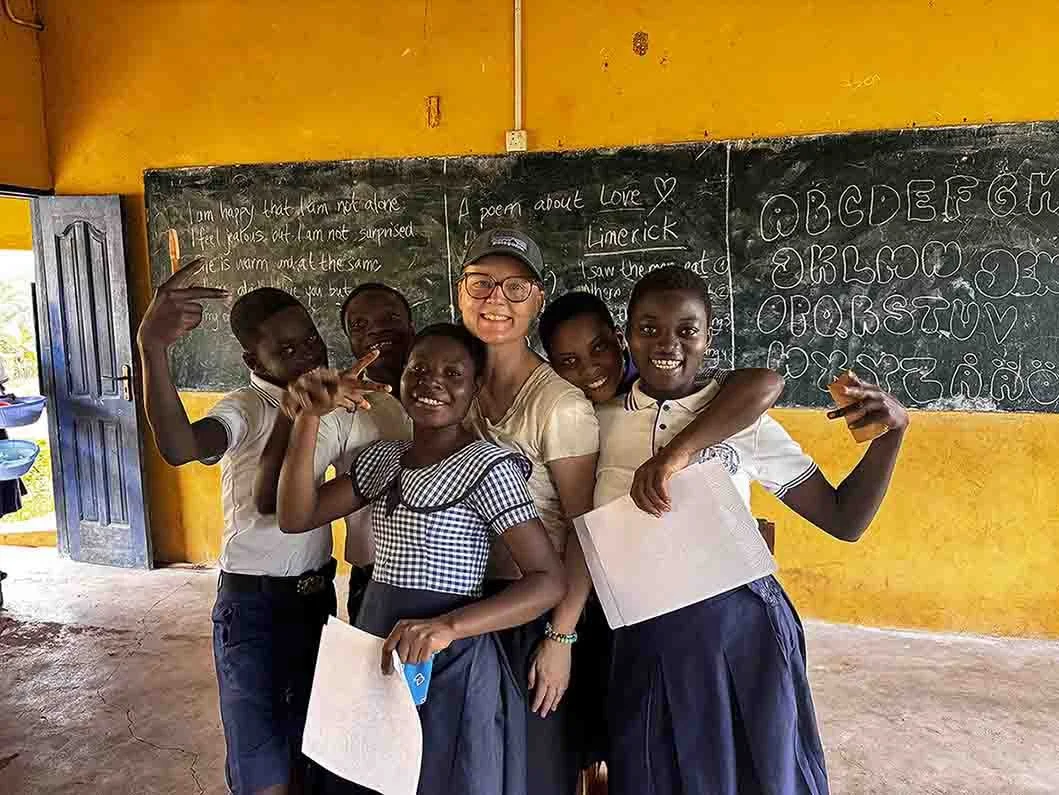
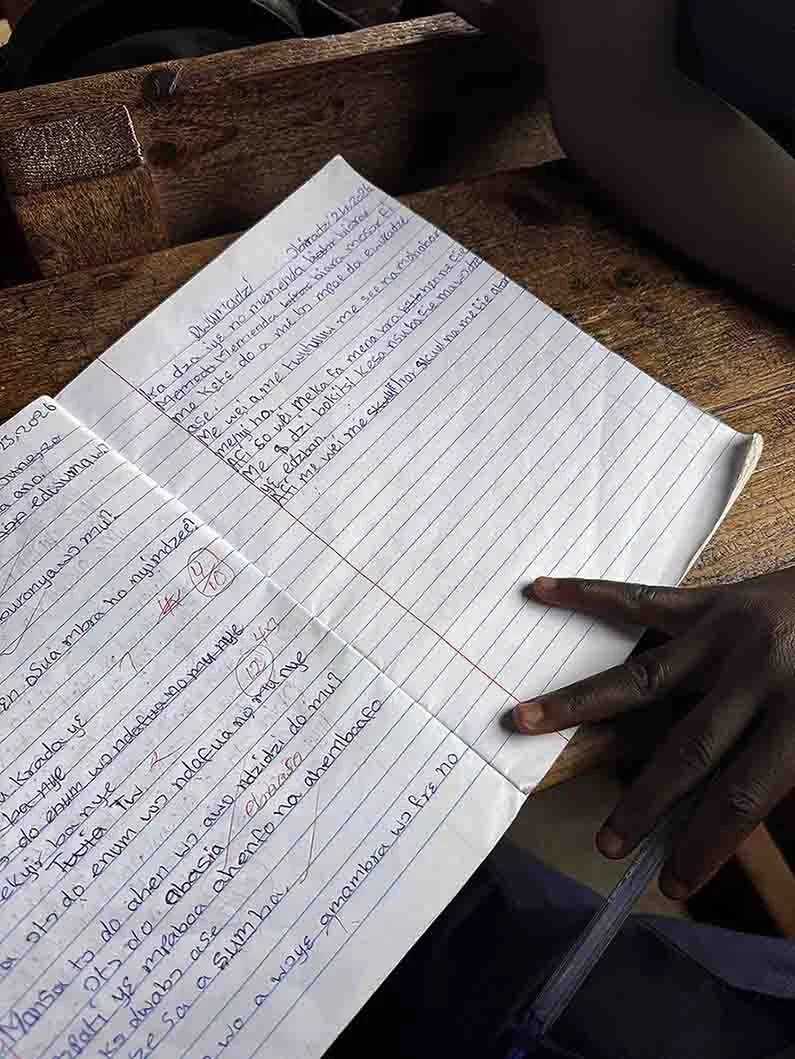
6th grade at School of Hope, Poetry class mixed with bubble letters (by yours truly)
Two weeks at a children's home in Gomoa Tarkwa, Ghana, June–July 2026
I have never been met with such kind vibes at an airport – even the passport control people greeted me with a smile and a warm “welcome to Ghana”. I told them I was there to do volunteer work at an orphanage and a children’s school and I saw gratitude in their eyes and felt a sense of relaxation in my body. I was welcomed here.
John, the head of the orphanage, picked me up with three of the children from the home — Sara, one of the young teachers who also lives on site, Isaac, one of the older boys, and Naomi, one of the older girls. The road out was so pitted with holes that we didn't drive through them, we drove around them. In Sweden, we wouldn’t even had tried. These drivers knew how to and a daily task was to change a tire or another part of the car. An expensive set up, unfortunately.
Traffic was a bit chaotic – but in that exotic way kind of way, no belts, lots of honking, no speed checks, quick turns, goats on the road, motorcycles everywhere but somehow it all worked. I got in safely to Gomoa Tarkwa and “Home for Hope”. At two AM I stepped into my room with my big suitcases filled with toys, clothes and excitement. I put up my mosquito net over the bed and fell asleep.
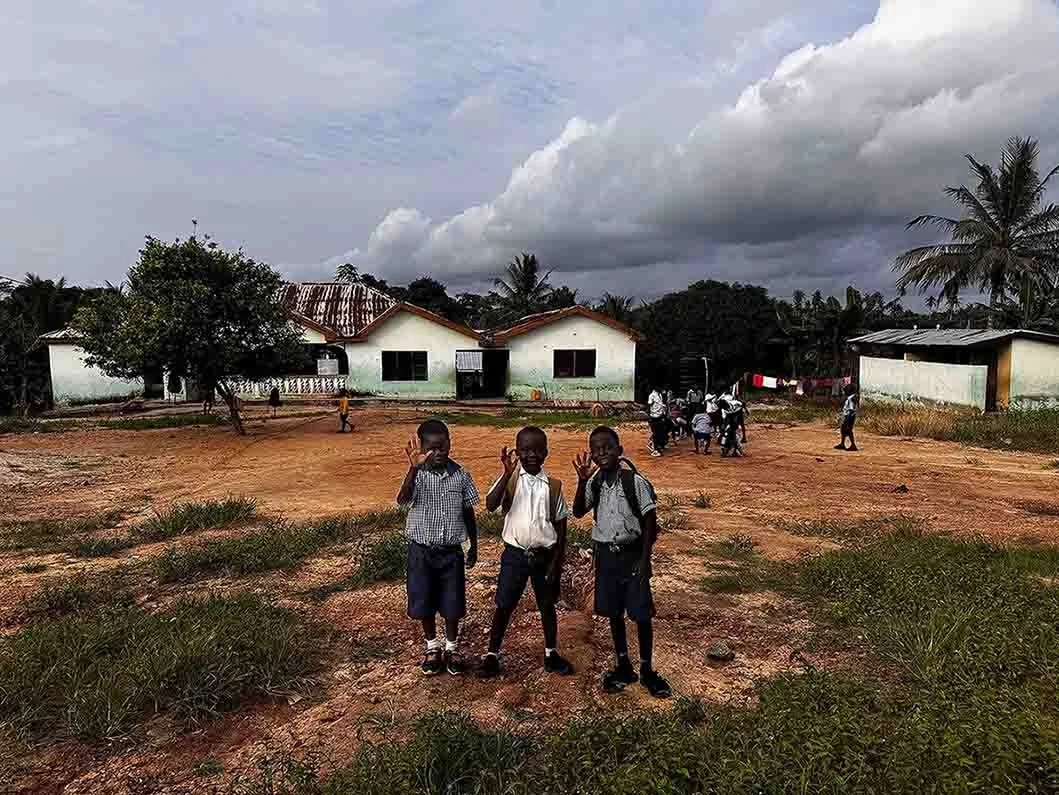
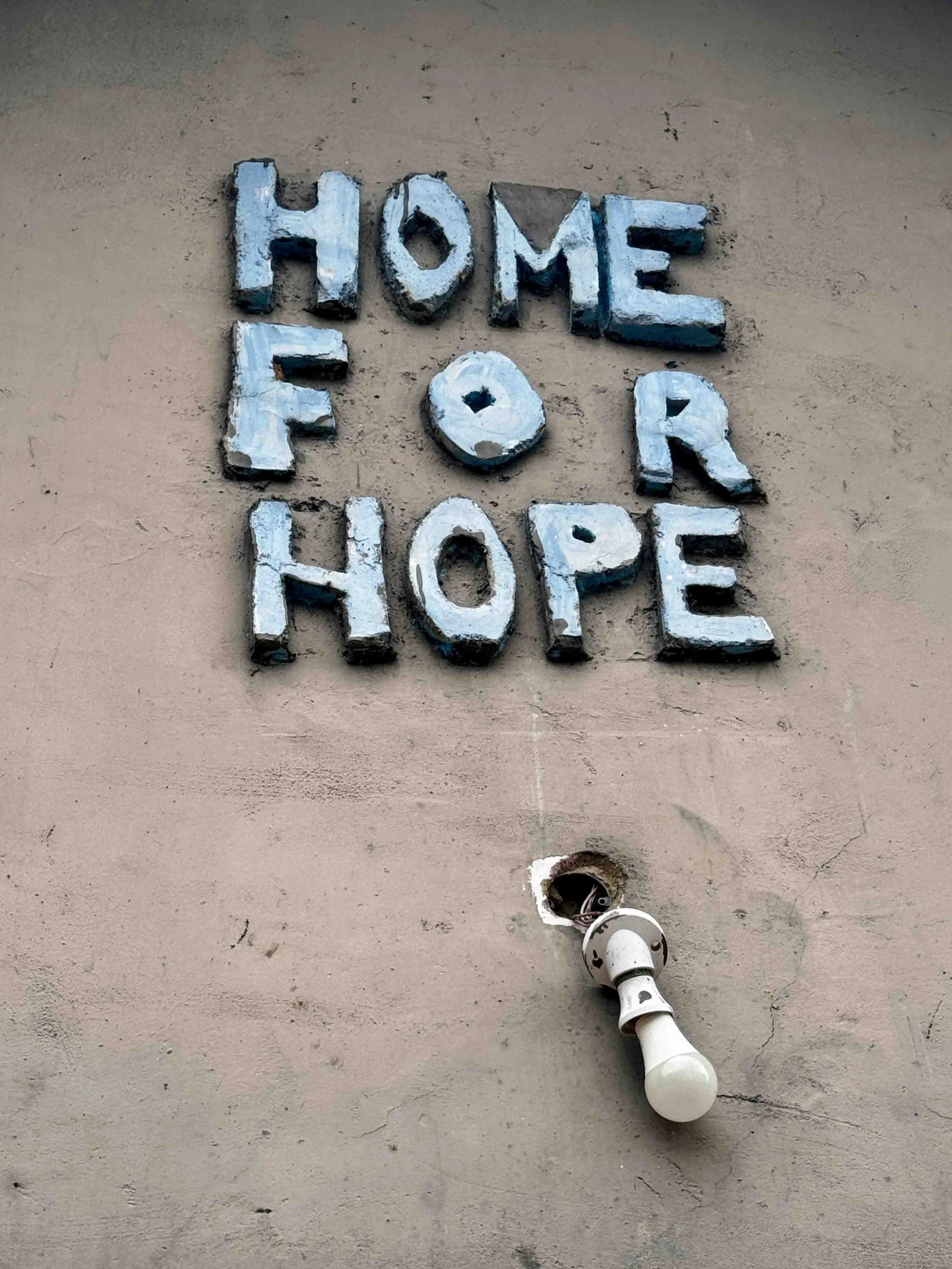
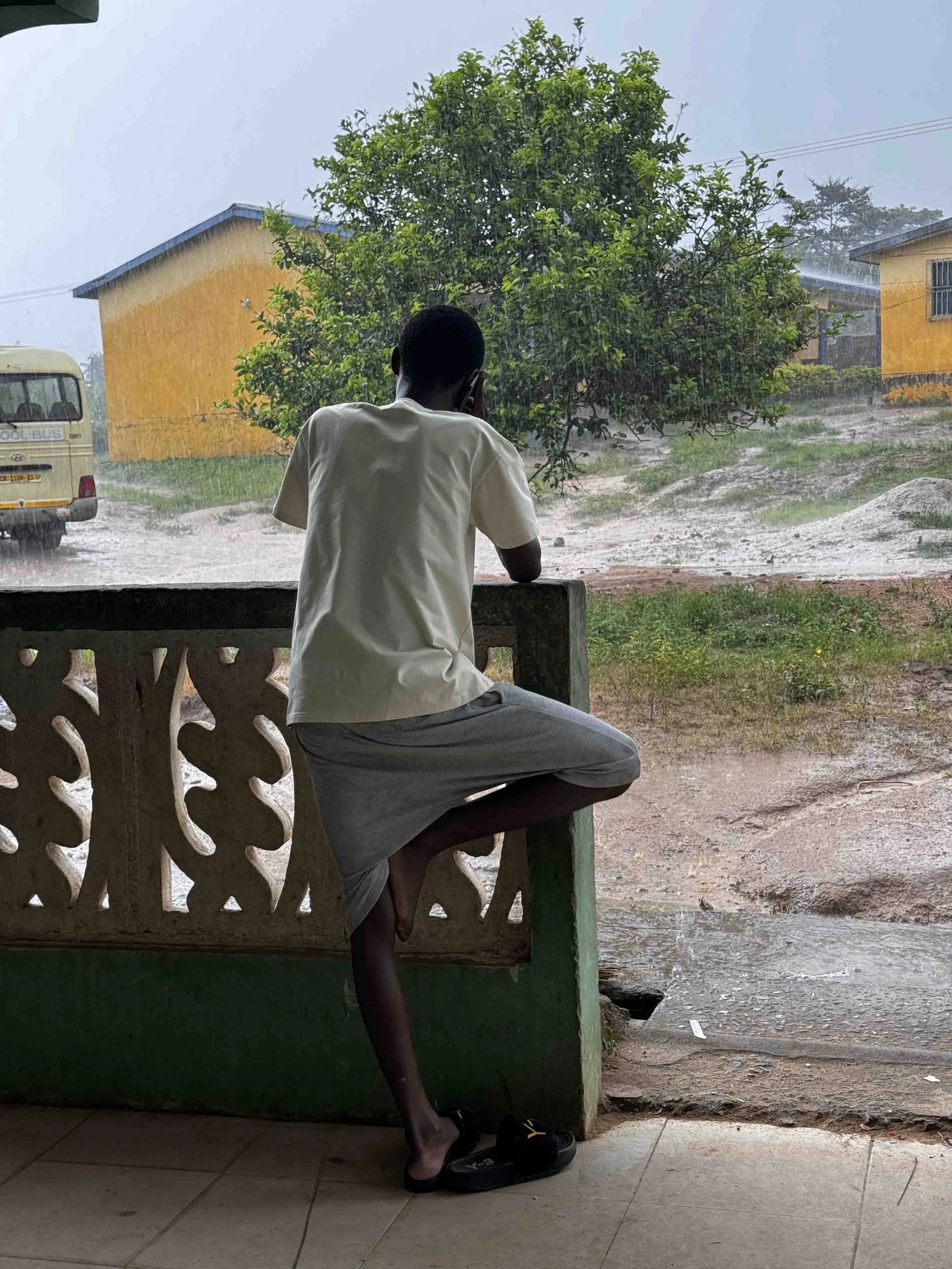
The premises of Home for Hope, Gomoa Tarkwa, Ghana. Lemon tree in the front.
I woke up early from the greetings of roosters, crickets, frogs and children already awake and moving around in the garden. It made me smile. I was really here! I went out to meet them and they ran up to shake my hand, give me hugs, touch my skin, touch my hair… They were fascinated by things I'd never thought to notice about myself: the veins showing blue through my skin, my freckles, how thin and pale-blond my hair was – and how red and sweaty my cheeks were! They all introduced themselves and asked if I could remember their names. I failed badly that first day. We all laughed. They asked about my trip, my children and my parents, and were excited to hear their names. “Eeeeeiii!” they shouted with happy faces. Ei is an expression I now love – it’s used for different needs depending on accommpanying sentiment and energy: Ei! = Stop it! Eeeeeiiii! = Yay! Ei?! = What?! …and so on.
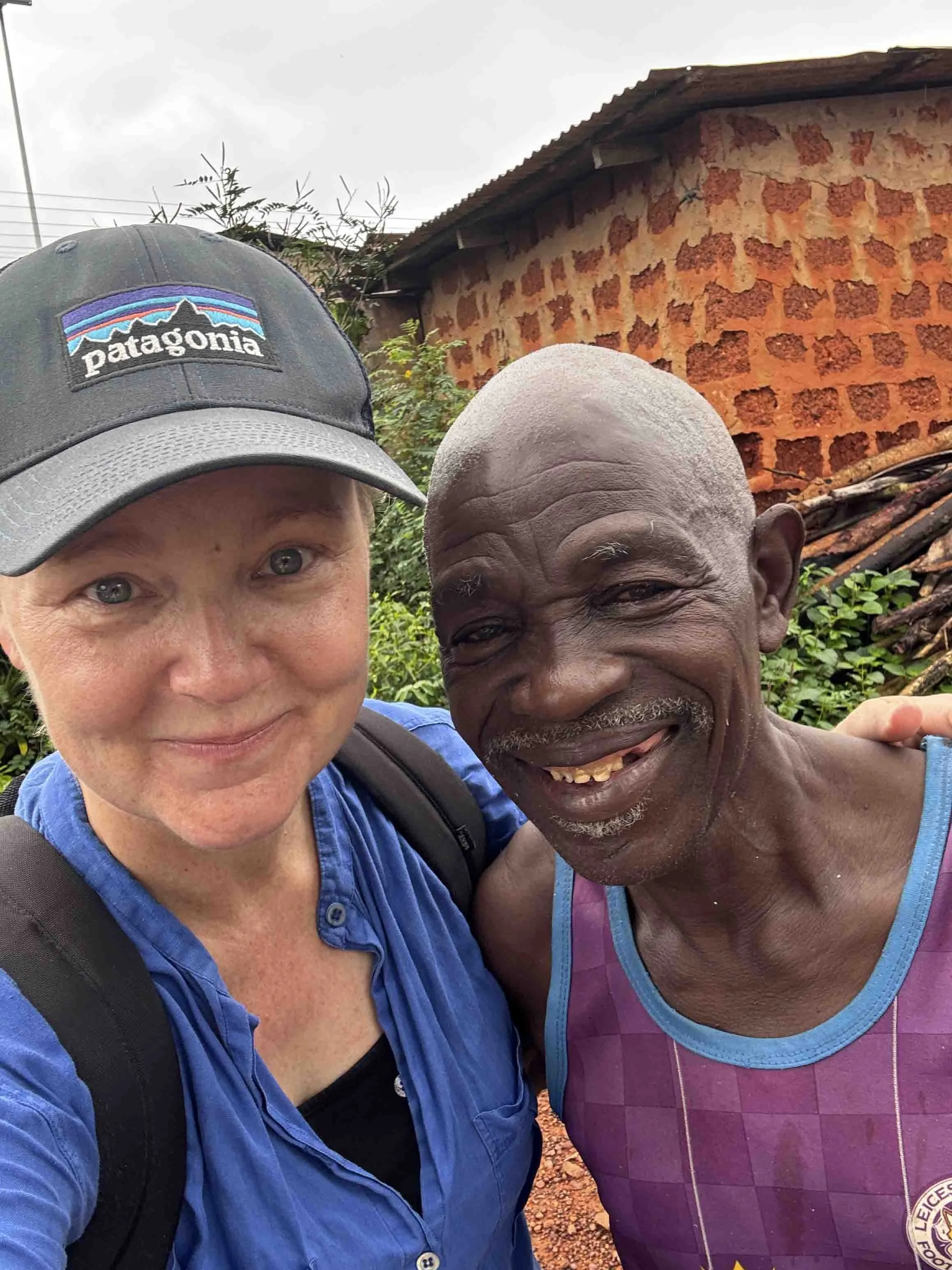
I hadn't been in the country 24 hours and I already had a nickname: Obroni, “Obloni” from the little ones. White person. Said with so much affection it stopped sounding like a label and started sounding like a hello. I learned my first phrase — Ete sɛn (“etsysen”) — how are you — and used it constantly. T is often pronounced “ts” so one of the girl’s names Gifty, is pronounced “Giftsy”. Their local language is called Fante (“Fantse”). I was also called Madame and Madame Jenny by those who remembered my name. Even today “Madame me!” echos in my mind with a visual of a young child wanting attention. Men are usually called “Sir!”.
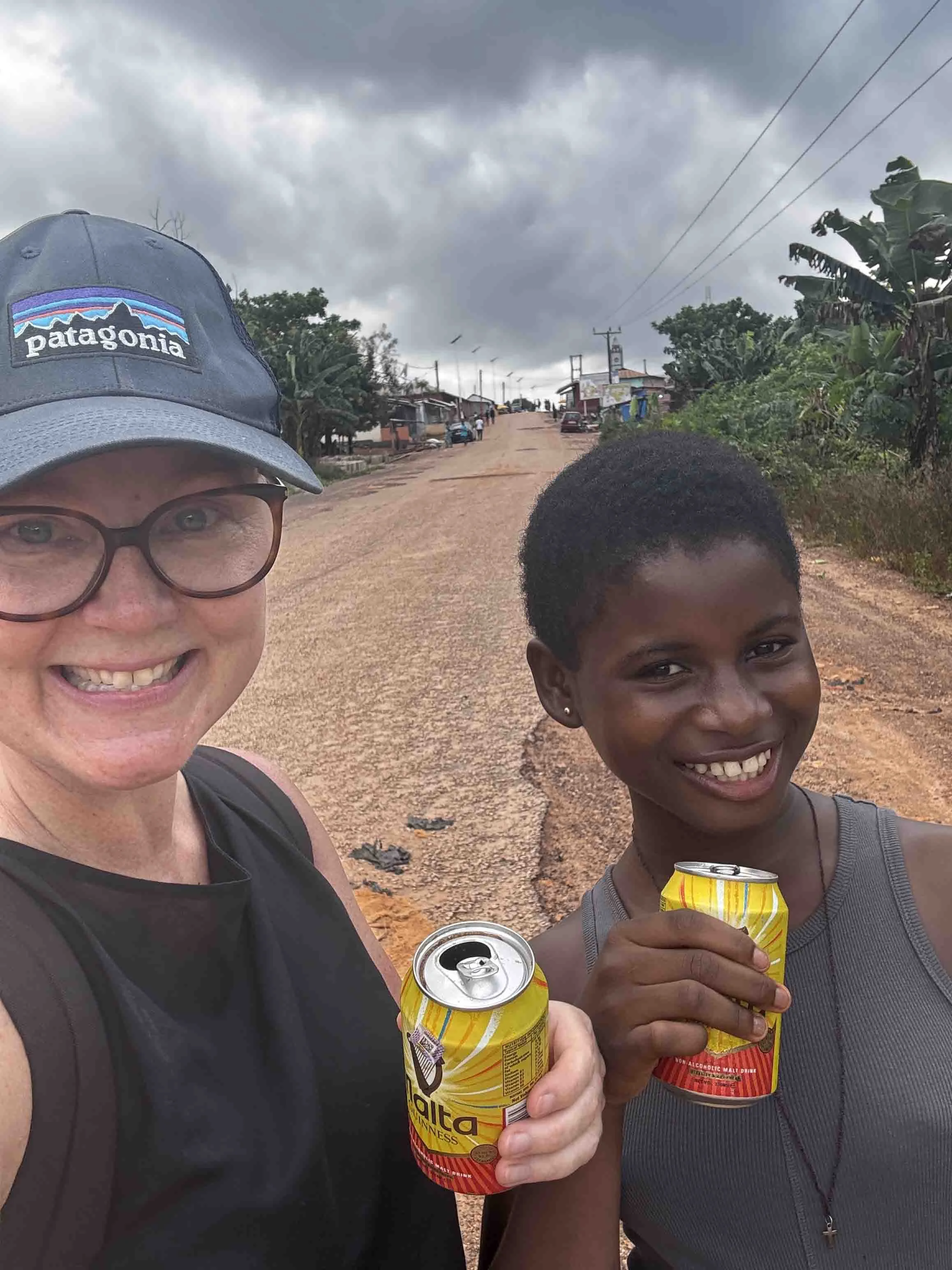
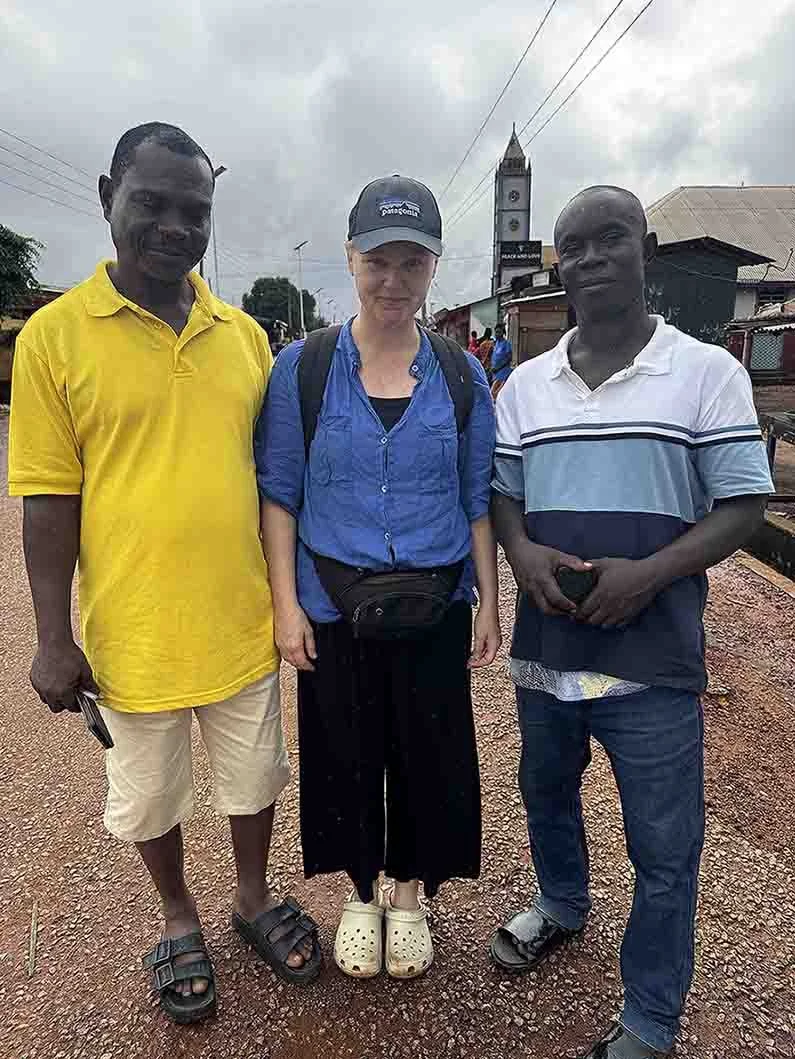
It was Sunday morning and Rockson, one of the teen boys, came with me to church in town so I could meet Ebo, the head of the charity foundation, and to enjoy the local community, learn about their culture, say hello and visit the small town of Gomoa Tarkwa. It was a warm, dusty walk into town. A road made of red sand lined with palm trees, mango trees, bamboo trees and other lush greenery. I had never seen such abunance of vegetation and fruits! Everything grows in Ghana – between heavy rains, the strong sun and the potent soil. But the houses and the roads are not strong enough for the weather. The water flushes away the ground and melts the concrete the houses are built with. This makes it very hard for poor people to live and commute, and business to thrive in the poorer communities. We had a good chat, Rockson and I, on our walk through town.
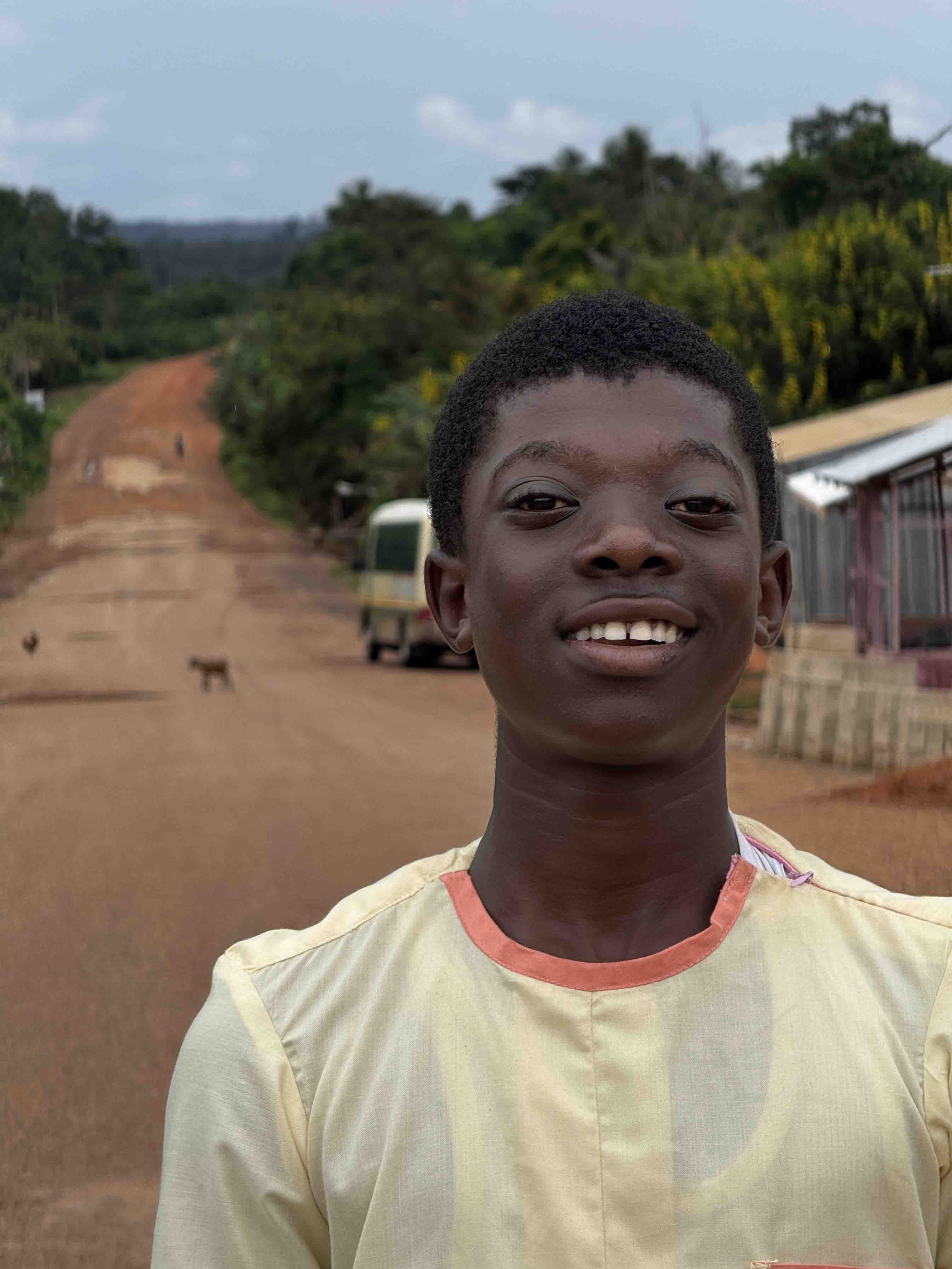
Rockson, aka Baby, walking with me to town.
Everyone at church was wearing their most beautiful clothes – colorful and graphic. I felt very odd in my sunblocking outfit; long linen pants, long sleeve shirt and a cap. This in combination with the constant sweat pouring out from each pore, mixing with sunblock 50 and mosquito spray, I didn’t feel quite “worthy” to be there. But I was welcomed with open arms. They sang beautiful songs and prayed. The focus was their struggle due to the rain and flooding which is worse than its ever been. They keep praying to God. Medase. Thank you.
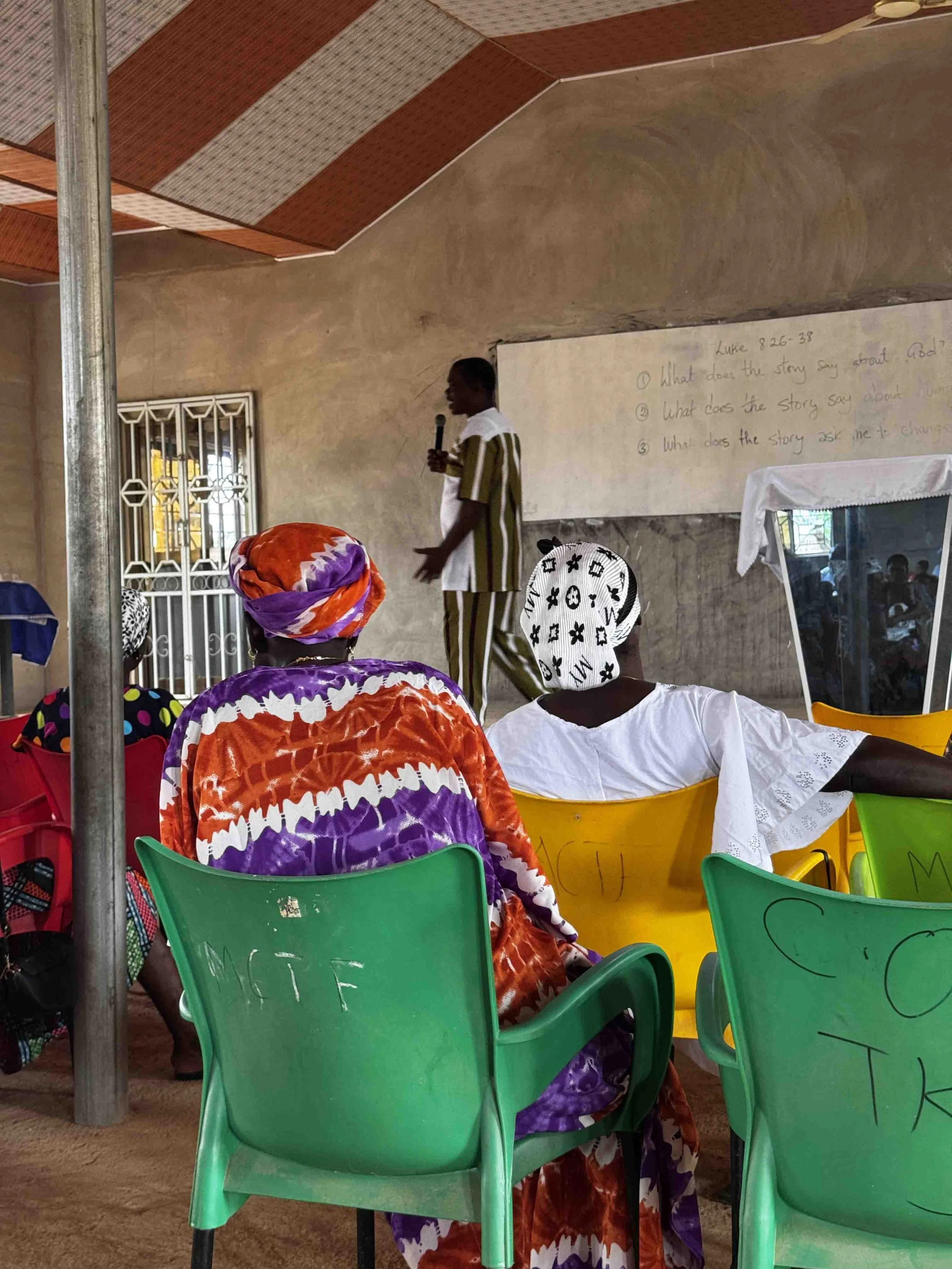
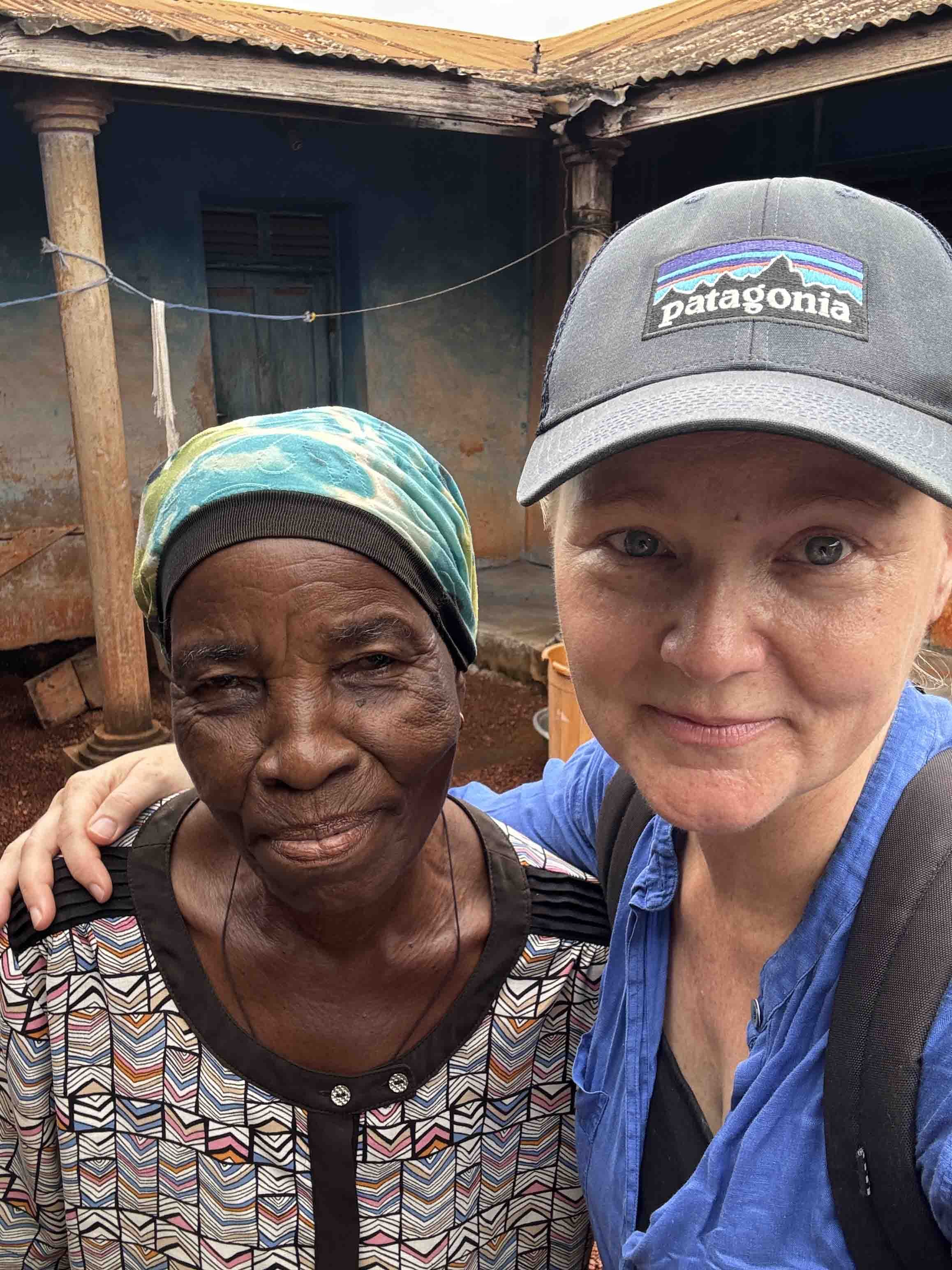
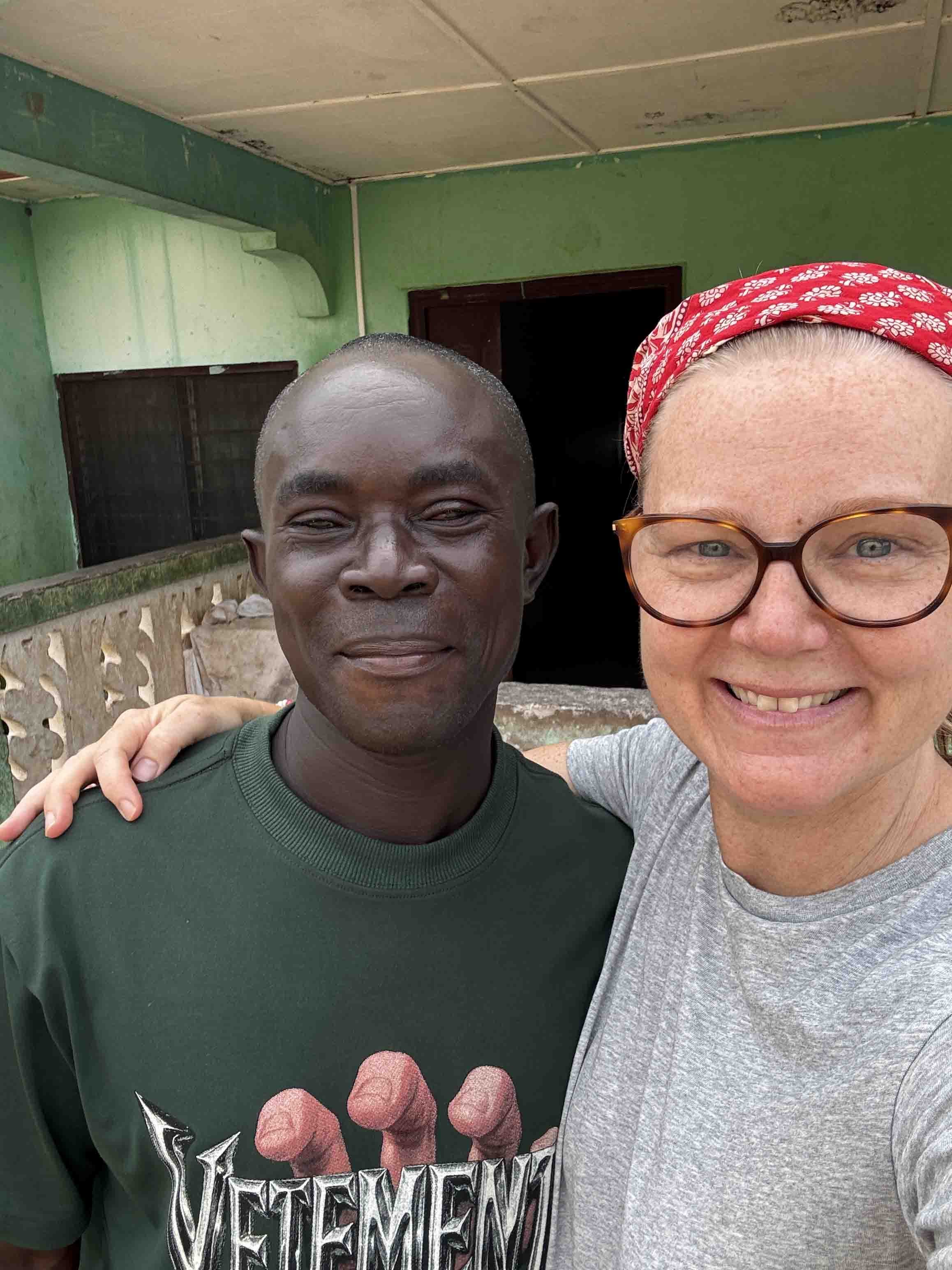
Ebo Wilson Prah and women at church.
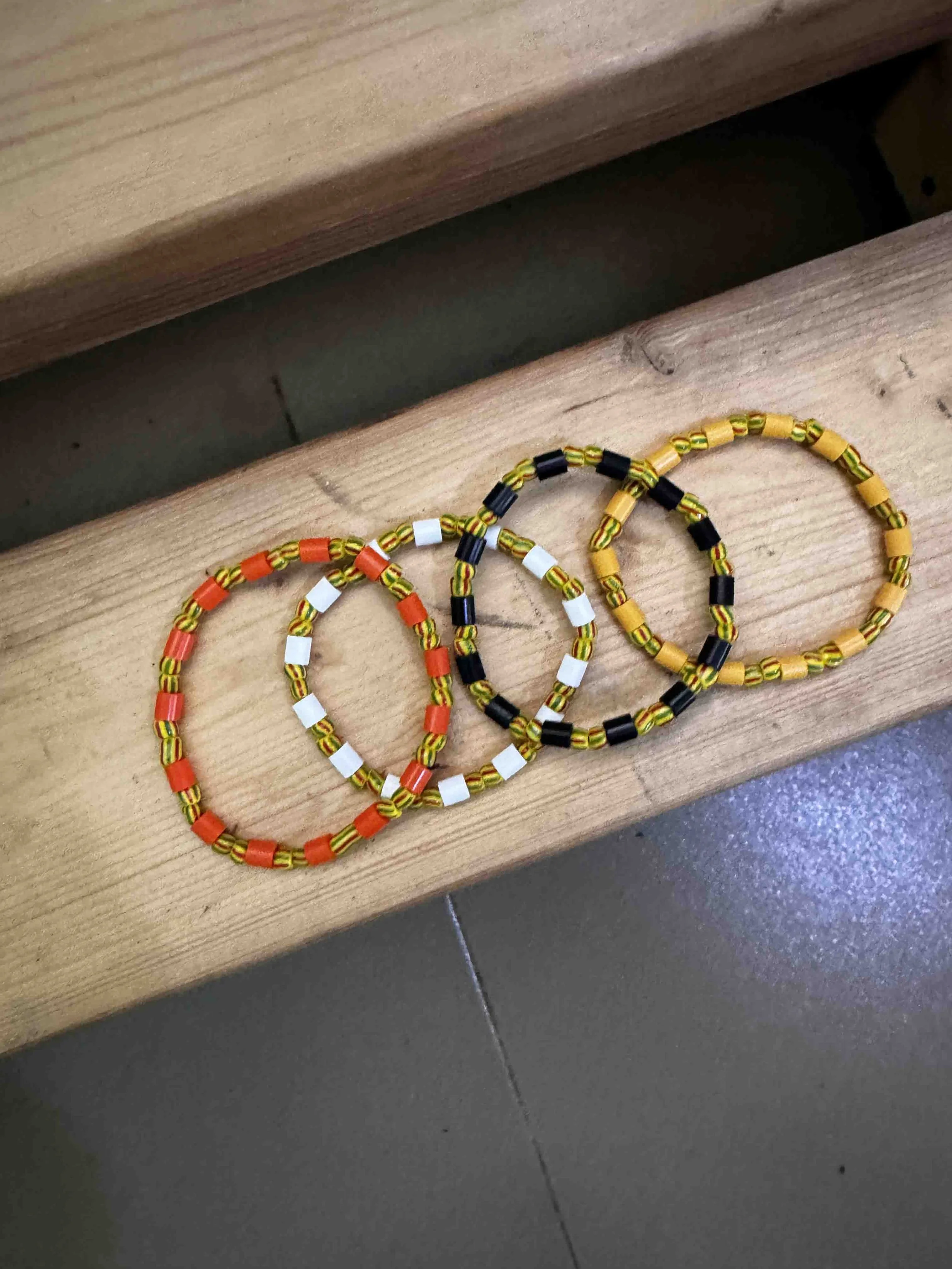
We walked back to the home and I brought out pearls, thread and scissors to make bracelets, paper, drawing books, stickers, pens and a proper sharpener. Within a few mintues, the better pens had vanished and the sharpener had disappeared — not stolen, I realized, but rescued. One of the older girls had quietly taken custody of the good stuff so it would last long enough to be shared. They showed up a few days later, in a classroom of the older children. I made a mental note: bring more crayons, pens and paper next time. Enough that nothing ever needs to be protected from anyone.
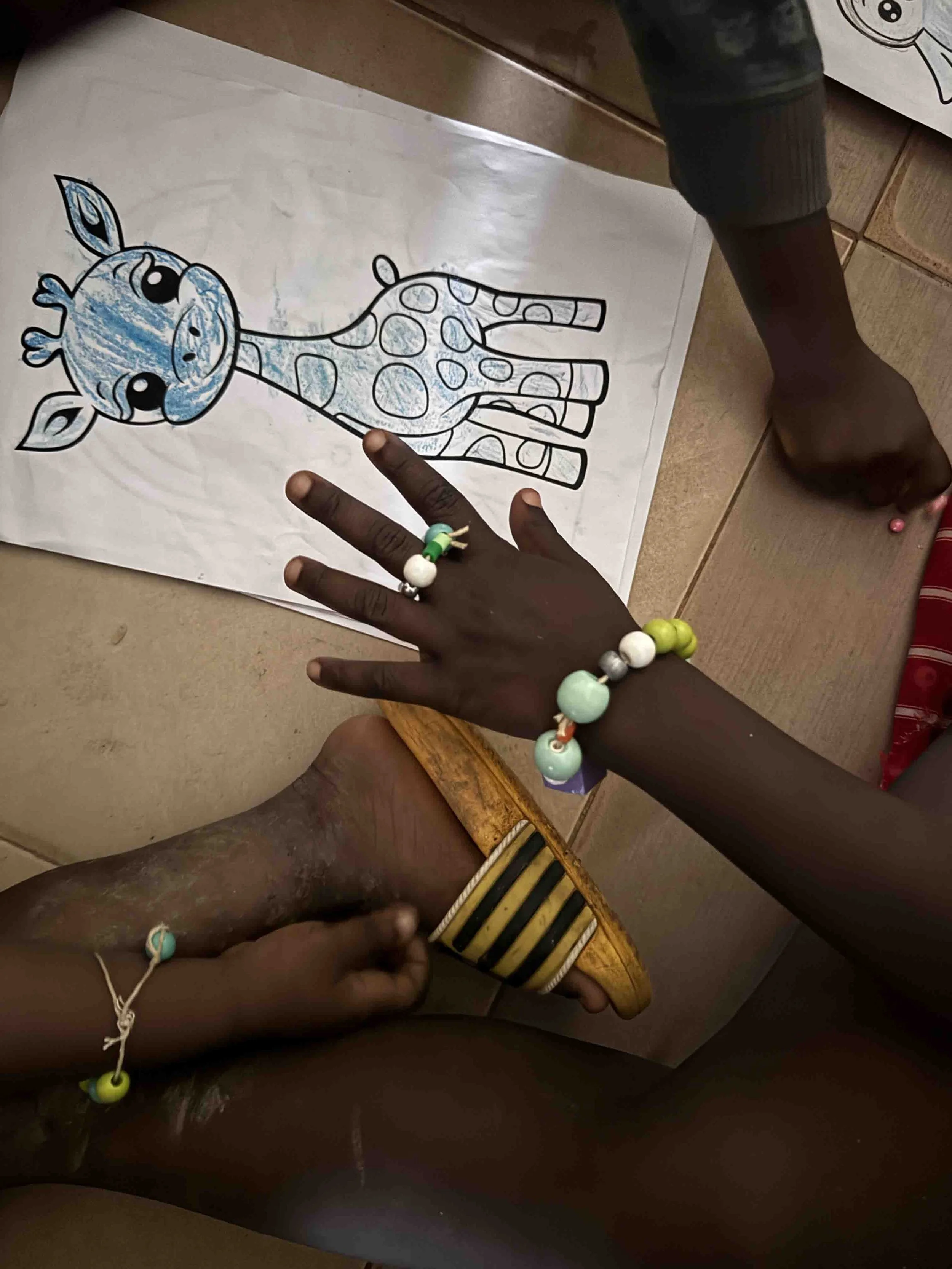
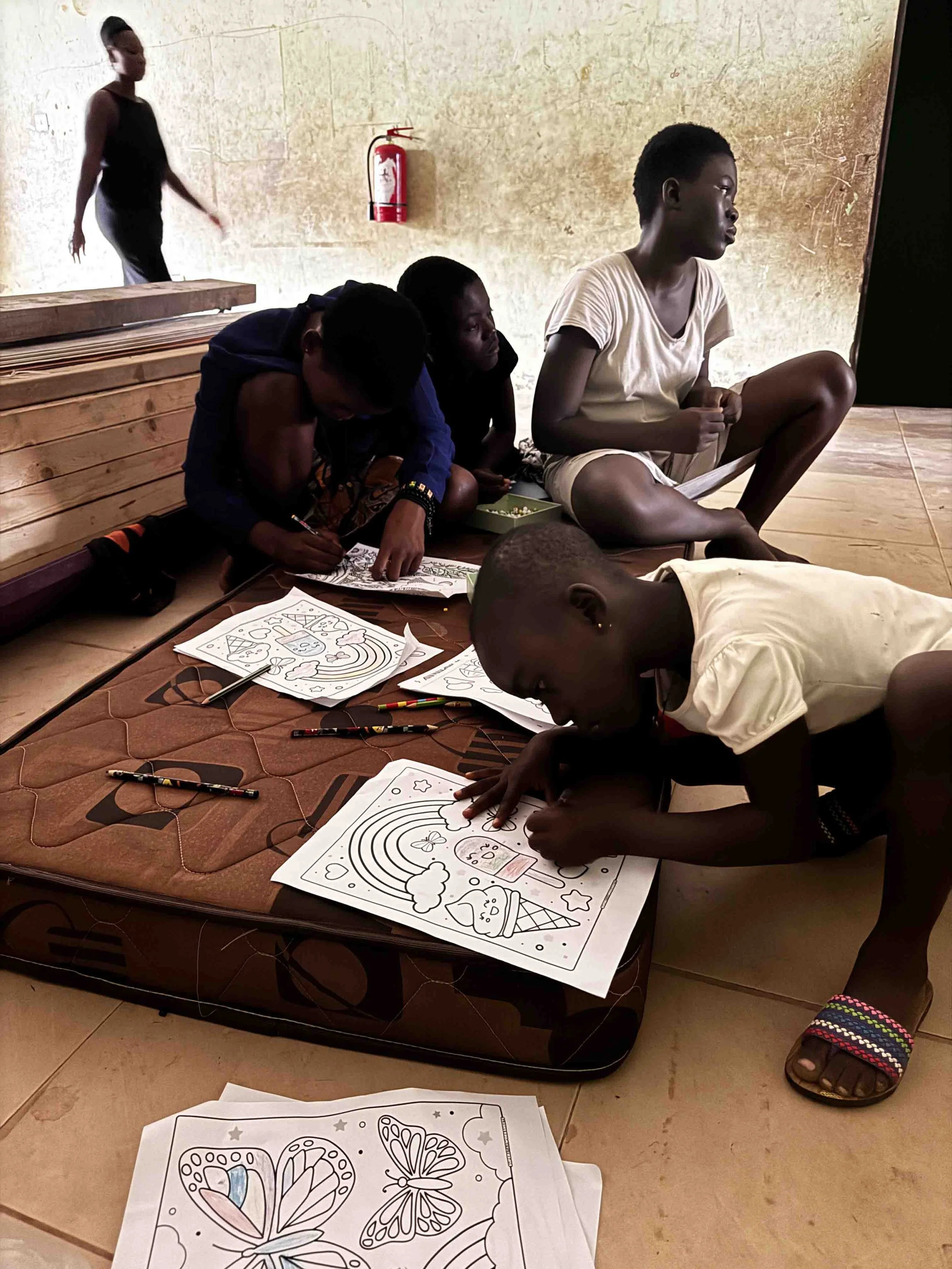
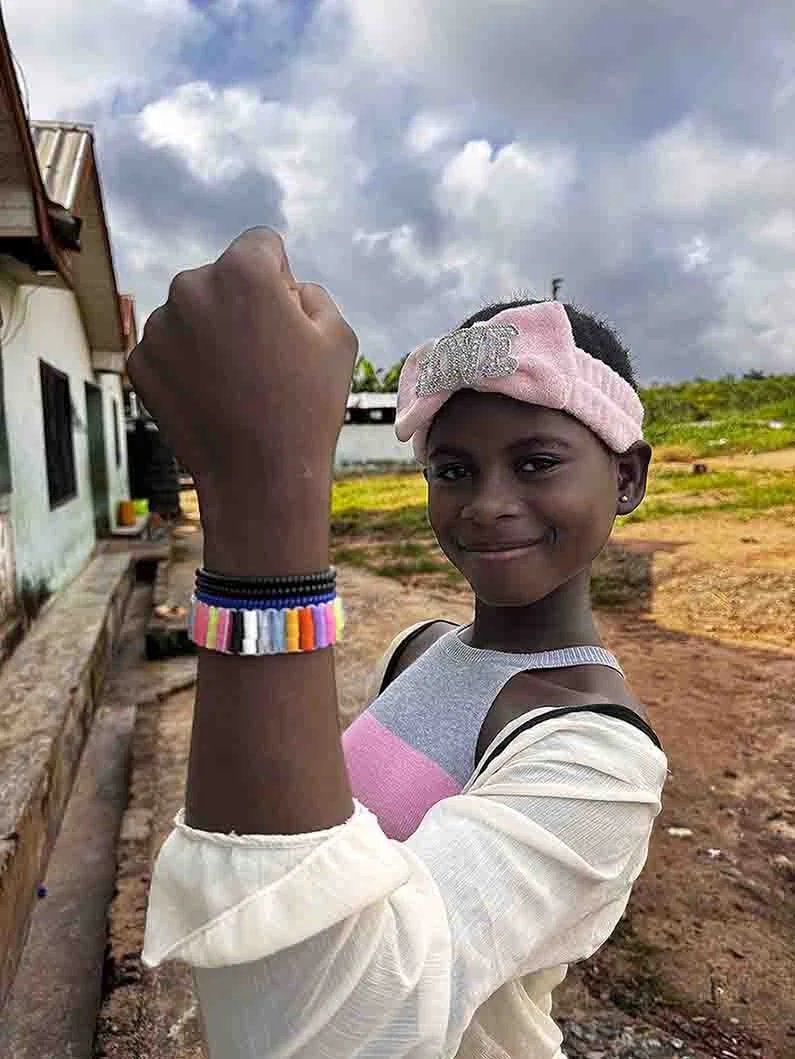
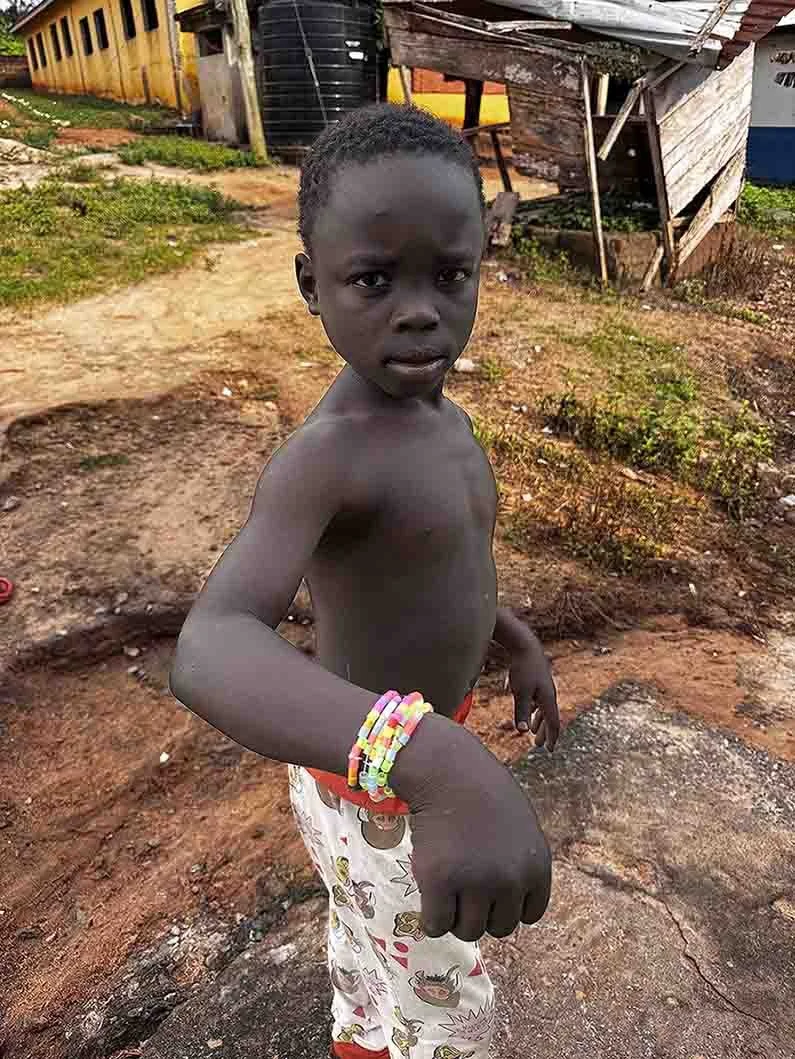
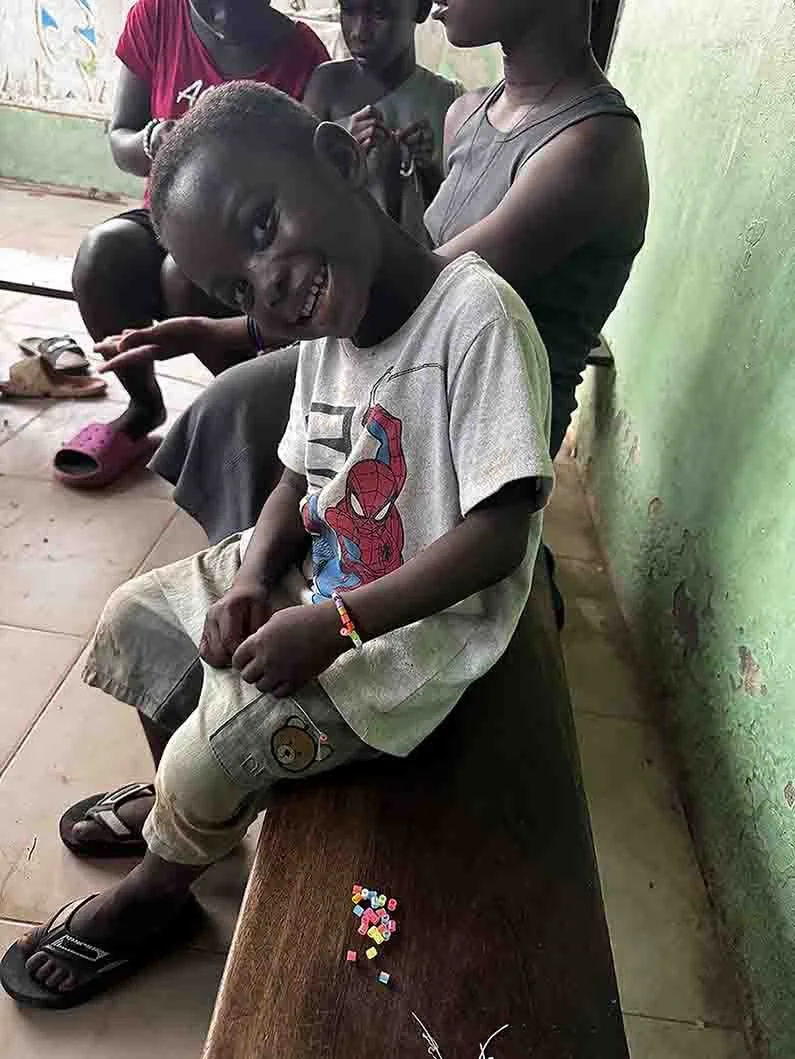
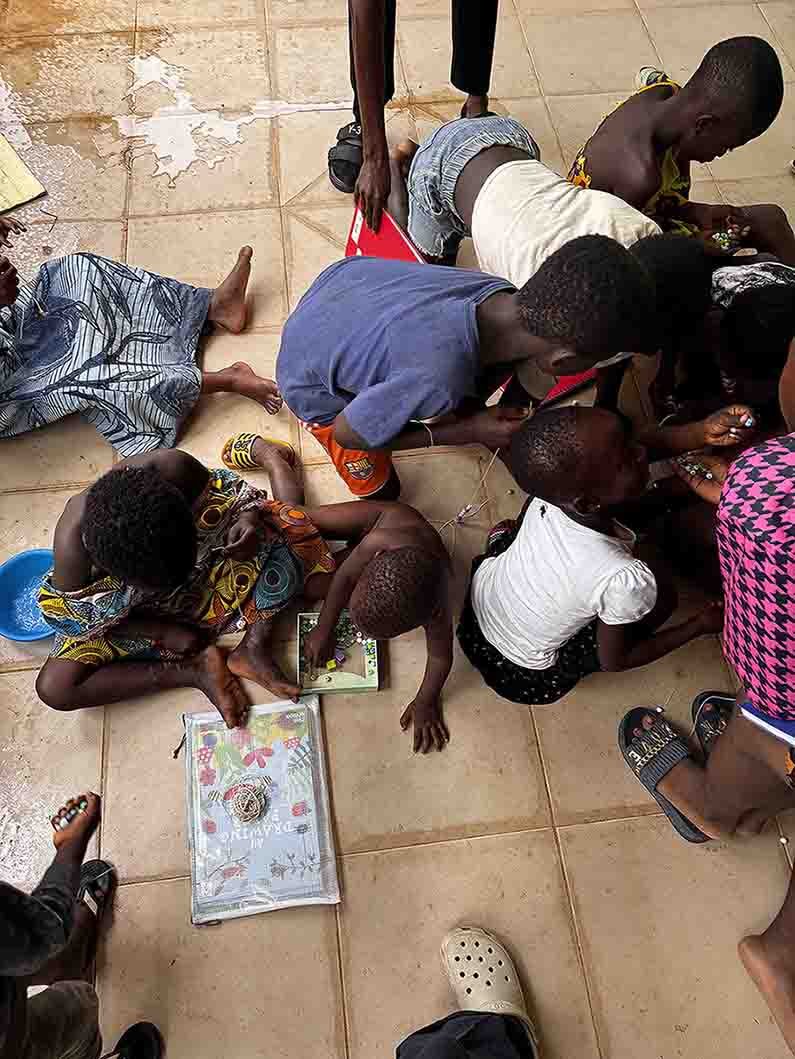
Donated items enjoyed by the children. (Click on the last photo to see the full gallery)
Nights had their own soundtrack. I slept under the mosquito net with the light left on to keep the cockroaches away (tip from a friend that worked!), while crickets, frogs, and geckos kept the dark anything but quiet. And the roosters — I was woken every so often by roosters having a full conversation with each other. It was like sleeping in a nature’s orchestra and my common anxiety dreams were nowhere to be found.
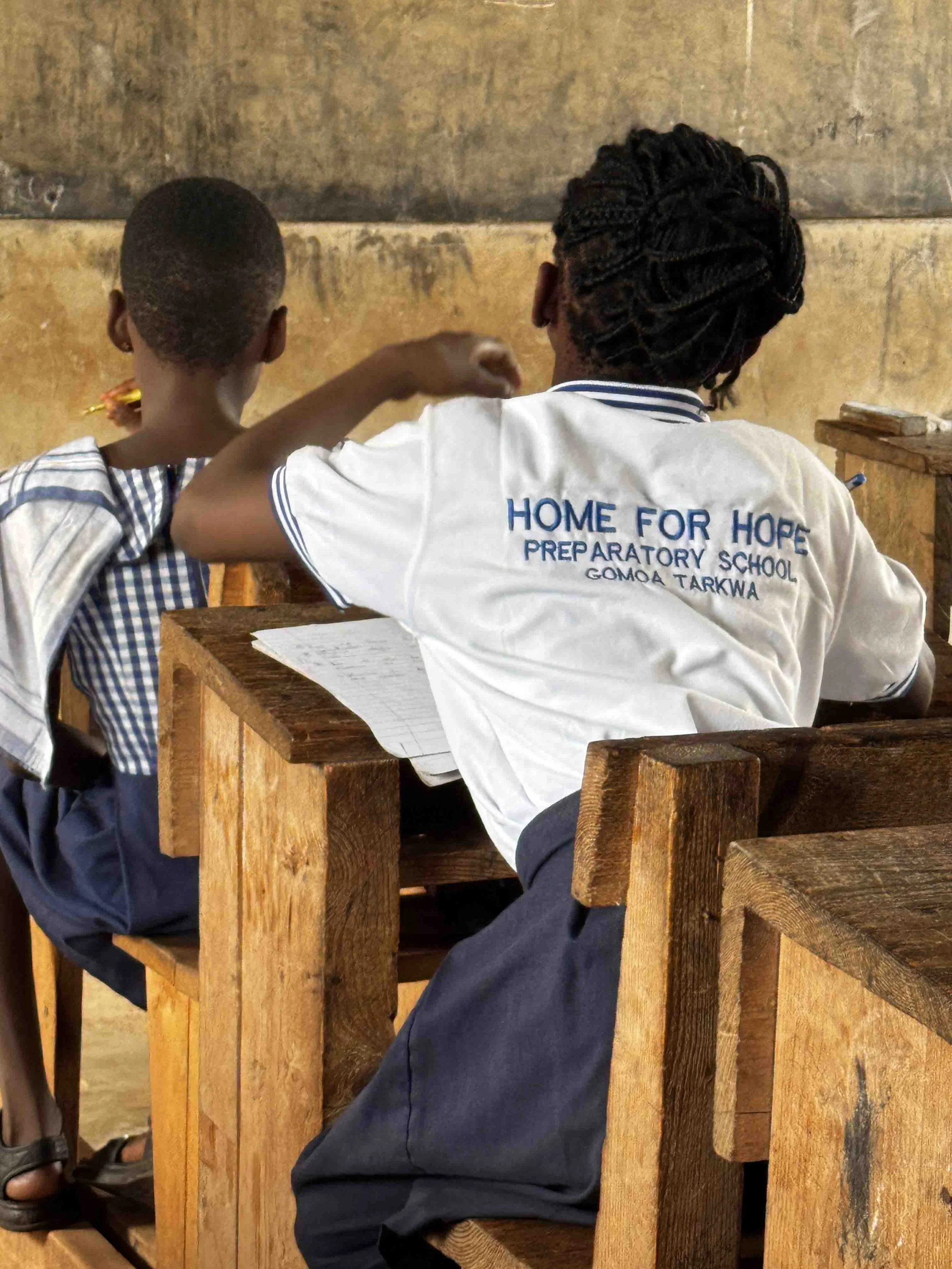
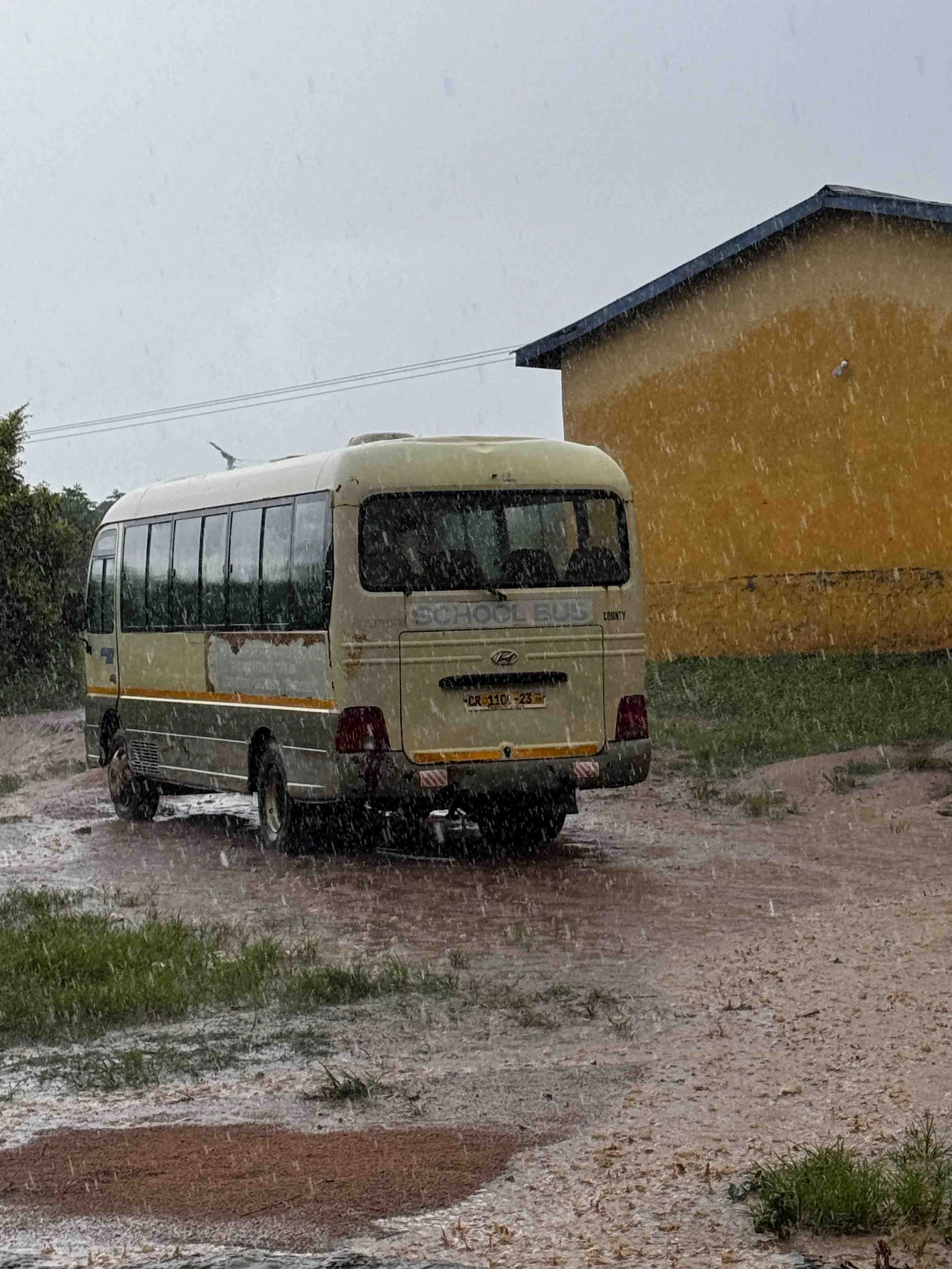
School sits right next to the childrens home — 250 kids are bussed in daily, one bus, three routes. I sat in on classes with most of the teachers, Sara, Eben, Seben and the school master, Frances. Frances asked to hold lesson on equality between men and women. No time to prepare so I improvised and loved how the children were so aware that they are a new generation where women can become presidents and men can cook. In another class we wrote poems about love and one of the children gave me a poem she wrote about me. Later that same week, Frances showed me something else entirely: a script! He's a writer and a producer, and plan to start filming a TV show. We read part of his script together out loud, a very precious moment.
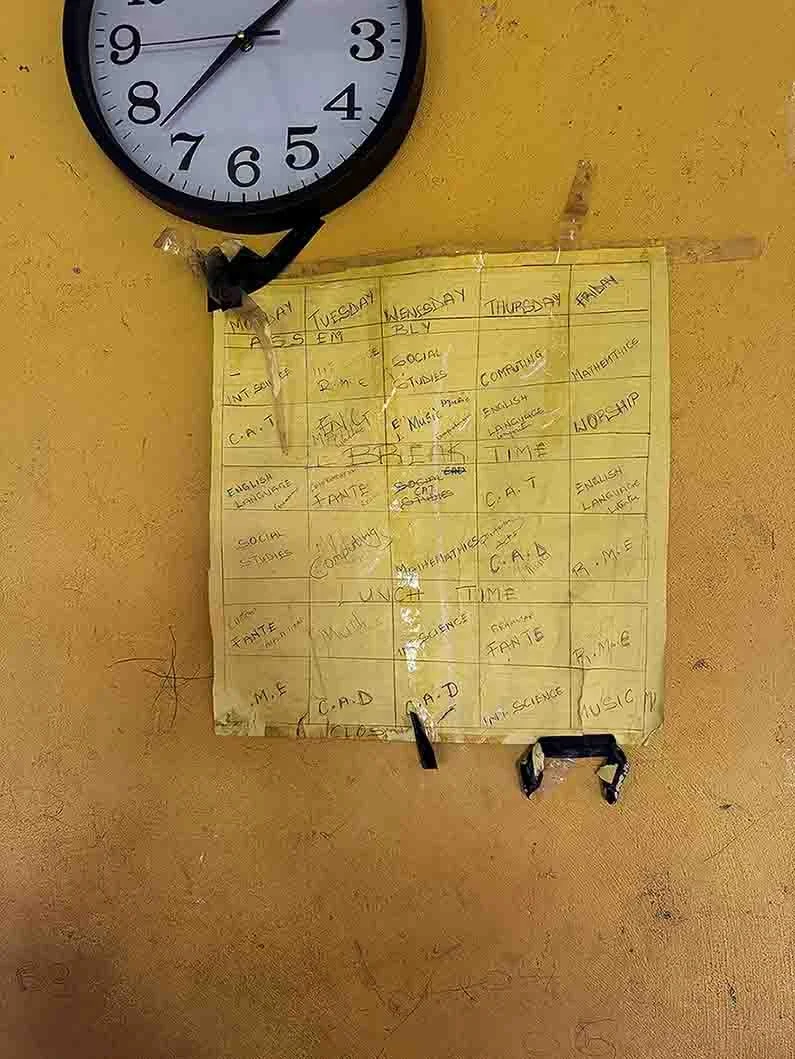
The classrooms are very simple – like all the houses in Gomoa Tarkwa - made of cement blocks and concrete and with an aluminium rooftop. Some windows have glass, most don’t. They all have roofs but no fans that work. You are dependent on the air flowing through the space to keep the heat down. It is warm and moist, and all the paper and books seem to melt after some time. The white chalk the teachers use for the blackboards melt as well. Some children didn’t have books or materials, since they couldn’t afford to buy it, and instead got to watch. Another mental note: find ways to get all these children books for the education they deserve.
The flute that a friend had donated to my trip showed up in a music class and the teacher played it beautifully. No other instruments were available at the school. The children would only see drawings in their book. If they had one.
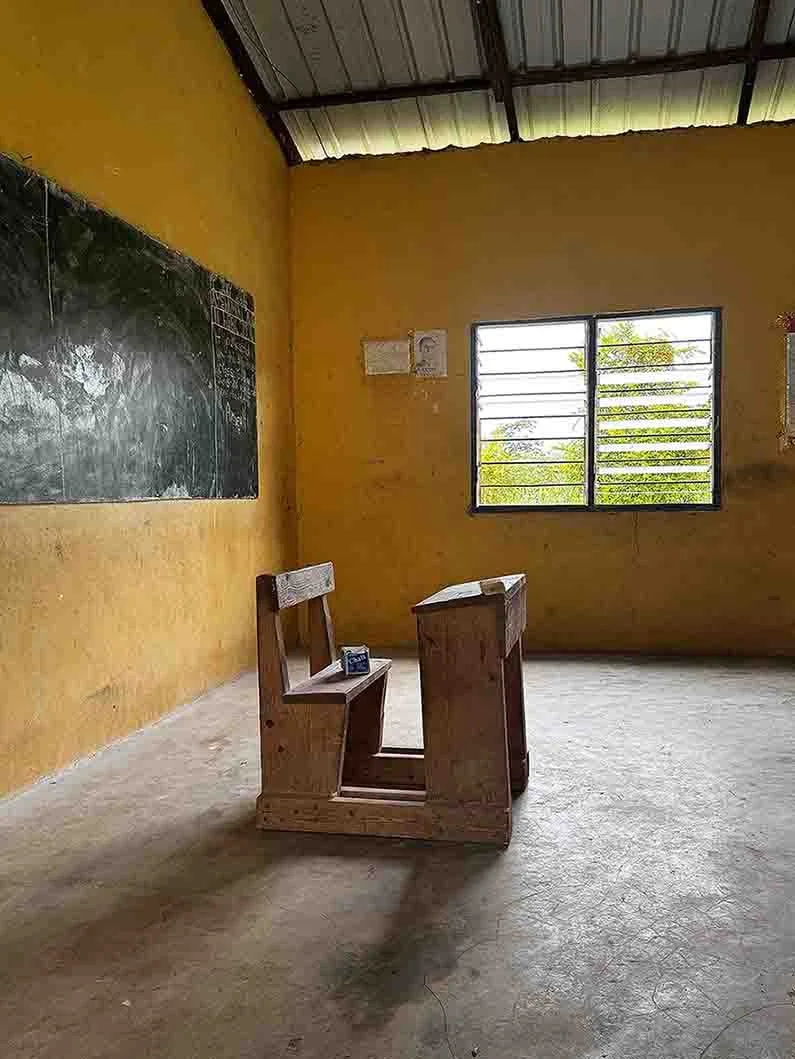
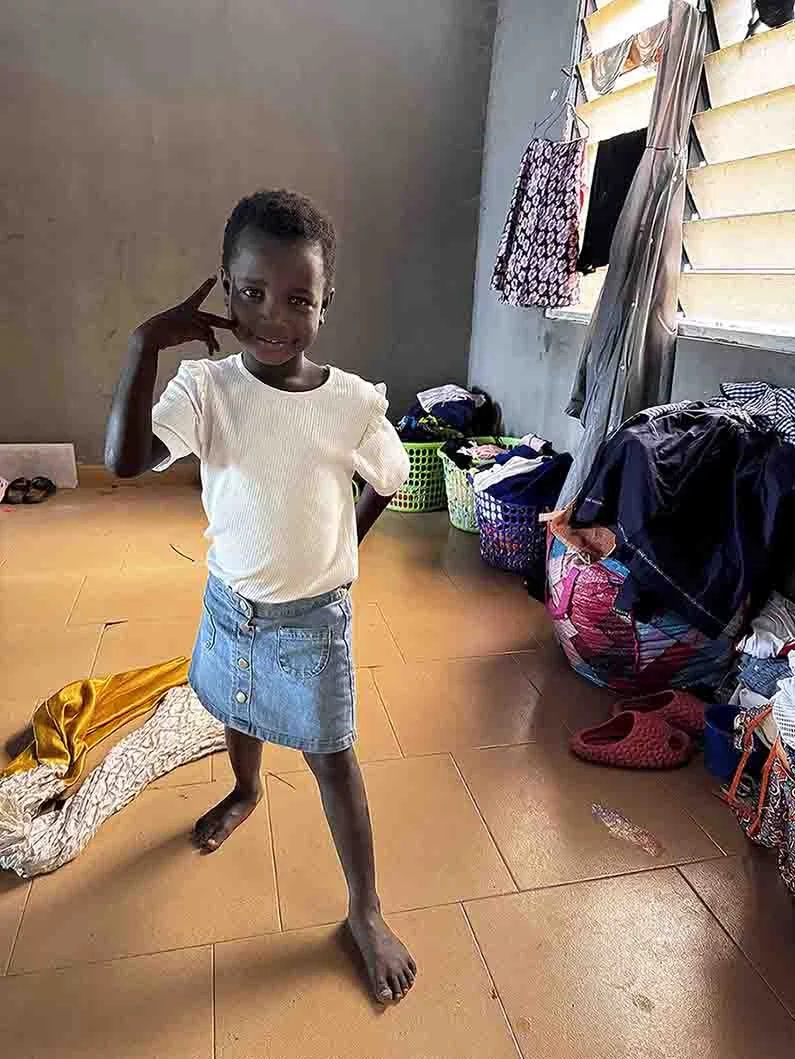
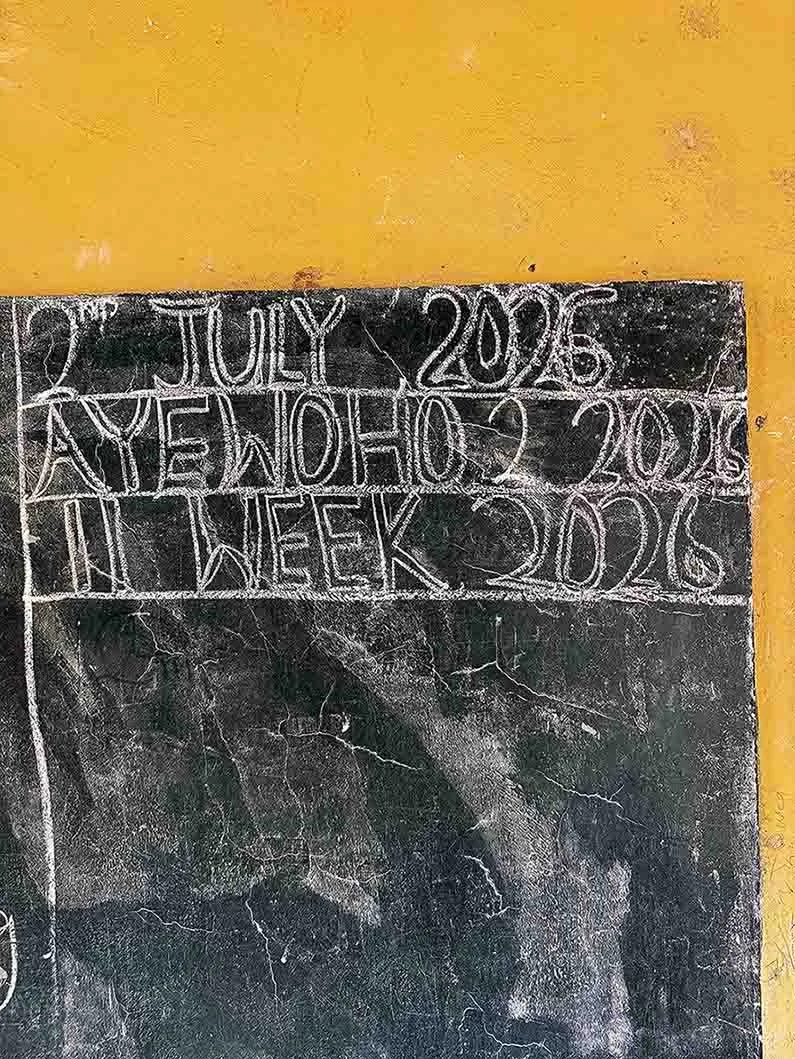
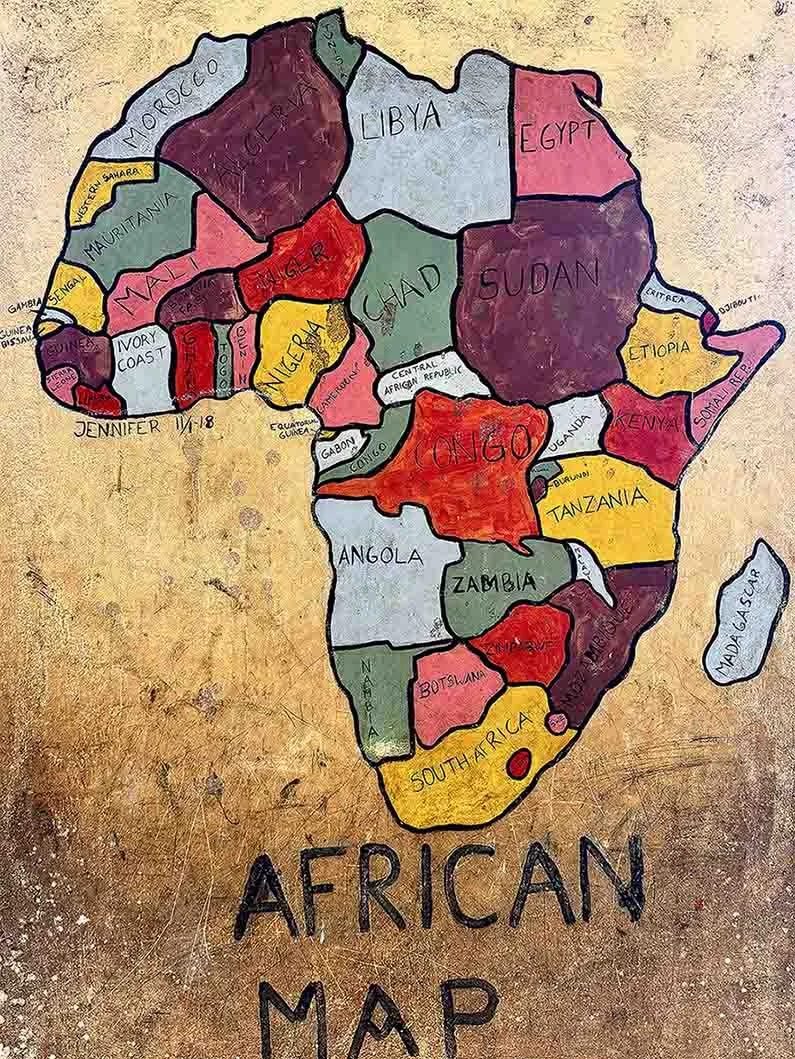
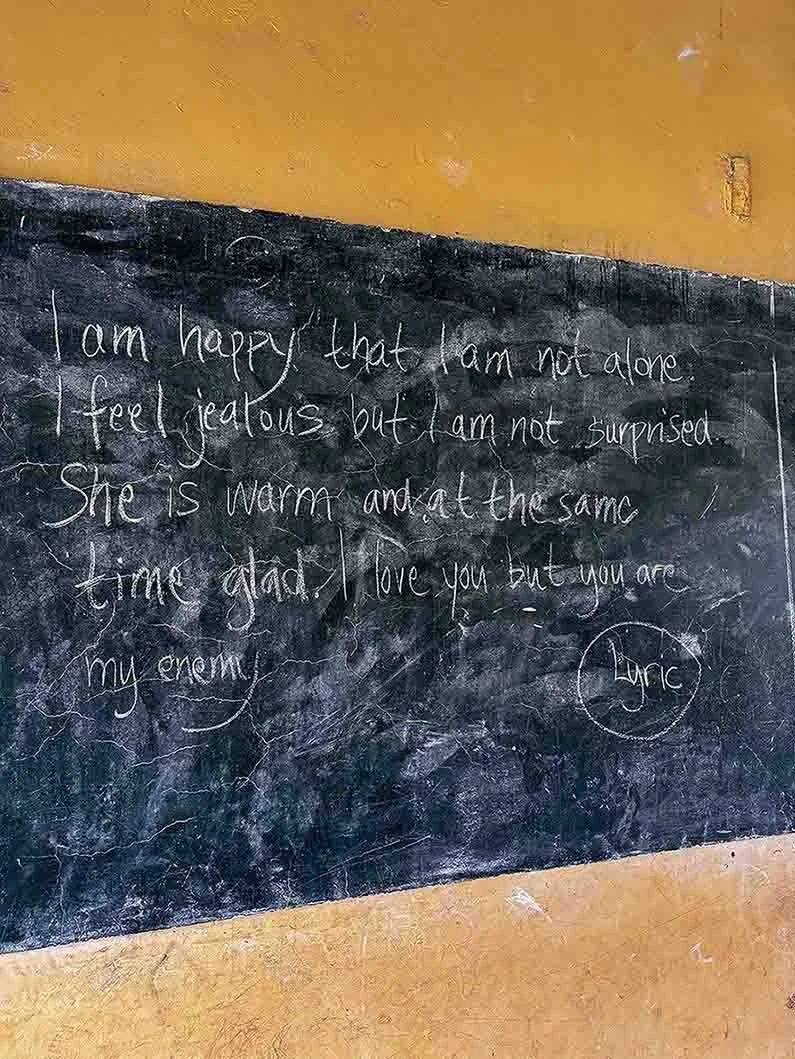
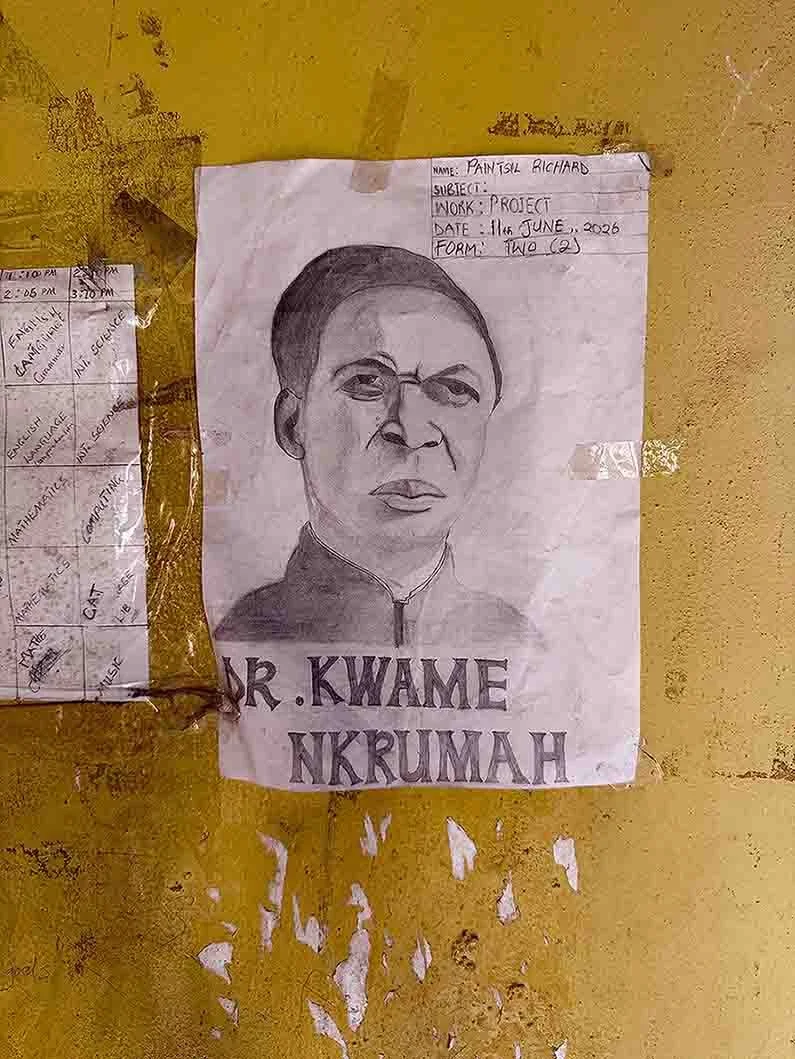
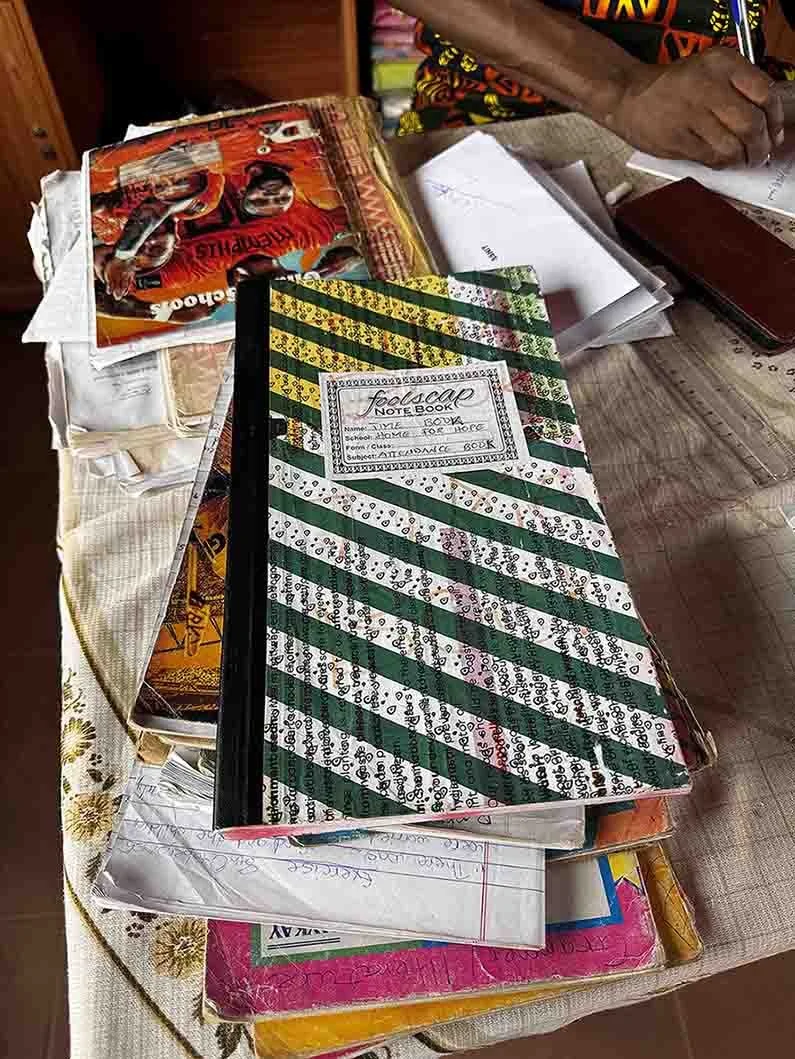
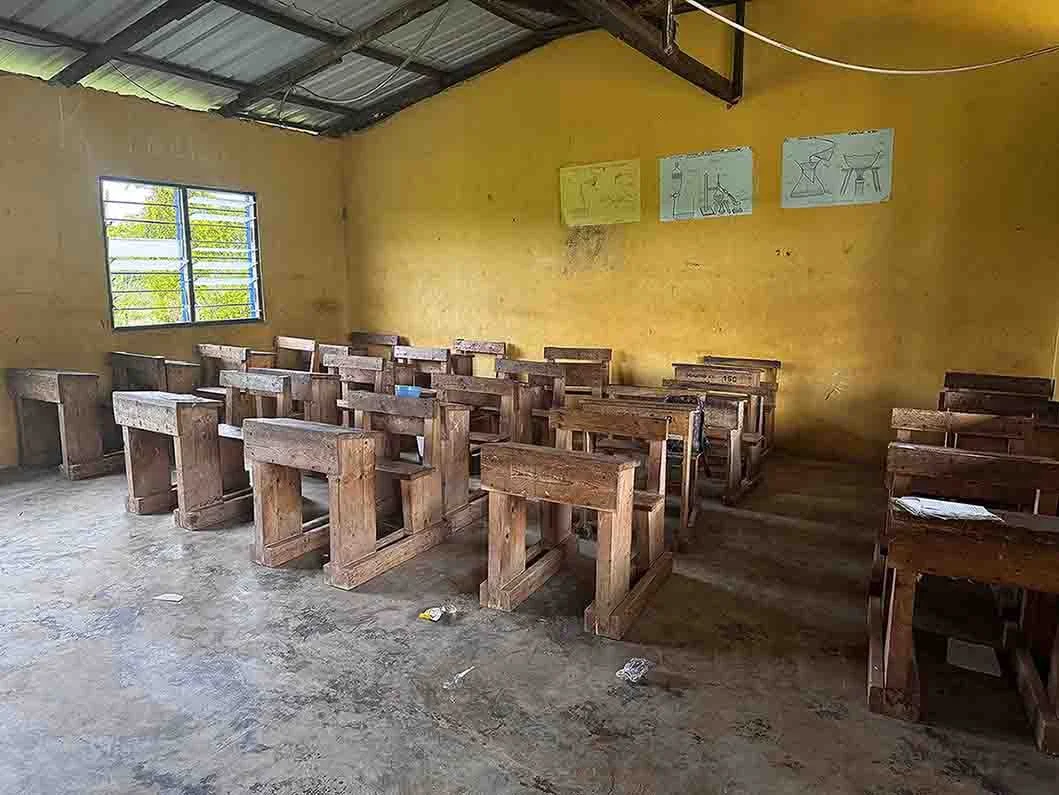
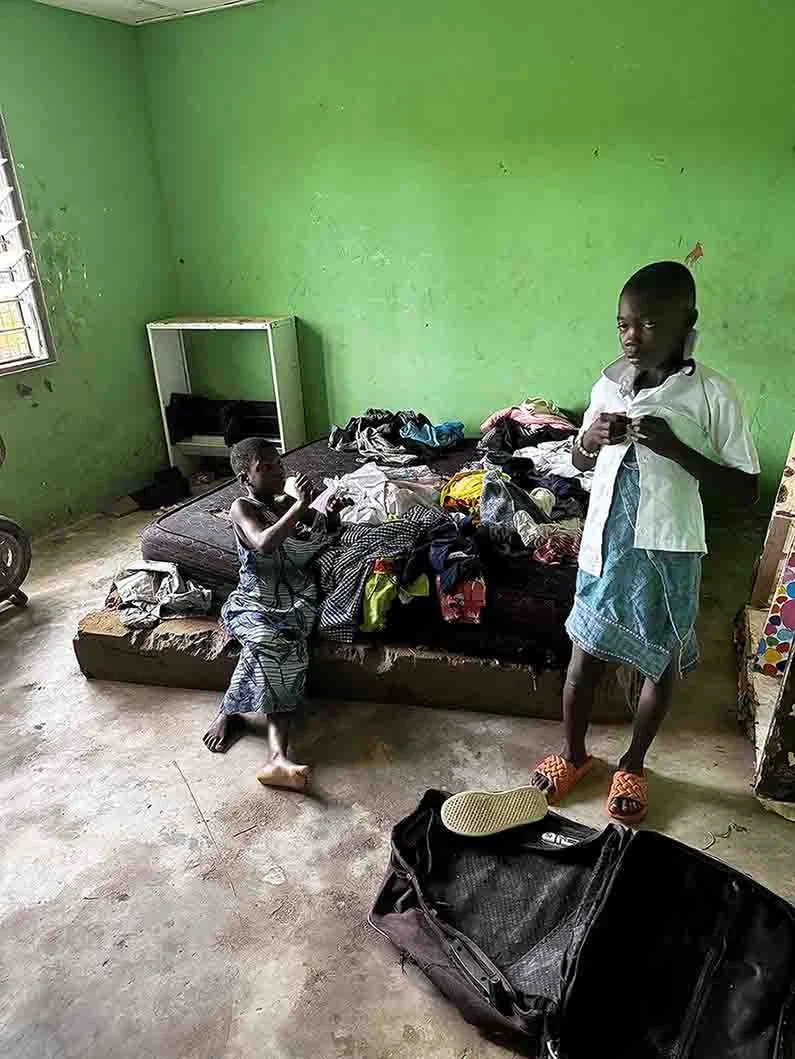
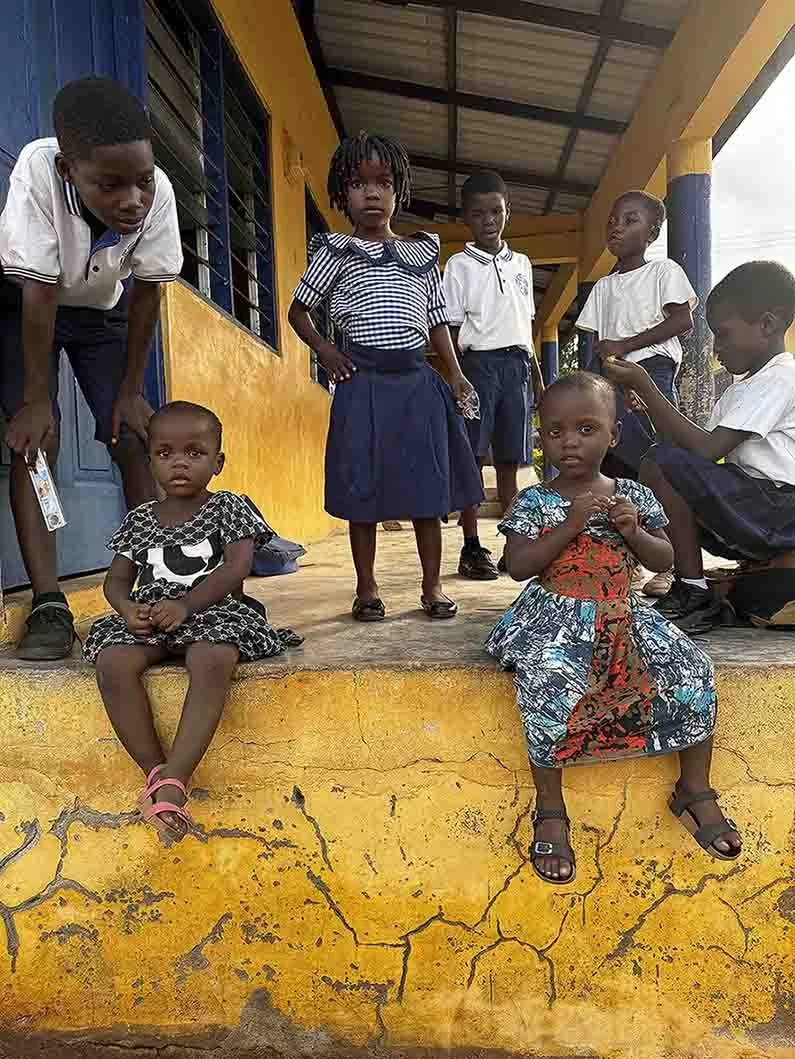
The class rooms at School of Hope and Happy in her new outfit. Maybe this was donated by you? :) (Click on the last photo to see the full gallery)
All the children are required to wear a school uniform, but most of them were torn and mended, zippers missing or broken, probably handed down from older siblings or bought second hand. Blue and white were the colors. One of the younger girls, Happy, was missing her school uniform one morning. The younger kids clothes were laying randomly on a big mattress in one of the rooms and everyone knew exactly what clothes belonged to who. They would fight over items if anyone tried to take something away. With Happy not being able to go to school without her ‘uniform’ I decided to open up my suitcase and gave her a blue denim skirt and a white tshirt out of my bag. At least the colors were correct, and she could attend school.
The bag full of clothes for the children was still sitting in my room waiting to be handed out strategically with the help of the leaders of the home. I was excited to give them the clothes. Clothes that friends had donated to me for this purpose back in Sweden, now finally here in Ghana!
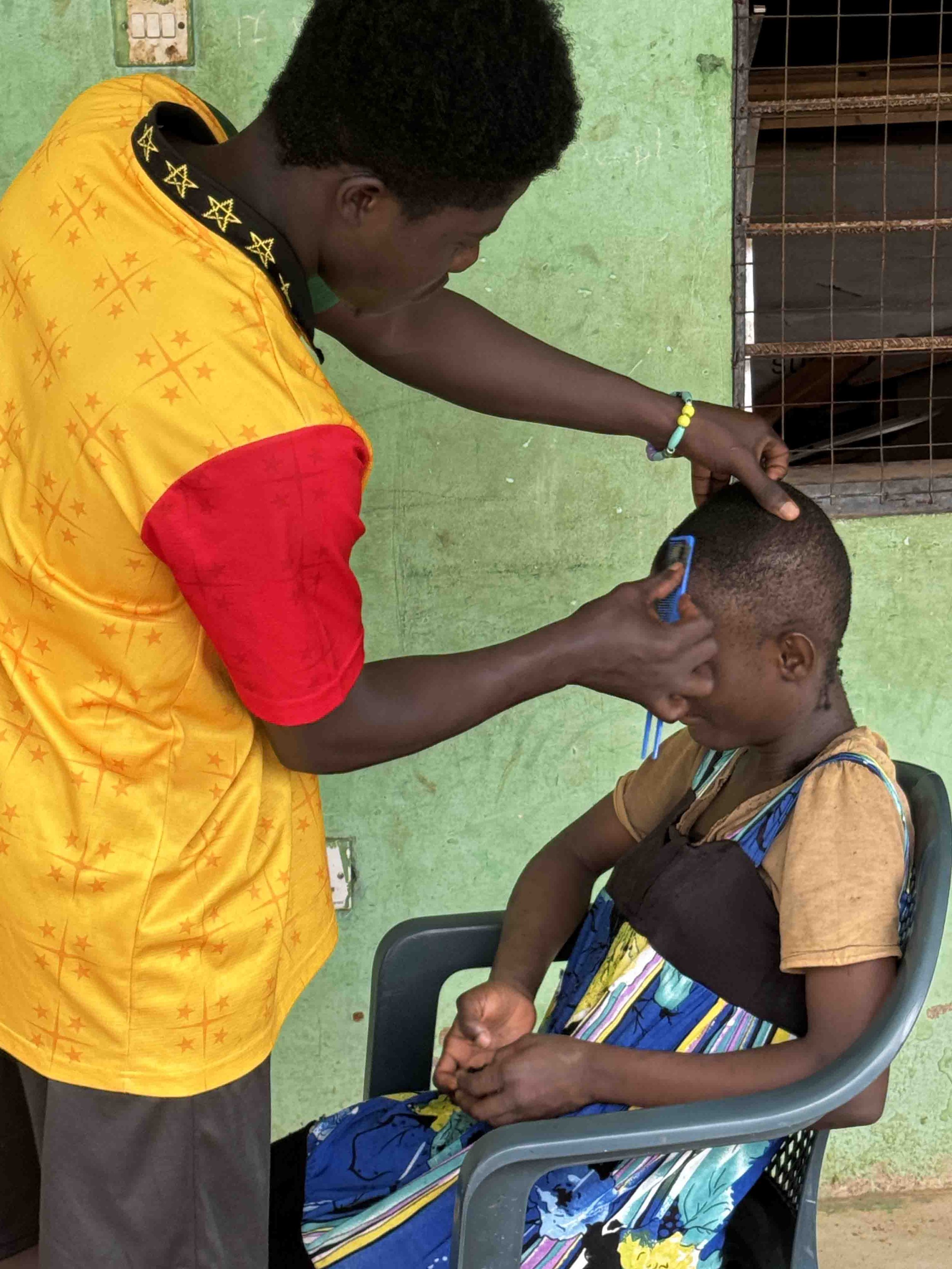
During breaks they braided my hair, wanted to take pictures with my phone and watch them (“eeeeiiii!”). I taught them how to fold paper into a “loppa”, whistle with a grass straw and speak Swedish. They taught me how to fold butterflies, speak in Fante and what foods they eat. We talked about soccer (both Ghana and Sweden in the world cup!) and did hand clapping games.
Not every classroom moment was easy, though, and I want to tell it straight rather than smooth it over. Children get tapped once or twice with the teacher's stick for being too loud, not sitting straight or not knowing the answer. This is still legal in Ghana and it wasn't my culture to override. One teacher said jokingly to the students “That is not correct, but I will not tap you today since we don’t want to make Madame Jenny upset”. He was right, this was hard for me to see and I felt sick and deeply saddened every time a child was ‘corrected’. I think the children had extra appreciation for me being in class this day.
Back at the Home for Hope, I started noticing the shape of how the kids actually live together. The oldest ones get the plastic chairs in front of the small TV; the younger ones sit on the stone floor or the old torn mattress on top of a rubble of wooden planks — that's just the order of things, and nobody questions it. What struck me more is that the older kids aren't just enforcing a pecking order, they're raising the younger ones — showing them how it all works - the water use, the chores, how to behave around a grown-up, and to some extent how to care for the younger ones. There is noone holding a proper adult ‘loving parent role’ necessarily and yet there is love — it's just peer-to-peer instead of top-down, like a campsite entirely run by the kids themselves. From as young as age 2 (!) up to 22. Somehow, they make it work.
The younger children loved to be carried (on the back) and hugged. We would walk around and sing songs. I wished I could clone myself to give everyone as much attention as they needed, but I was shared by 30 or so children and even more during school hours. Two of the teachers had their babies strapped to their backs during school, or let the students walk around with them. Part of the daily school life here, where the mothers bring their infants to work. There was no money for day care and the babies had to be fed by their mothers.
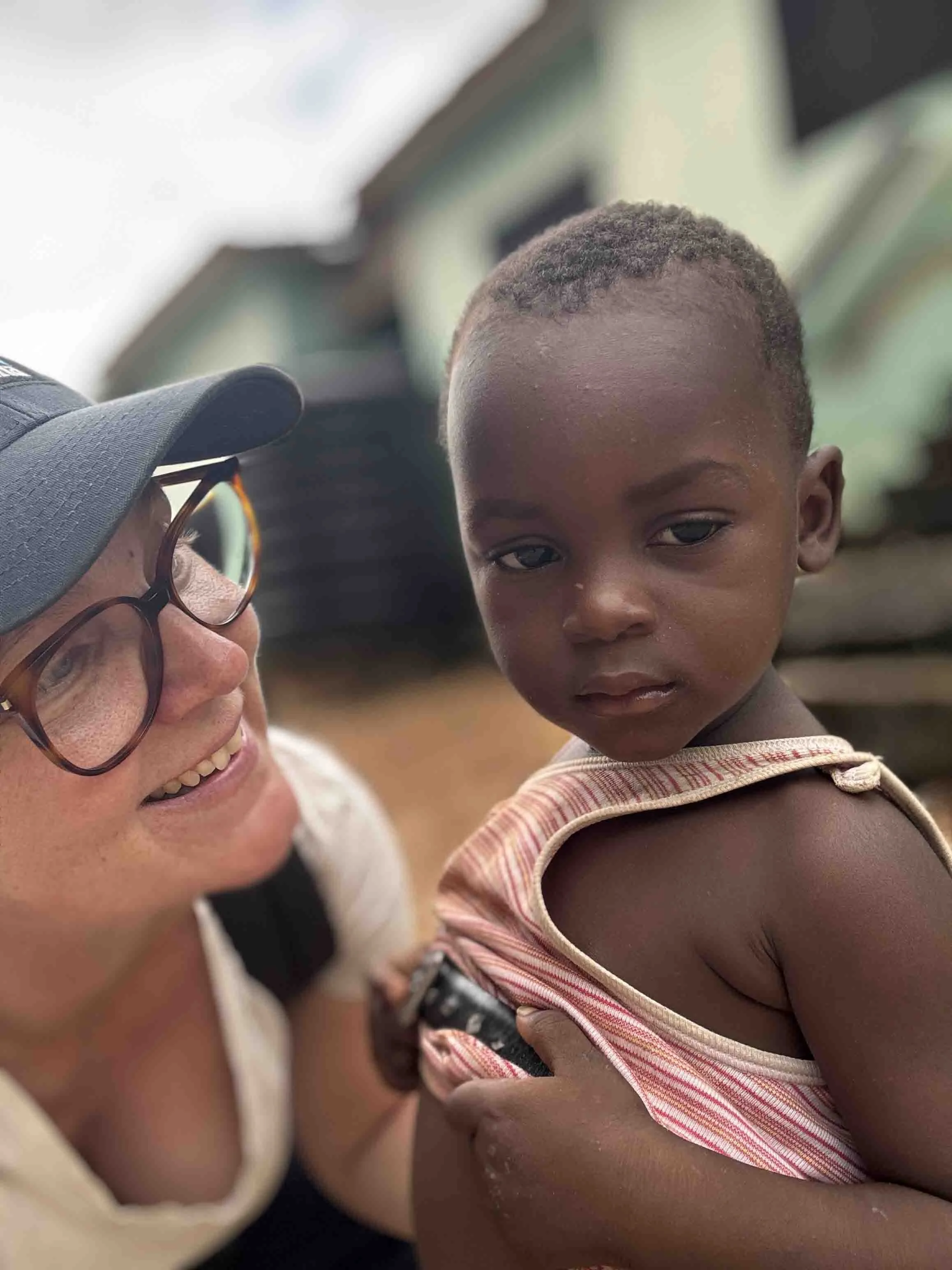
Amazing little Yao showing off his belt.
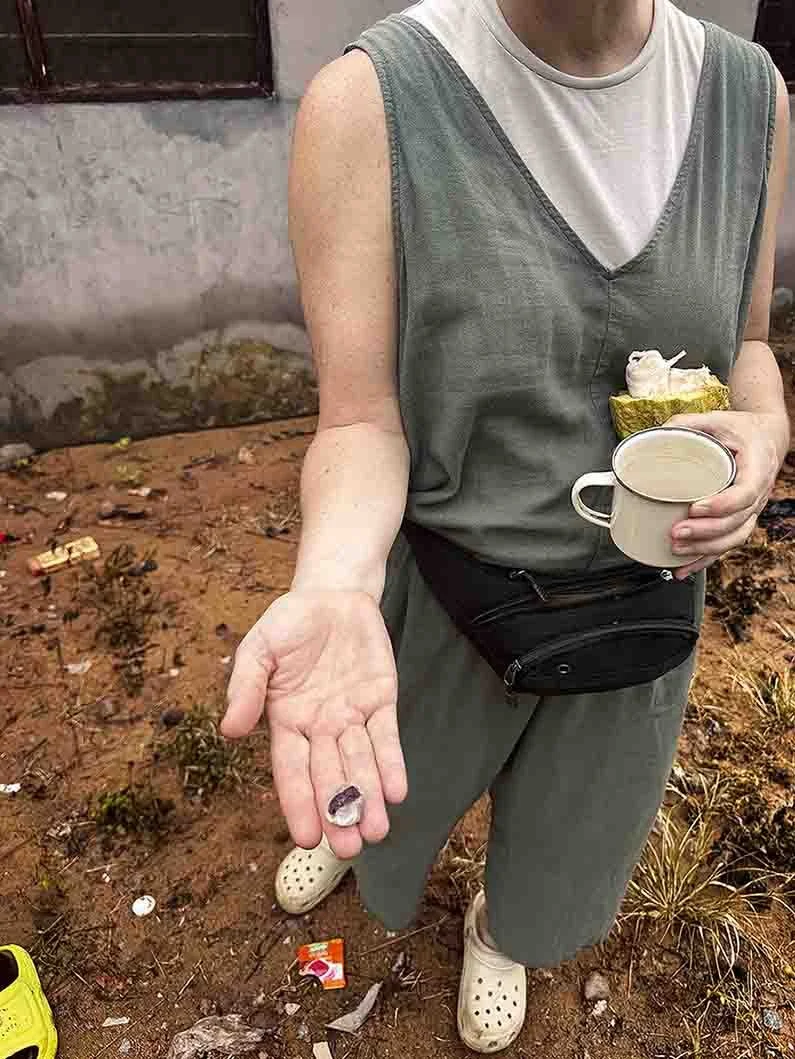
As I got to know the children more we had some deeper conversations. Some of what I learned there was harder to sit with... Two of the sisters at the home have twenty-six (26!) siblings between them, from their father and several women / wives. I learnt that more children is read as strength and means more help around the house. However, with the current situation of not having means to provide for a big family a lot of children end up homeless. Ghana reports a 22% poverty rate. Poverty is predominantly a rural issue, like in Gomoa Tarkwa about 3 hours from Accra. Most of the country’s poorest citizens are small farmers, just like the ones I met. Most of them rent land from land owners and pay by giving half of the crops to the land owner. Lots of manual work but they lack access to modern equipment to scale up their businesses. I ask questions. Could they start growing cacao instead of cassava to have smaller items to work with but with more value, would there be buyers for this? I realize I know nothing of farming or the value of produce. I didn’t even know what a cacao bean looked like until the children showed me and that you could enjoy the outer layer of the bean. I kept taking mental notes.
Harder still to look at is the lack of functional infrastructure — the same rain that makes everything grow so fast also tears the roads apart and cracks the stone-and-concrete homes, year after year, with no real system in place to catch either. More than once, driving through it, I caught myself thinking it felt like sixty to seventy years of distance between where they're standing and where I get to stand by birth. I don't have a conclusion for that thought. I'm just writing it down as I’m reflecting upon my experiences.
One of my first nights I couldn't finish my very generously portioned dinner and gave some of it to a few kids hanging out outside of my room. Their faces lit up and I realized how much they must love getting food that is out of their ordinary every day where the menu is very limited. Or as one of the teenagers Emanuel said “In Ghana we love everything!”. :) I ended up giving them half of my food every day – omelette sandwich for breakfast, a plate of pineapple for lunch and noodles with vegetables and eggs for dinner. I had special foods since my stomach wouldn’t be able to muster the bacteria in their water and risk getting ill. They always brought the container back to me, washed and with a big smile on their face.
The childrens cook, Miss Mary, made all of their food over open fire — fufu, corn, porridge, a red sauce that turned up again and again, and one afternoon, Mary had found a gigantic snail in the farm! 2 year old Yao carried it proudly down to the kitchen. No electric stove, no shortcuts, and food still appeared every single meal – breakfast, lunch and dinner. Thanks to the Home for Hope organization.
Yao is a name given to him as he was born on a Thursday, like myself. The female version is Yaa. In Ghana, children are traditionally given "day names" based on the specific day of the week they were born. These names are not just labels; they are tied to cultural beliefs about the child's soul, destiny, and expected personality traits: Adowa / Monday / peace & calm, Kweku / Wednesday / wit, Kofi / Friday / fertility & charm, for example.
Another day the girls Jessica, Gifty and Naomi wanted to make me a goodbye gift to share with my children at home - toffee made of sugar, coconut, and ginger. We made it over the open fire and rolled and cut it on one of the wooden multi-use beches and it turned out to be delicious!
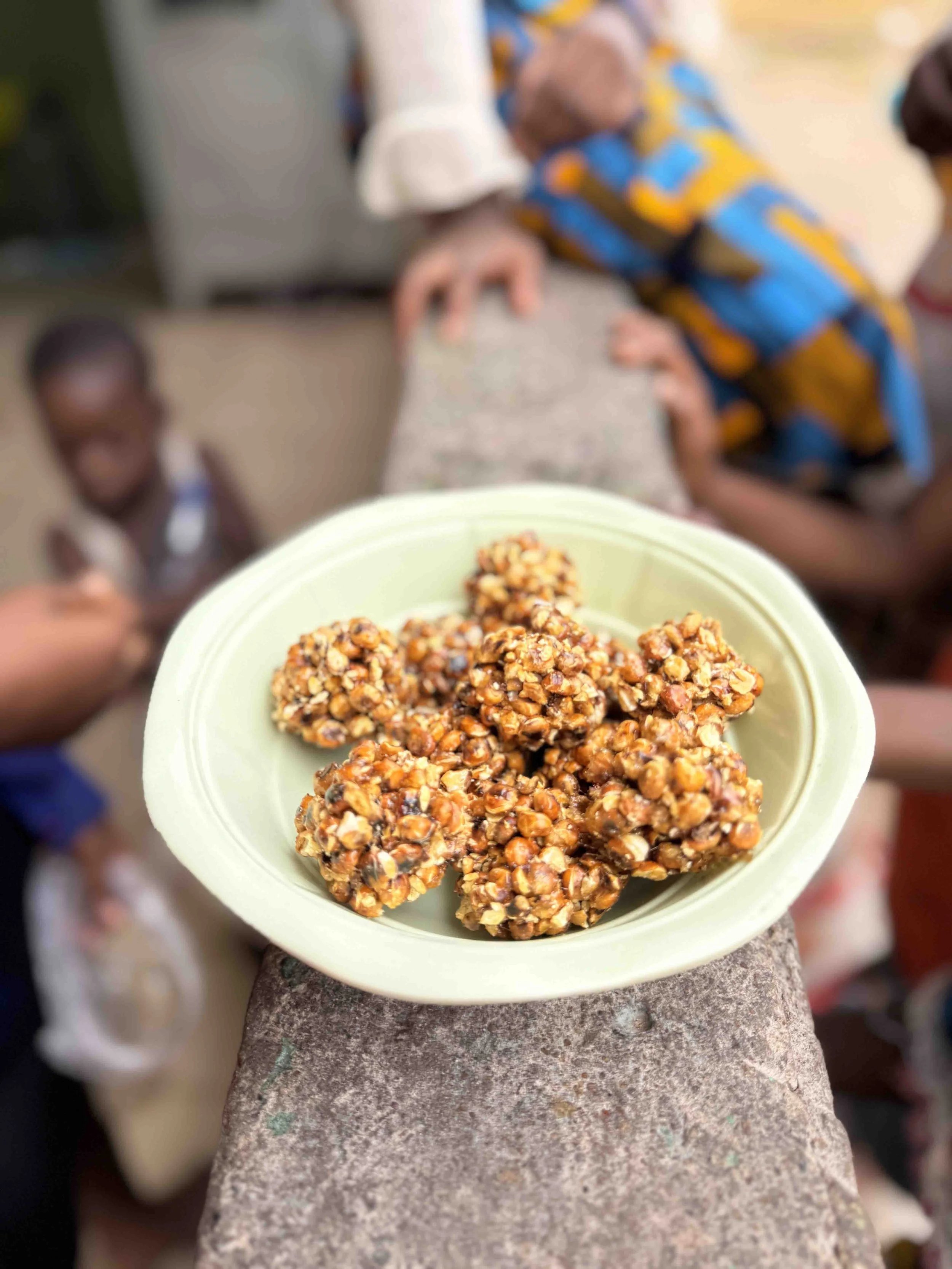
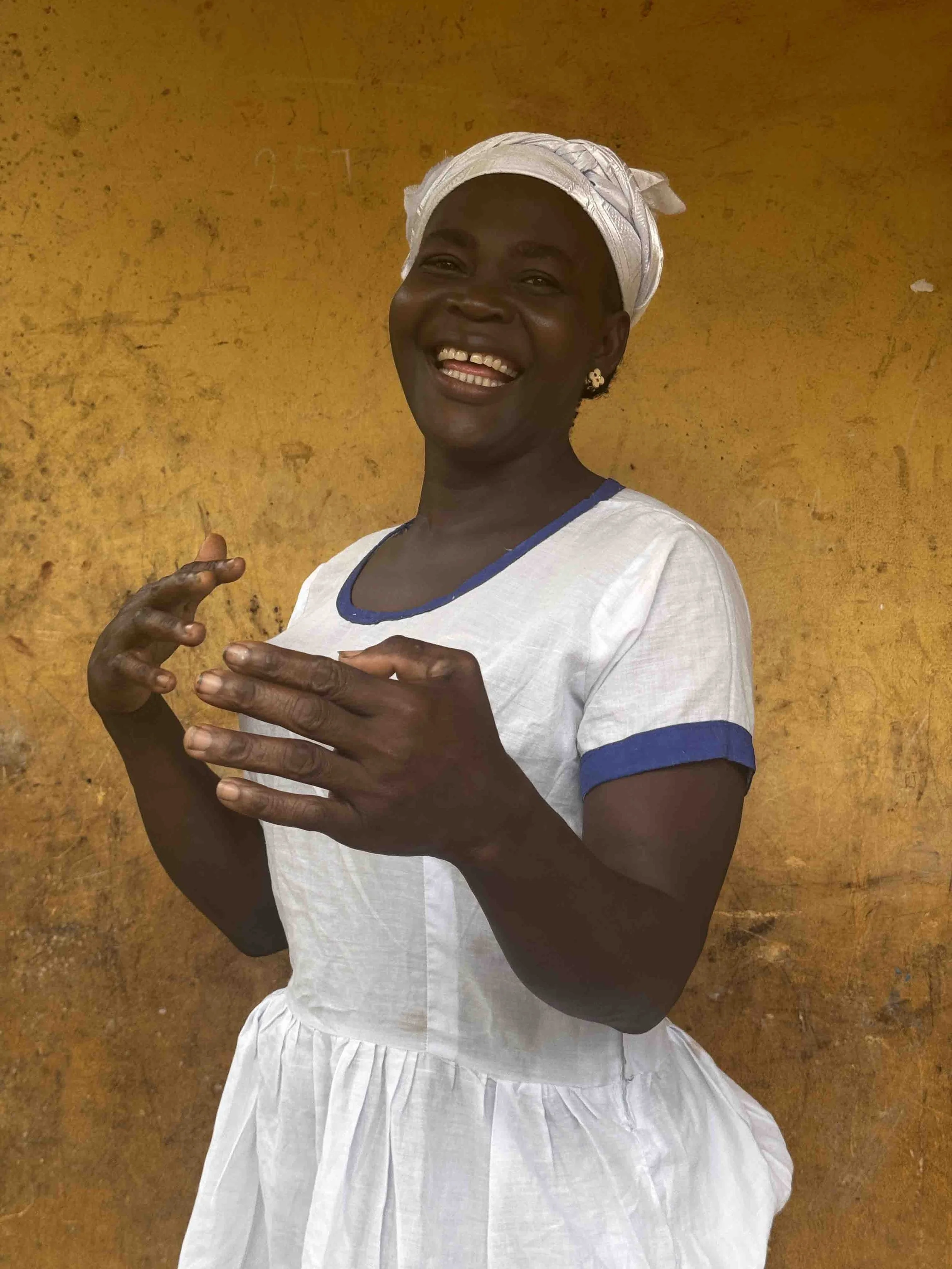
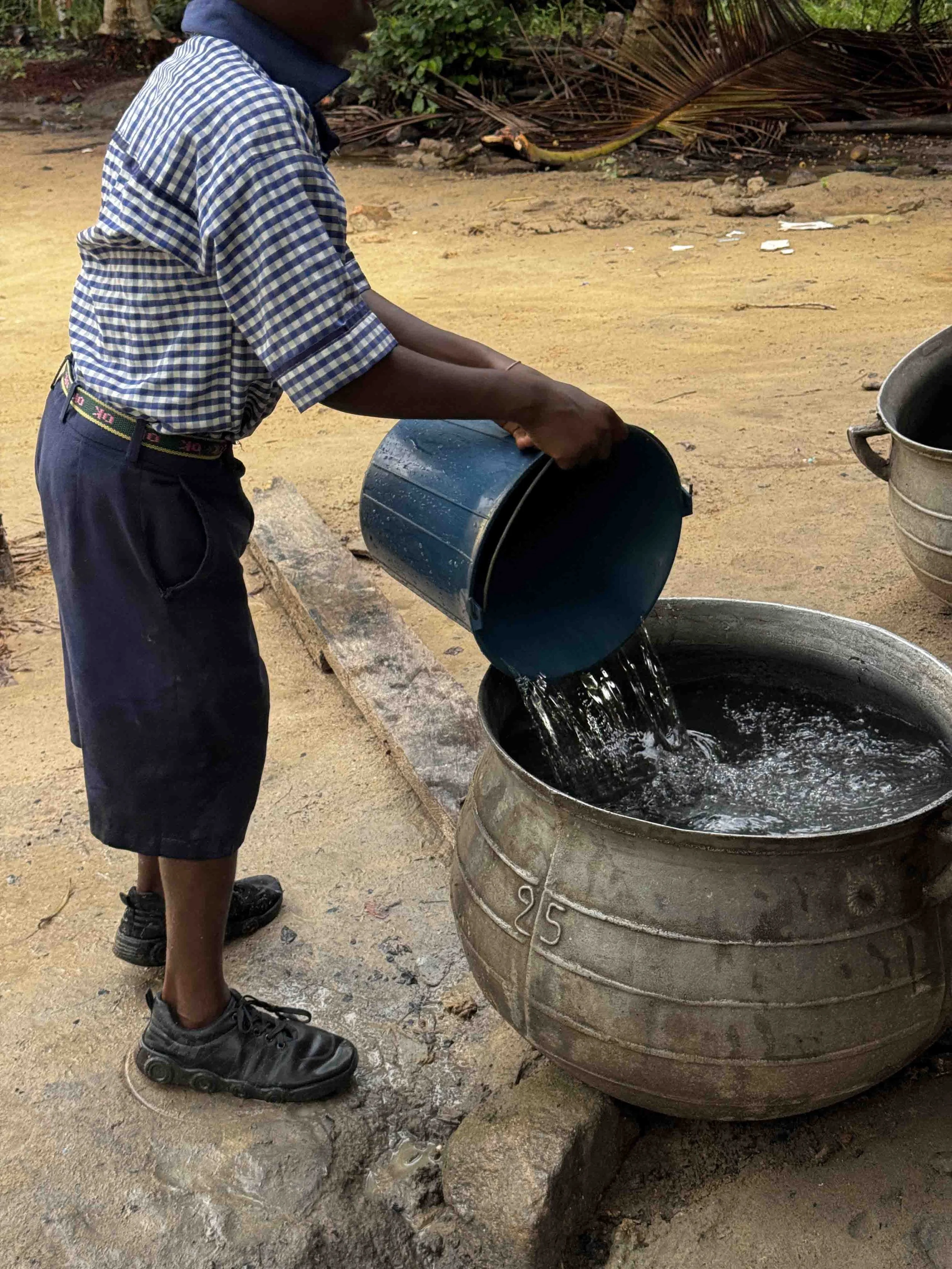
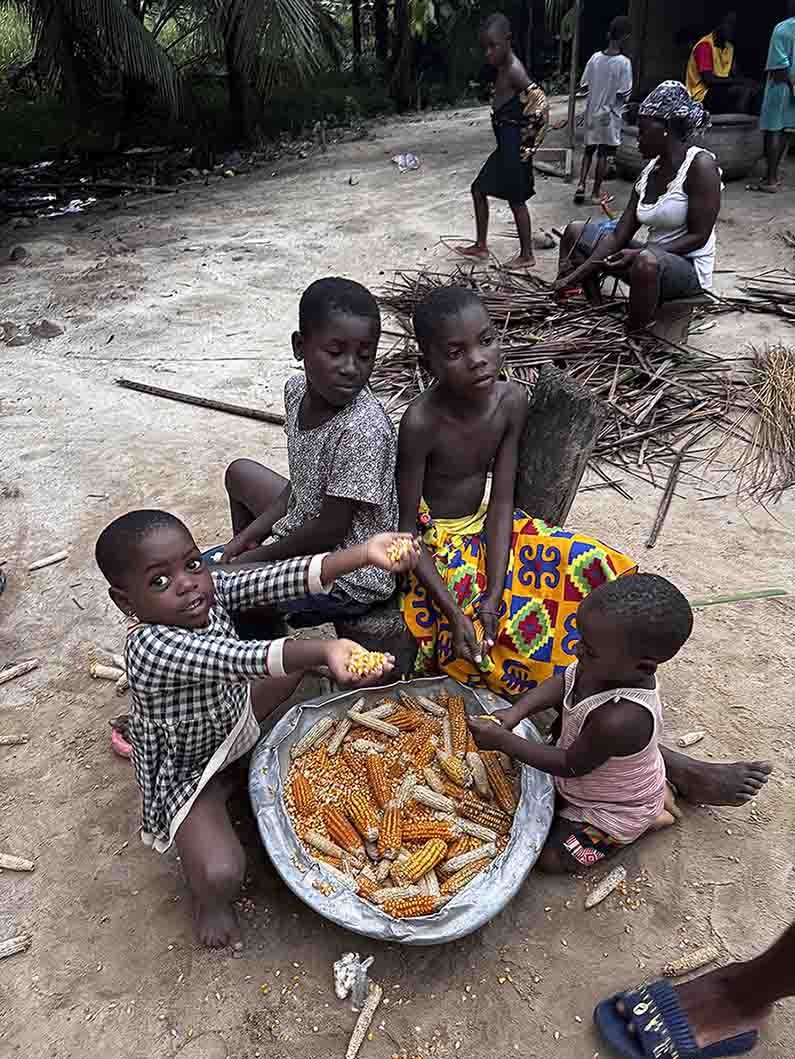
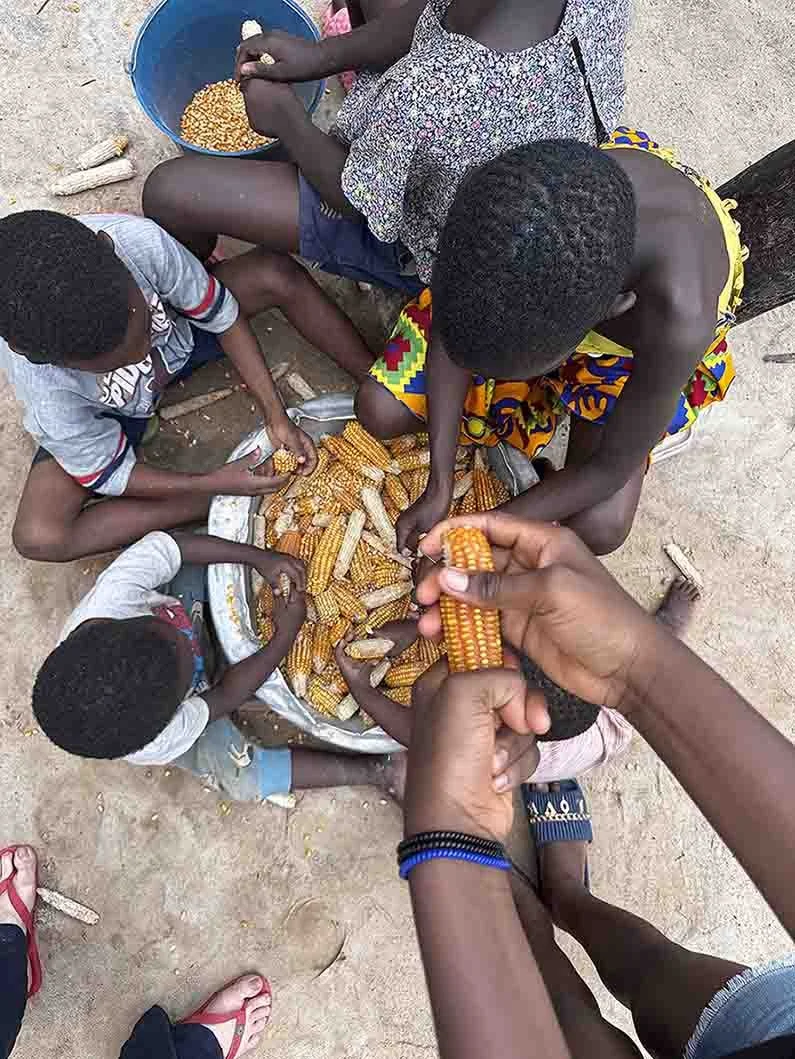
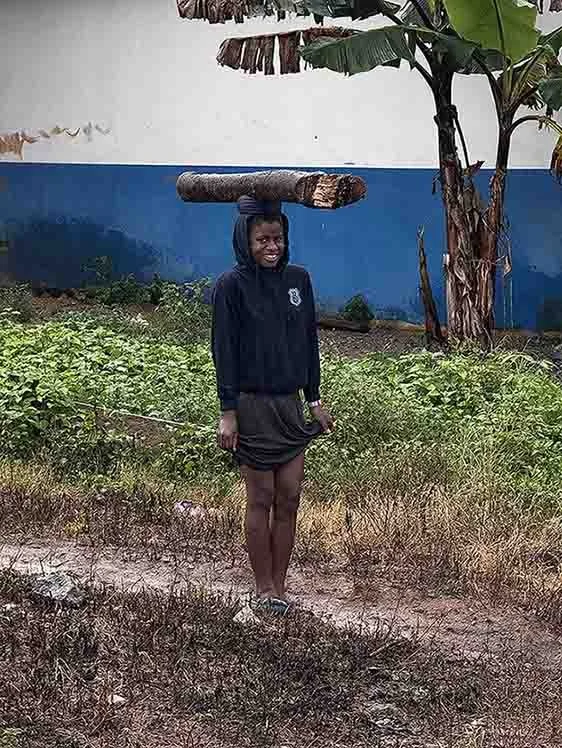
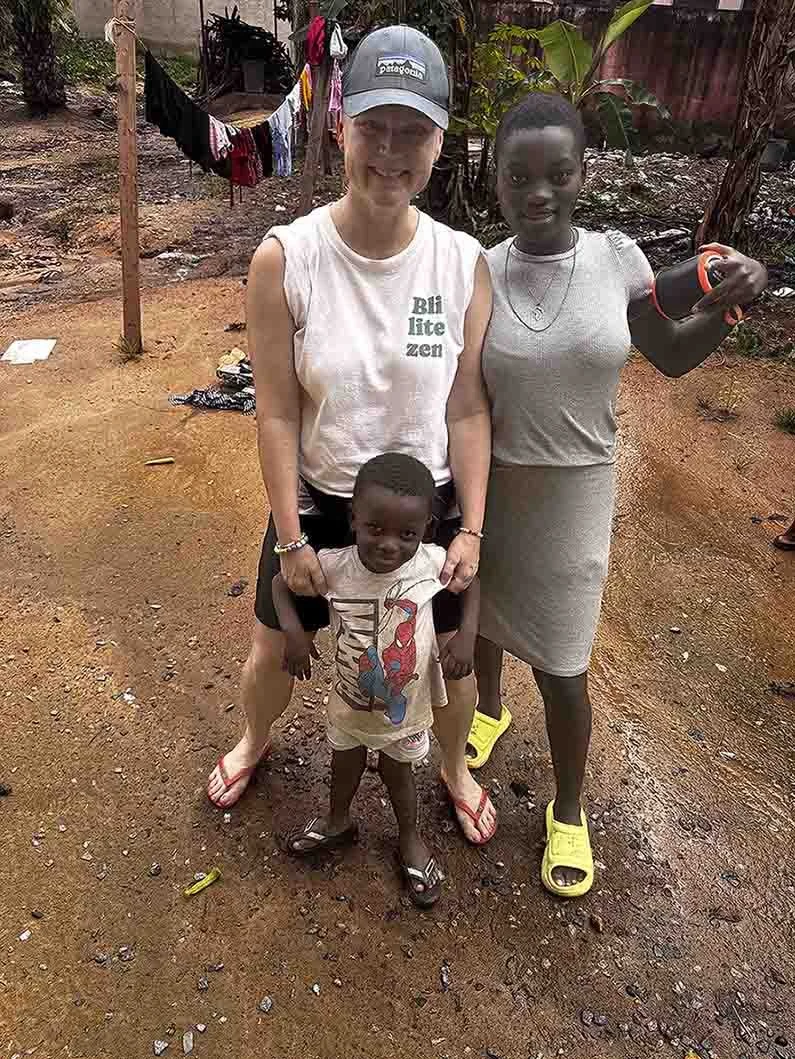
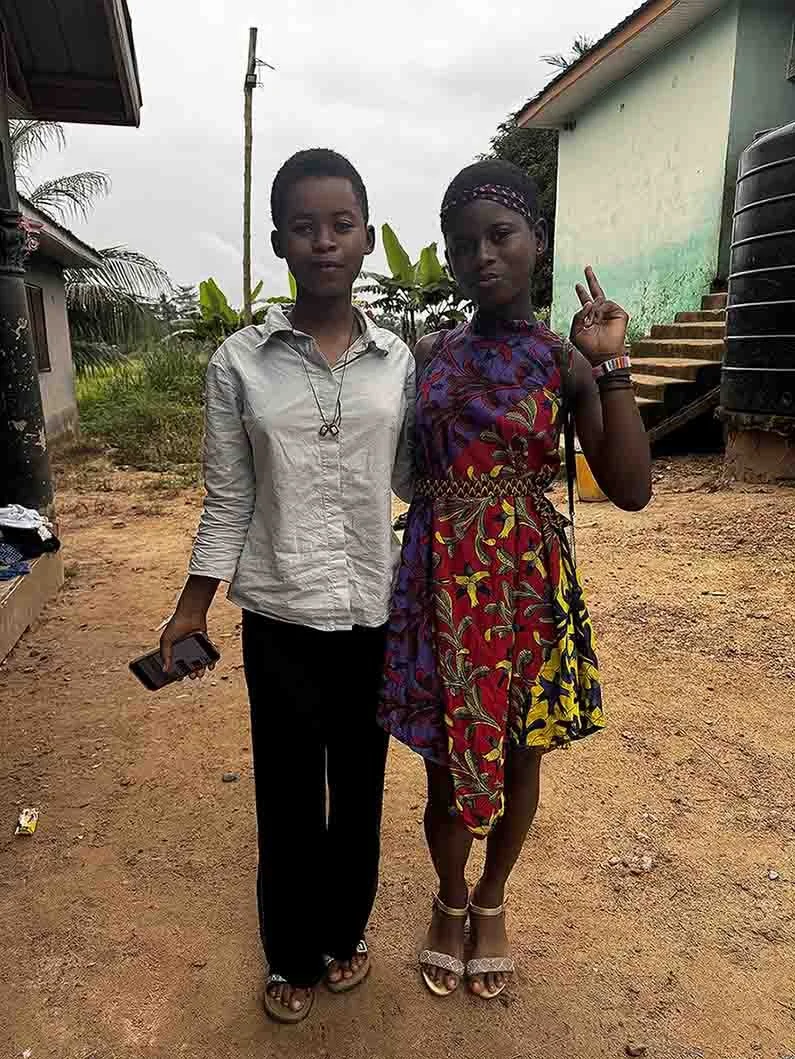
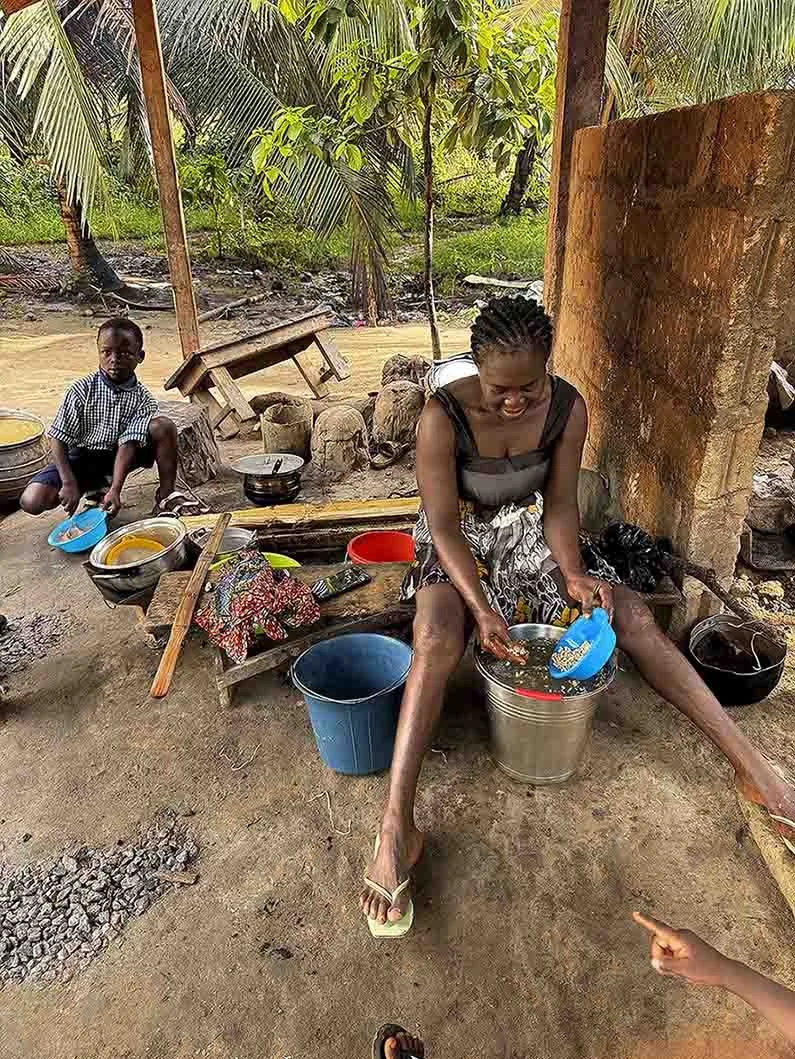
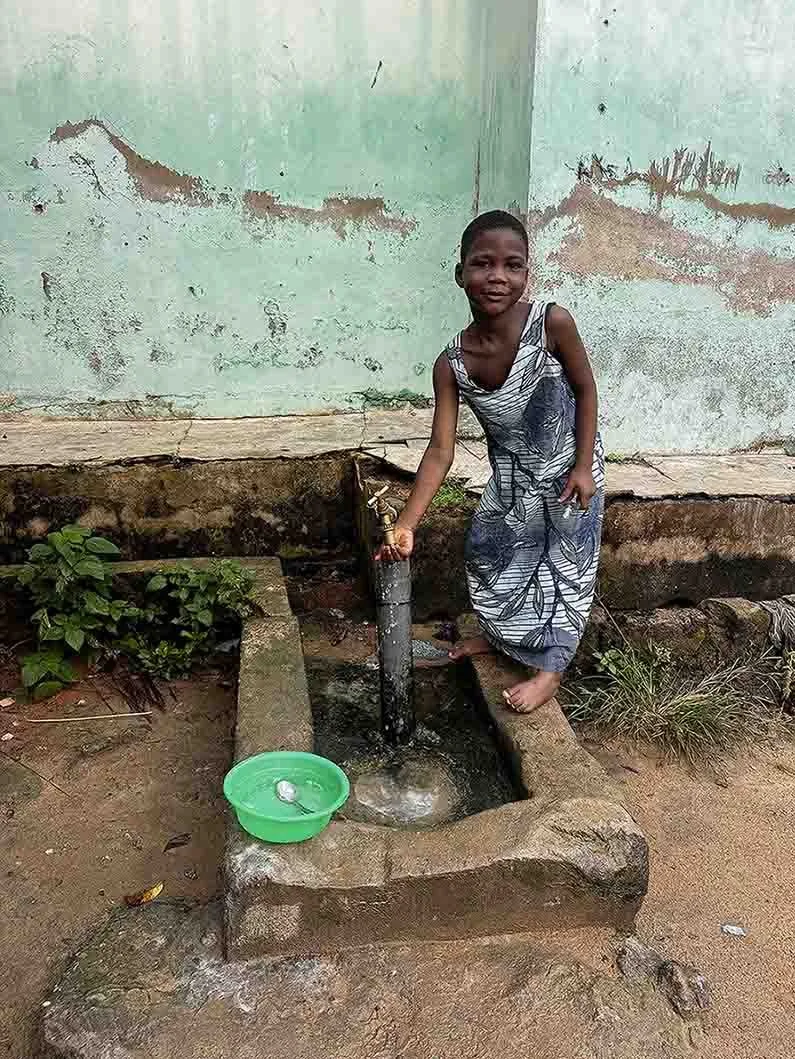
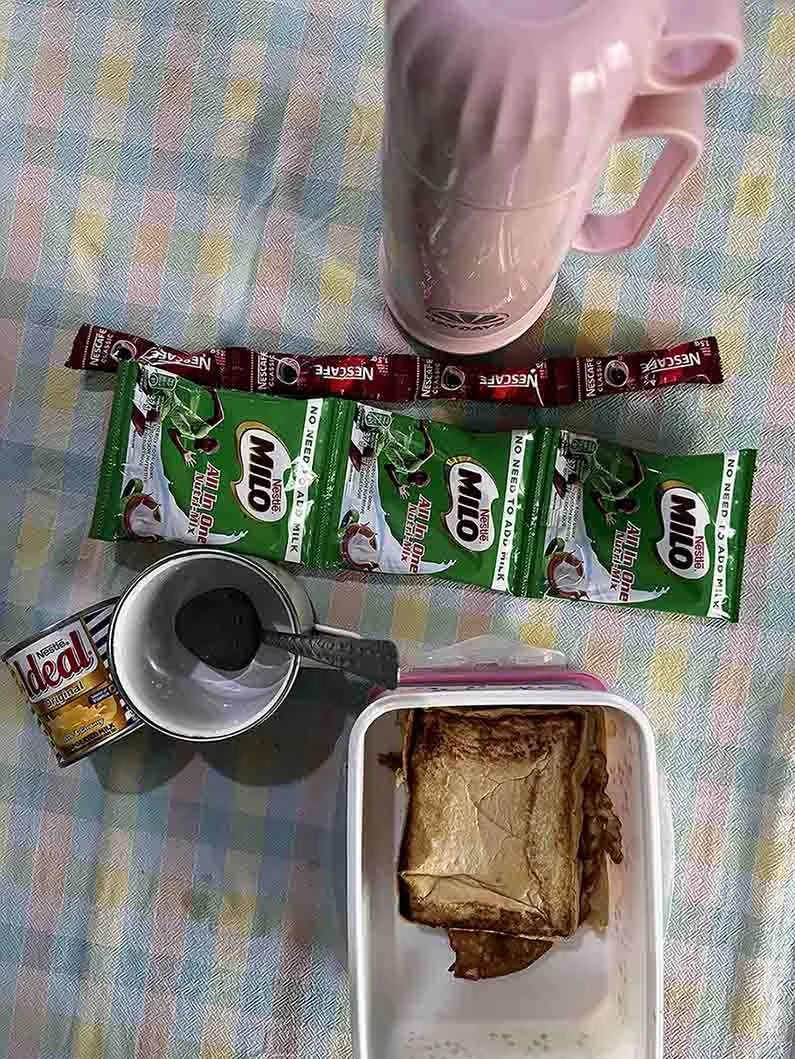
The children’s cook, Mary, happy to take a photo. Children helping out with daily chores such as fetching wood, prepping corn and getting water. My breakfast shown as well.
At Home for Hope everyone learns to mend for themselves, early. The kids wash their own clothes by hand and dry them over the gravel patch in the garden, keeping a tight, careful hold on the little that's theirs — a set of clothes, a couple of toys, a notebook, a soap and hairbrush. They walk to the farm for produce and firewood, and the fifteen minutes into town in 30-plus-degree heat or in rain that turns everything to mush in minutes — whichever the sky decides that day. During the power and water outages, which happened quite often, we would fill buckets with rainwater for the next day's shower or wash - it was brilliant not having to go down to the well. I watched the smaller kids bathe outside with a long piece of netting twisted into a sponge, then moistured with a skin cream until their skin was shining.
There is so much beauty in Ghana. The beautiful people and their inviting smiles to start. The green lush surroundings. The always present sun. The abundance of wild fruits. Some mornings the yard smelled like lemon blossom from the tree before the heat set in. The geckos that startled me every day were quietly eating the mosquitoes off the walls and kept me safer from Malaria. As soon as I got a mosquito bite the younger children would look at the bite with sad eyes and say “Oh, no… Malaria!”. I told them I was fine (well, per my part of the worlds standard I had taken 3 different vaccines and preparatory medicines).
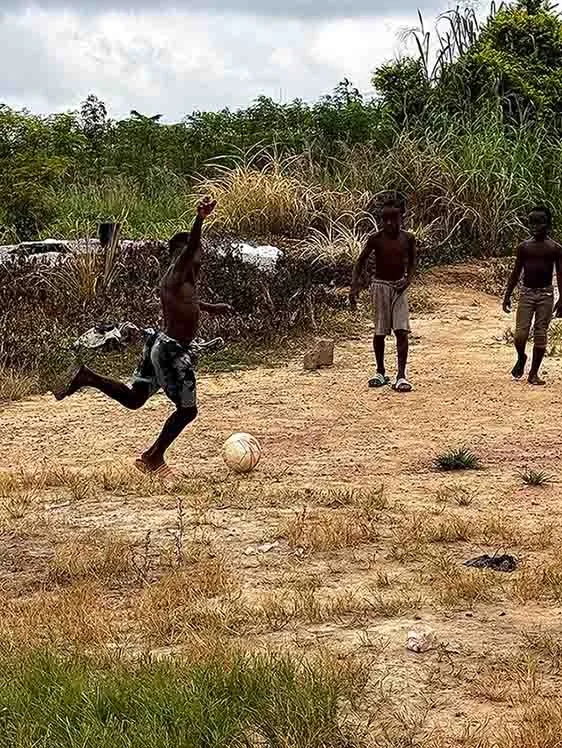
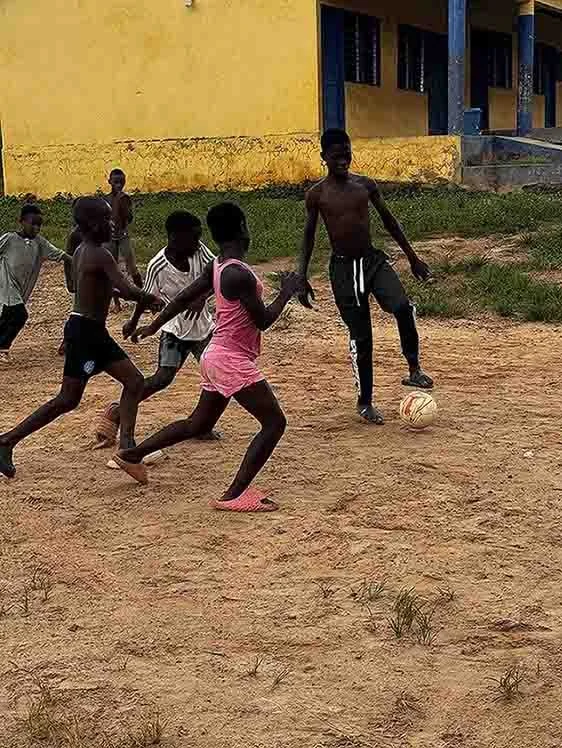
The kids would turn almost anything into a toy: a bottle cap, a bit of wire, a flattened tin can, endless invention out of nothing. When one of the children had an infected cut in the armpit, one of the older girls treated it with an anti-inflammatory plant picked from the yard — based on knowledge passed hand to hand instead of bought. “Don’t worry Madame, I’ll be fine.”, she said comforting my worried look. And I wished I had skills of a nurse or a doctor to be able to assist them better. I didn’t dare give to give them any of the cremes or pills I had in my room in case I would get sick. Infected eyes on a smaller child was wiped away by an older child’s t-shirt. A t-shirt too big was given to an older child who could use it better. Soccer was played with one closed-toe shoe each, they didn’t have enough shoes and one shoe was better to play with than sandals or nothing. A cookie or a piece of Swedish candy got a reaction like I'd handed over treasure. I had brought a bag of Mariannes from Sweden and they absolutely loved that minty-choclate treat. And they are loud, constantly, gloriously loud — singing, arguing, laughing, all of it at once, all the time “eeeeiii!”. I loved every bit of the noise and often caught myself smiling so much it hurt.
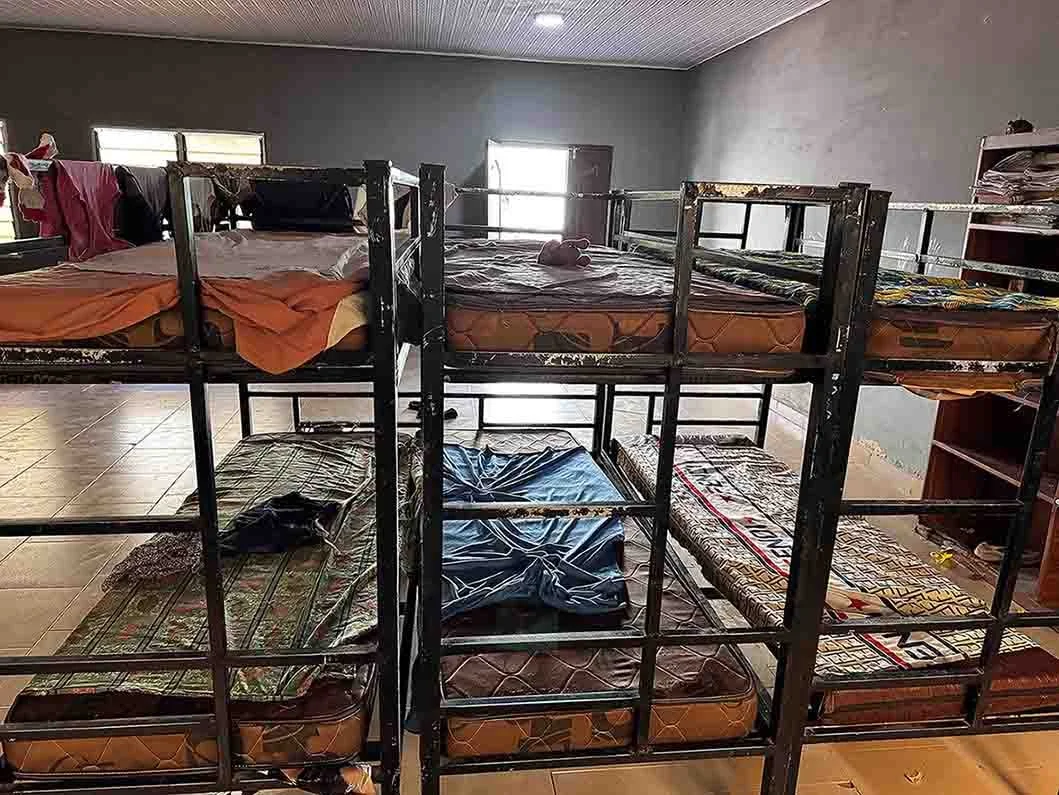
Day trip – Swedru. One afternoon John took me and two of the teen age boys to Swedru, a bigger town over an hour away on brutal roads. This day it was pouring down and the cars windows wouldn’t stay shut. We all got drenched. We wanted to buy the mattresses so the children could enjoy better sleep — the ones bought with money raised for exactly that. Seeing it happen in real time, watching a donation turn into an actual object a child sleeps on that same week, is the whole reason I'm writing this at all. So you can understand how important and generous your donation was. John said to personally thank you all from him. So, thank you, thank you, thank you. Your contribution makes a huge difference.
In Swedru we also bought underwear for the younger children, soap and some sweet treats. I wish I had the opportunity to buy them all new shoes, which they all needed as well, but we had to prioritize.
That afternoon we gave them the mattresses, clothes and toys – and everyone was filled with so much joy. For those of you who donated money, clothes or toys – know that they were very well received and I took as many photos and videos I could of their happy faces. I will show some here. You really made a difference in these people’s lives.
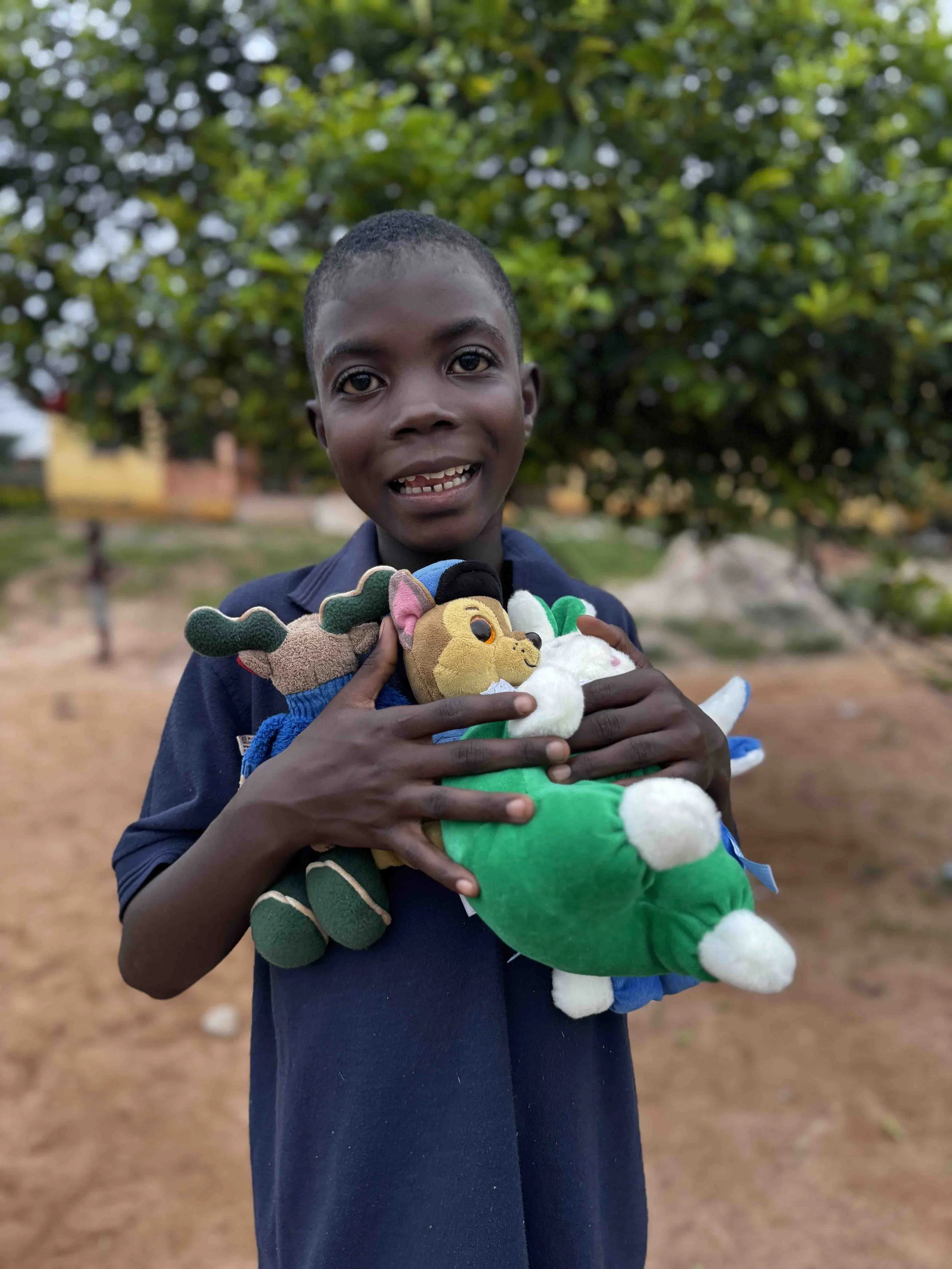
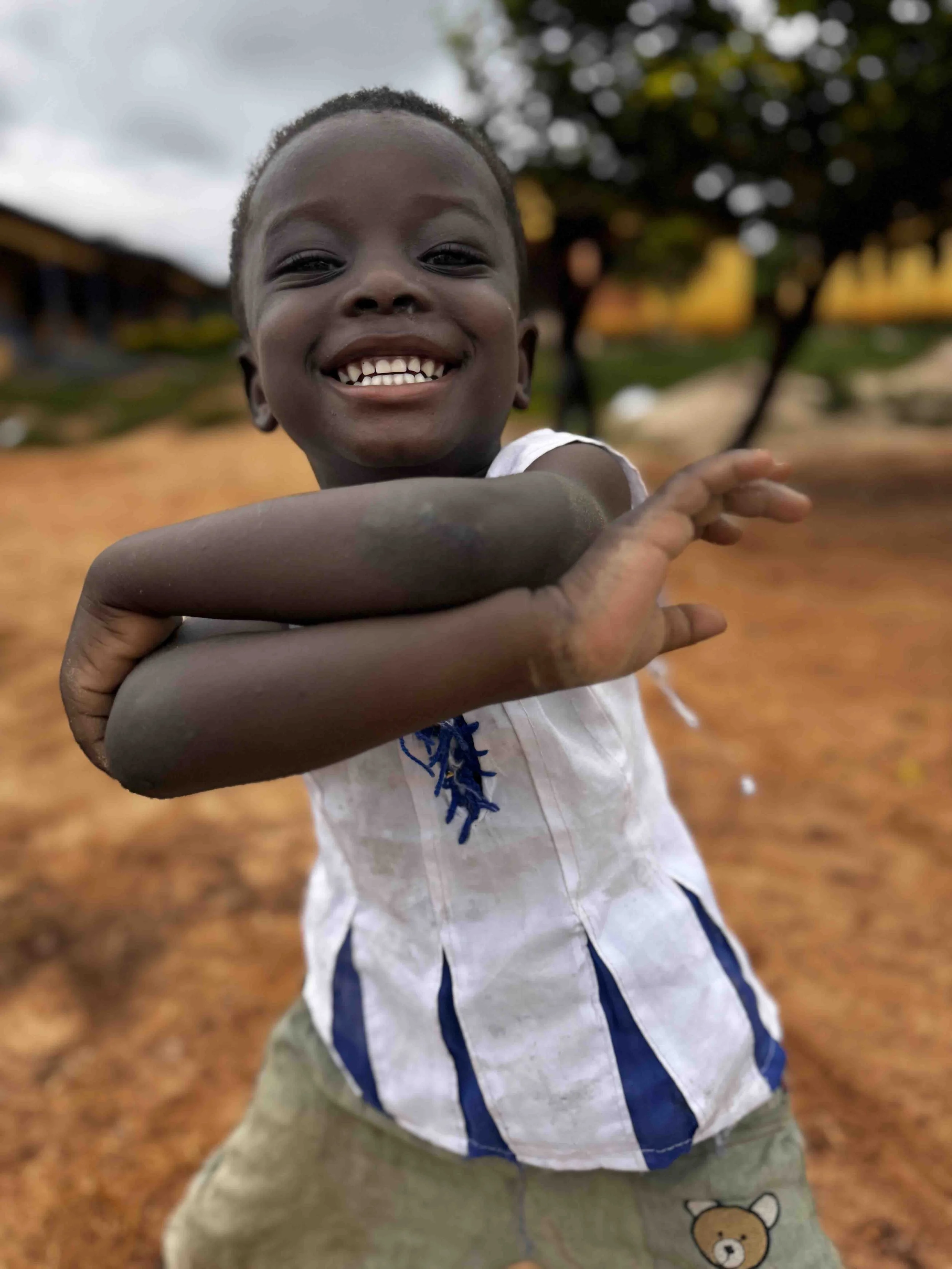
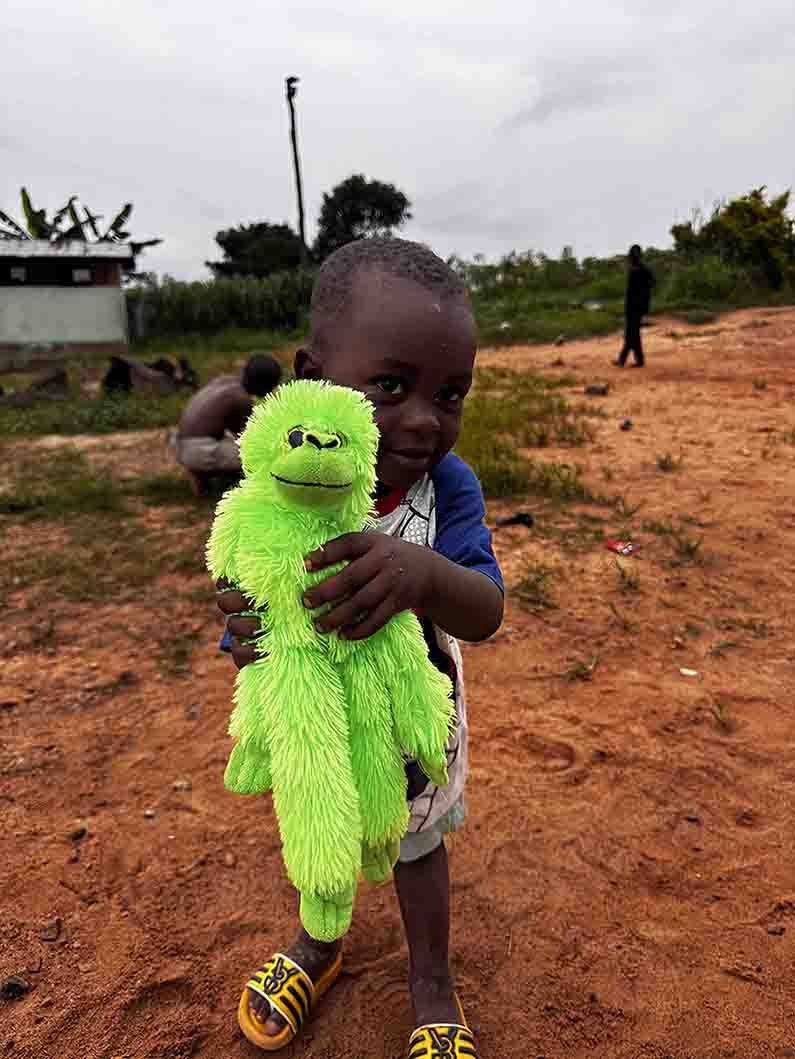
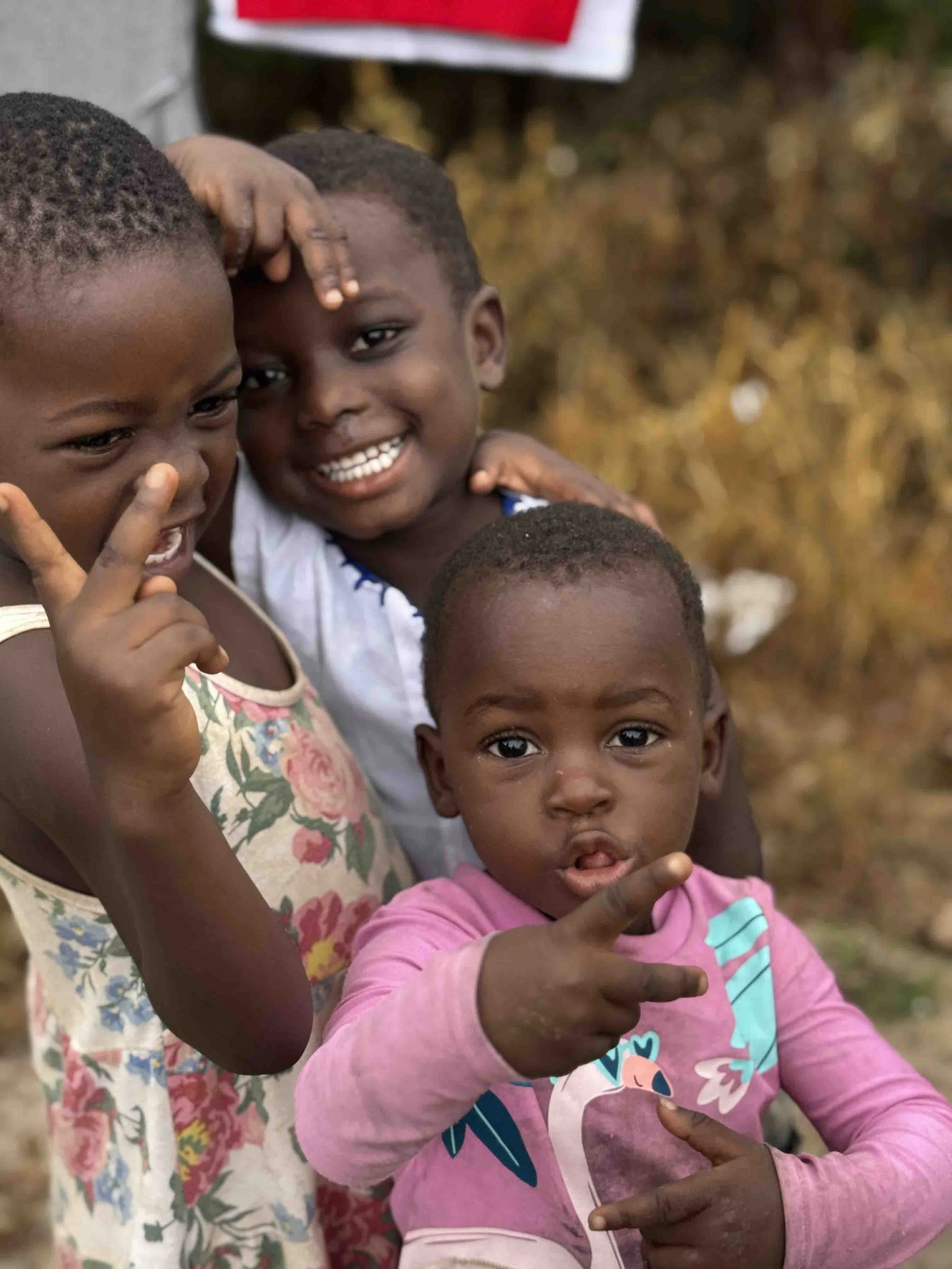
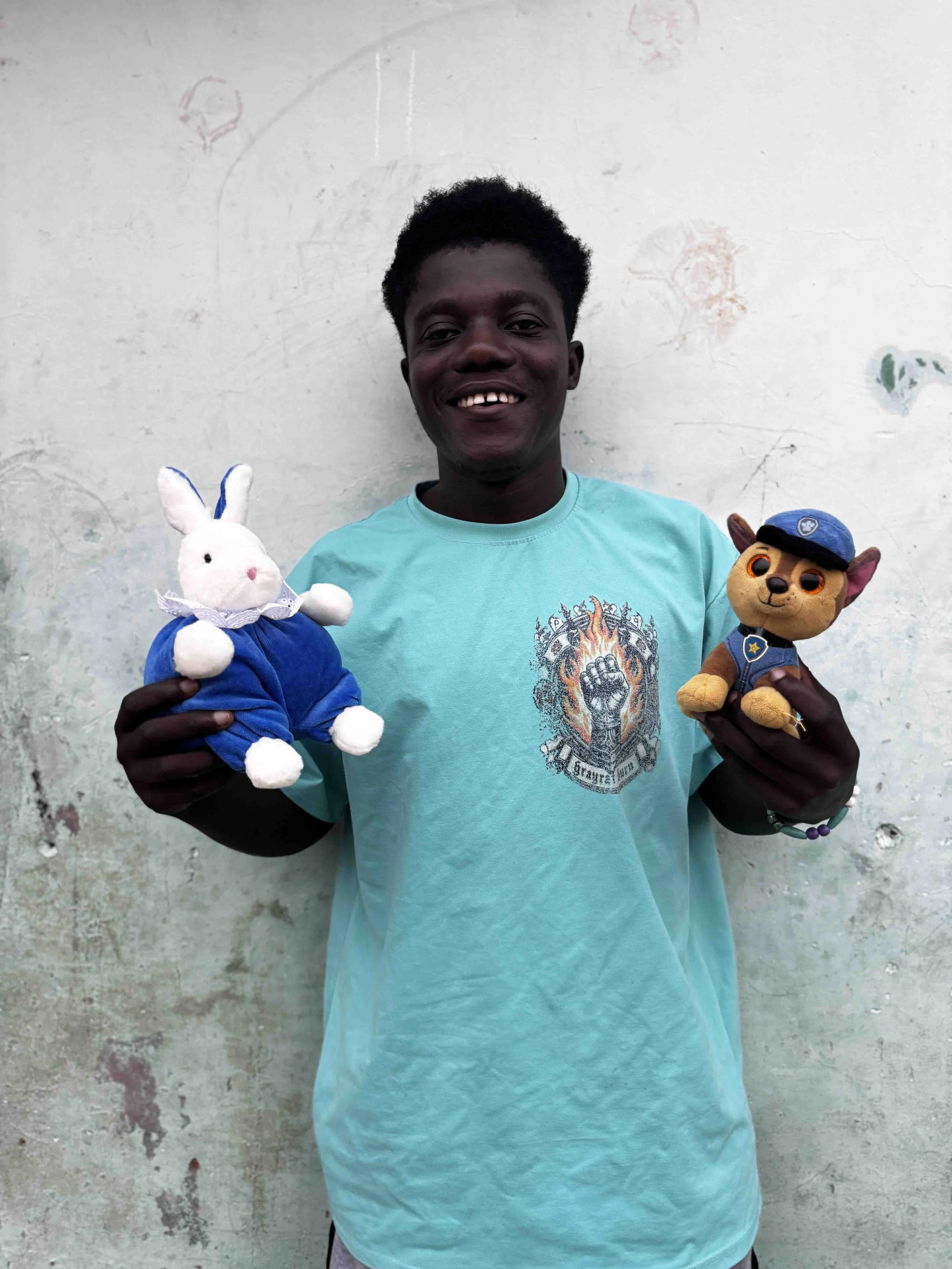
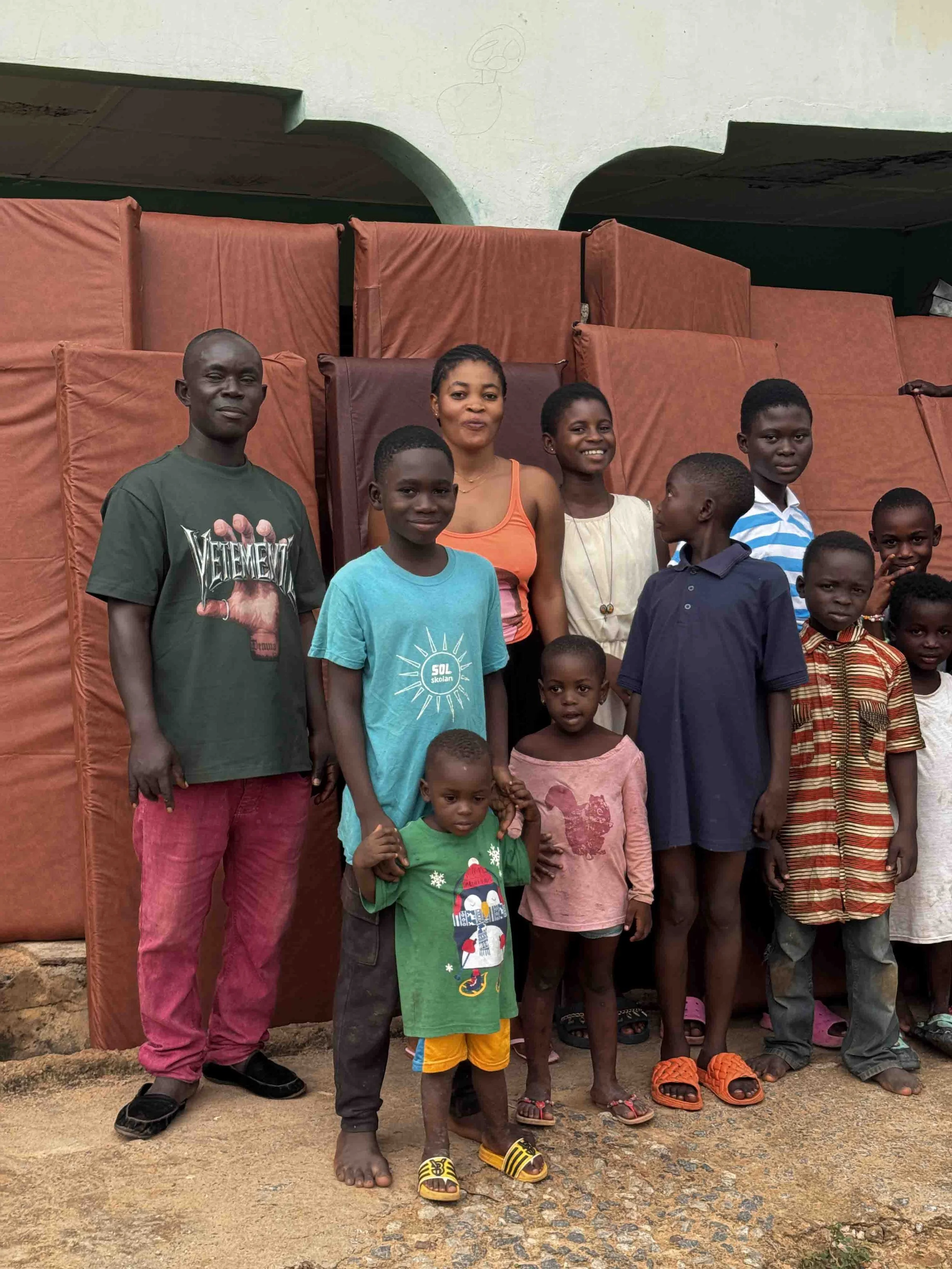
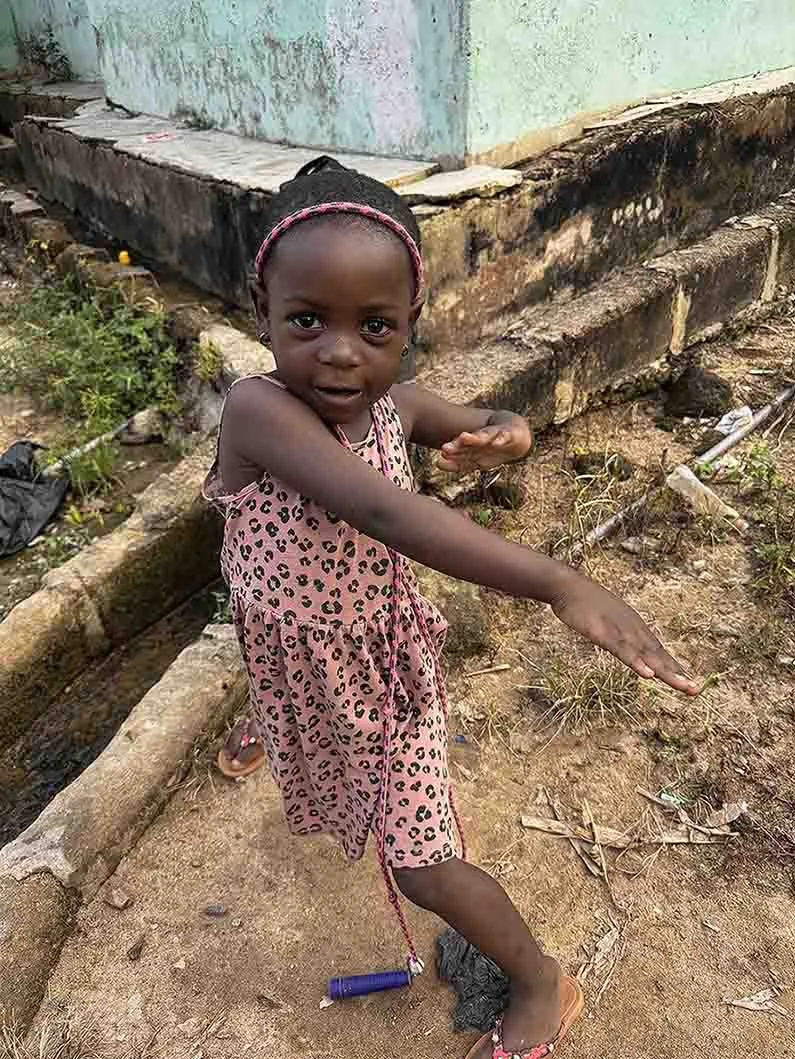
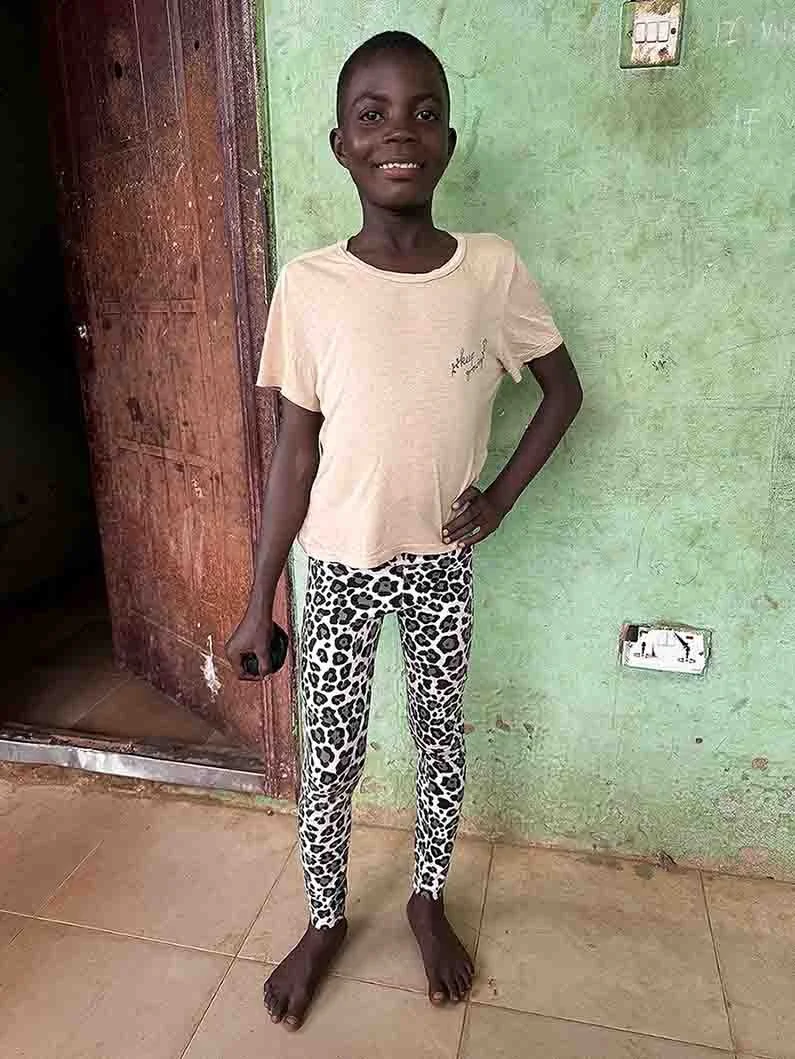
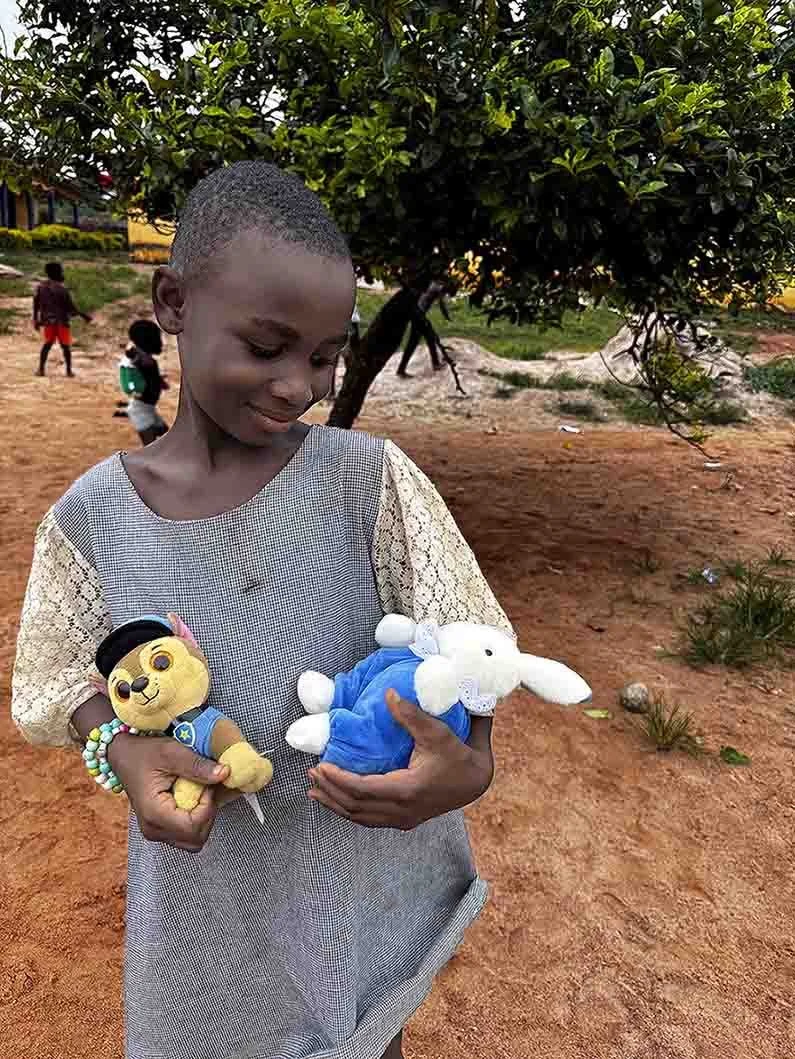
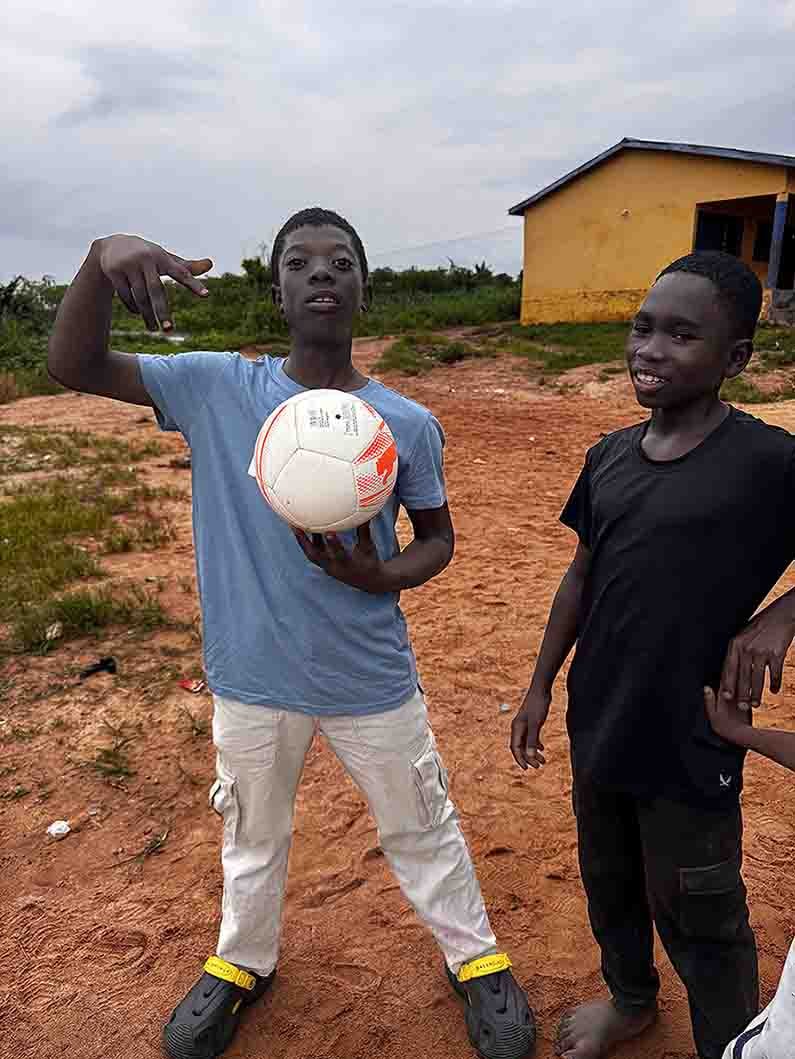
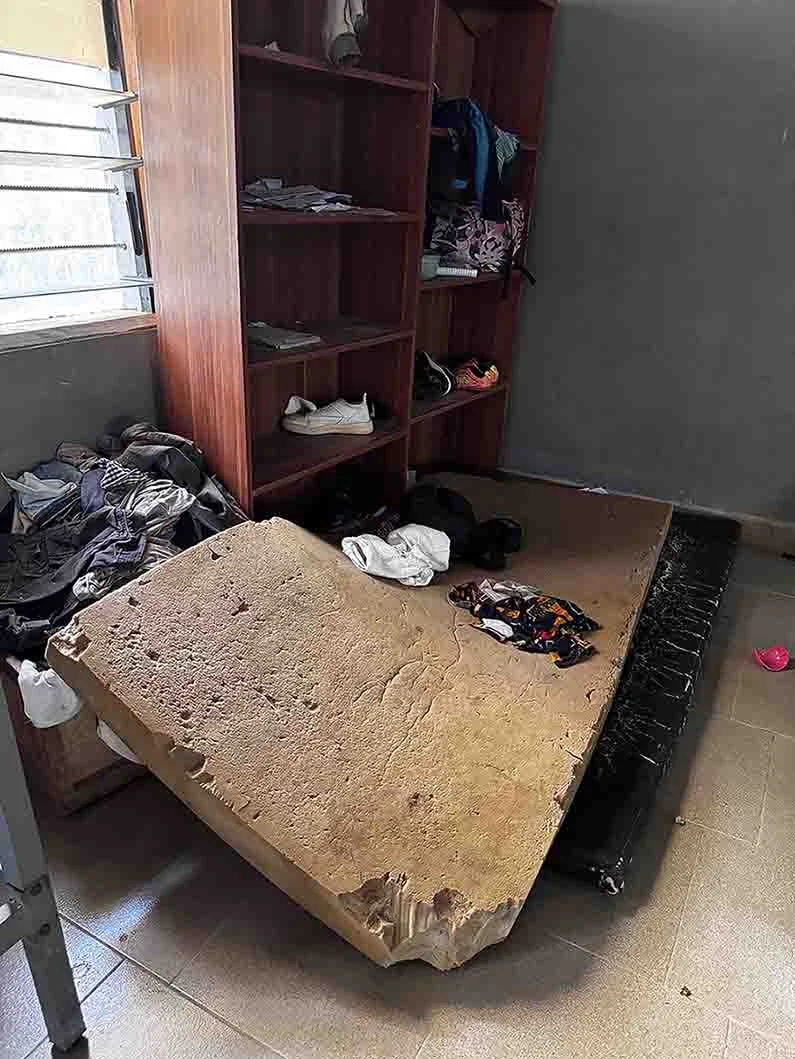
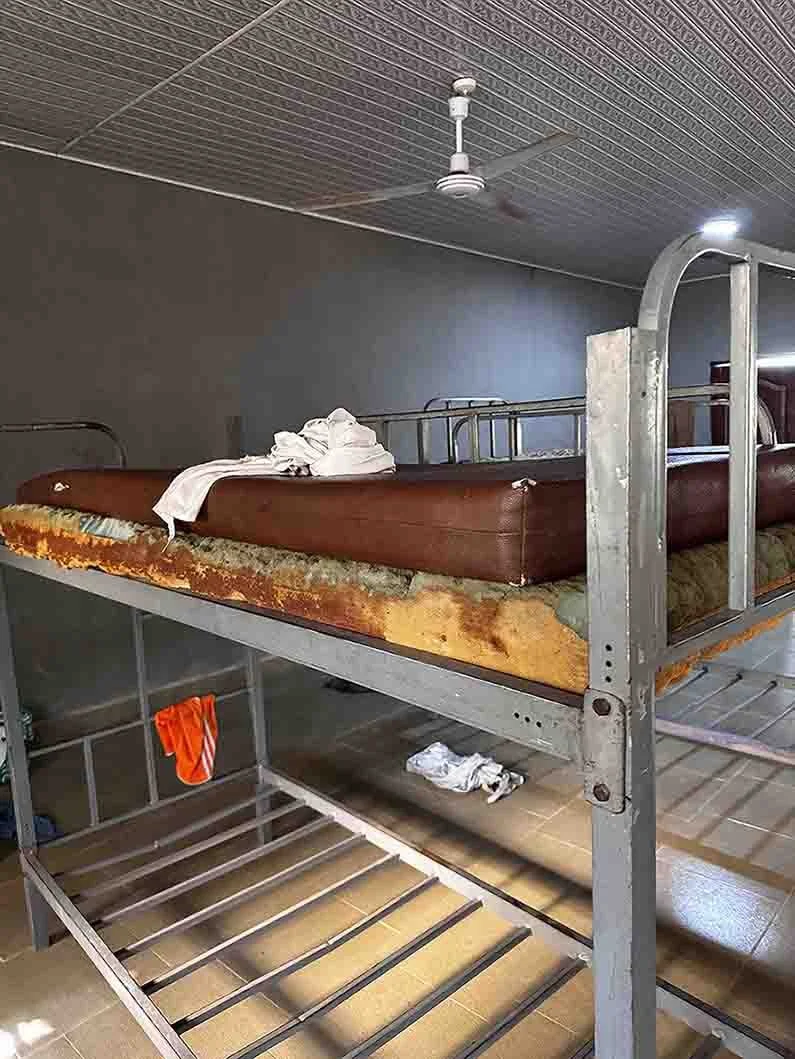
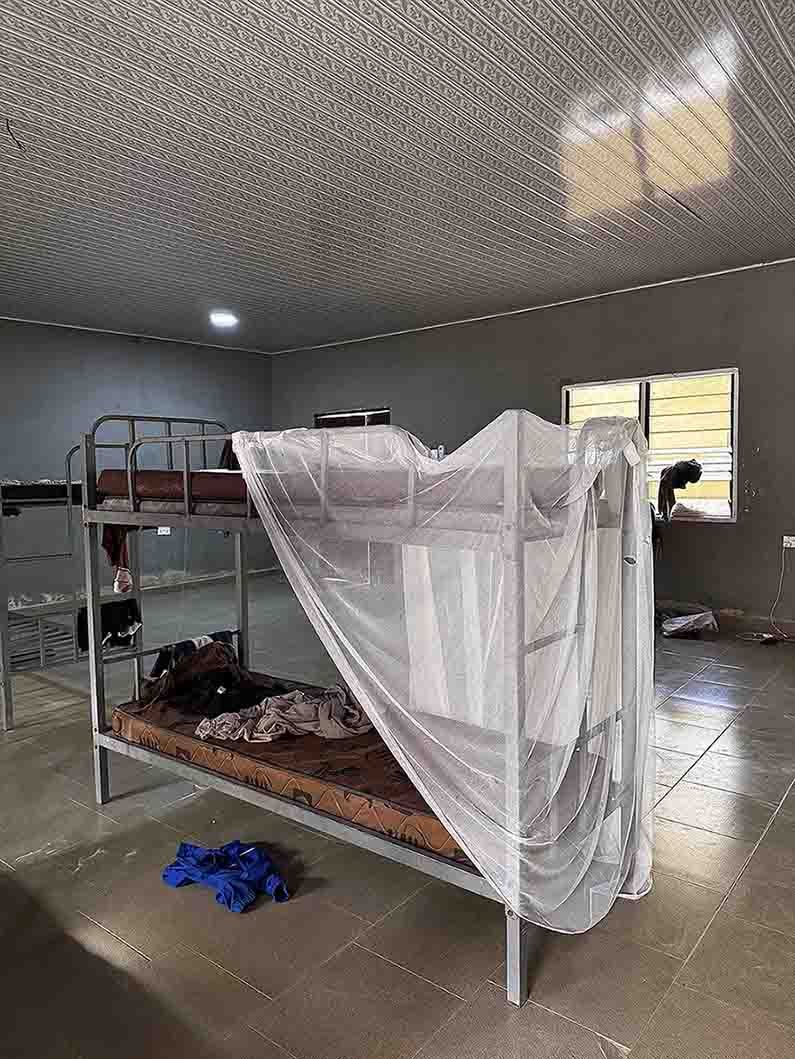
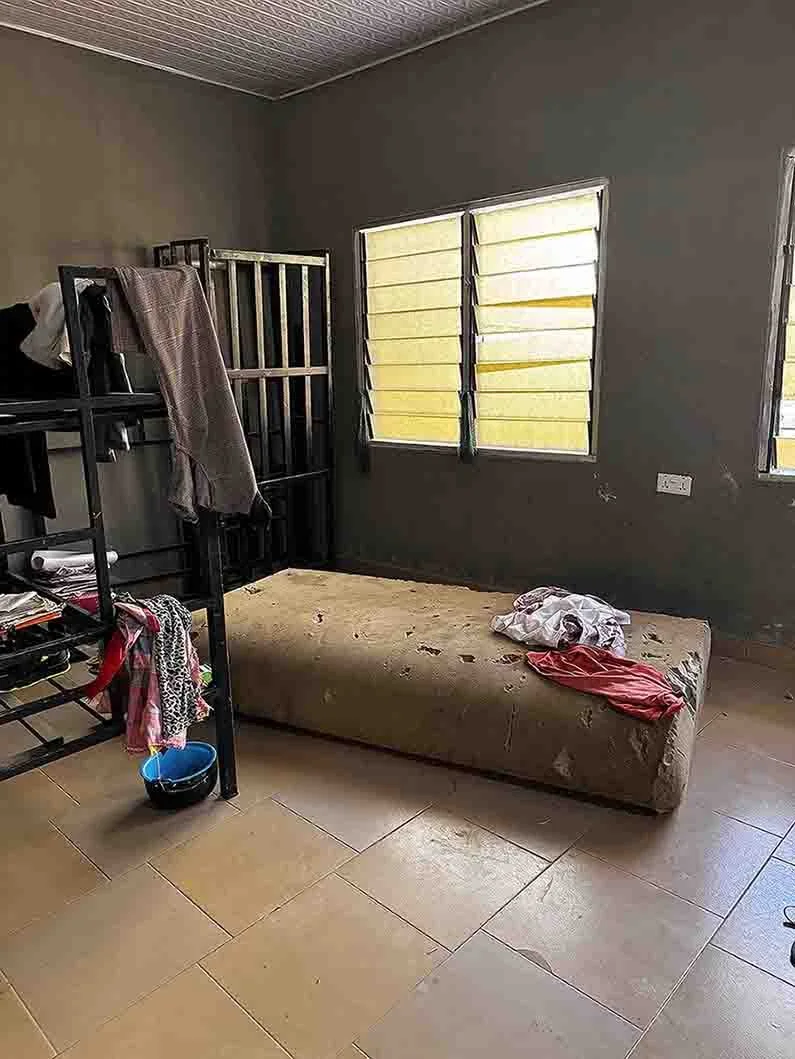
Clothing and toy donations handed out to everyone’s excitement. Thank you for all your generous donations! Photos of mattresses replaced by new, again funded by your donations. (Click on the last photo to see the full gallery)
The town itself taught me things I didn't expect to learn. I watched a family of five or six turn cassava root into flour by hand — peeling it, drying it over a fire, grinding it down into something that keeps for years without spoiling. I sat in on a meeting where dozens of local women were forming support circles for their own small businesses, since custom doesn't allow them to gather and talk shop out in the open. Every storefront I visited was really a shed with a cement floor, a shelf, maybe a fridge — and behind every one of them, someone finding a way to make some money. There is a program through the Maria Charity foundation where women can sign up for a start up loan to set up their business. Unfortunately many of them have to abandon their shops and are forced back into farming to get food on the table. A challenge the foundation is still very active in.
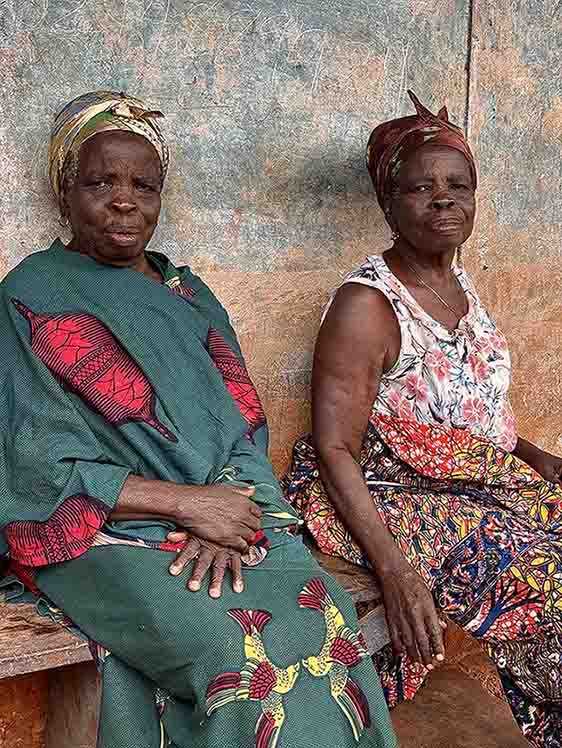
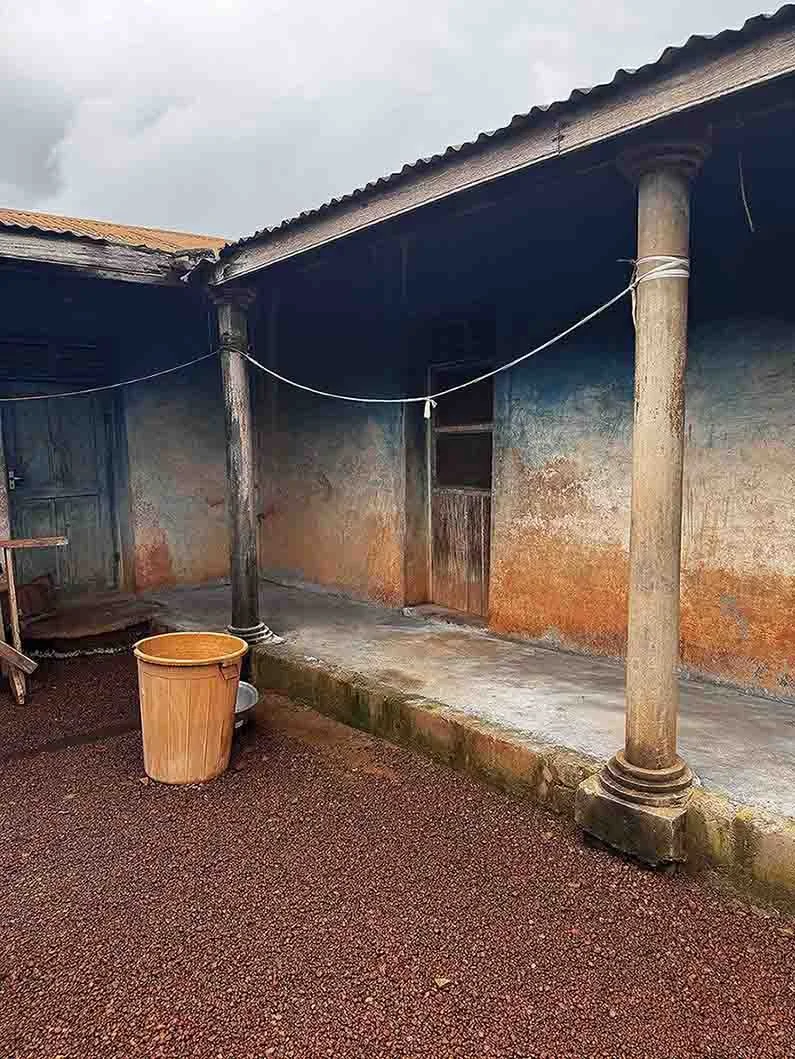
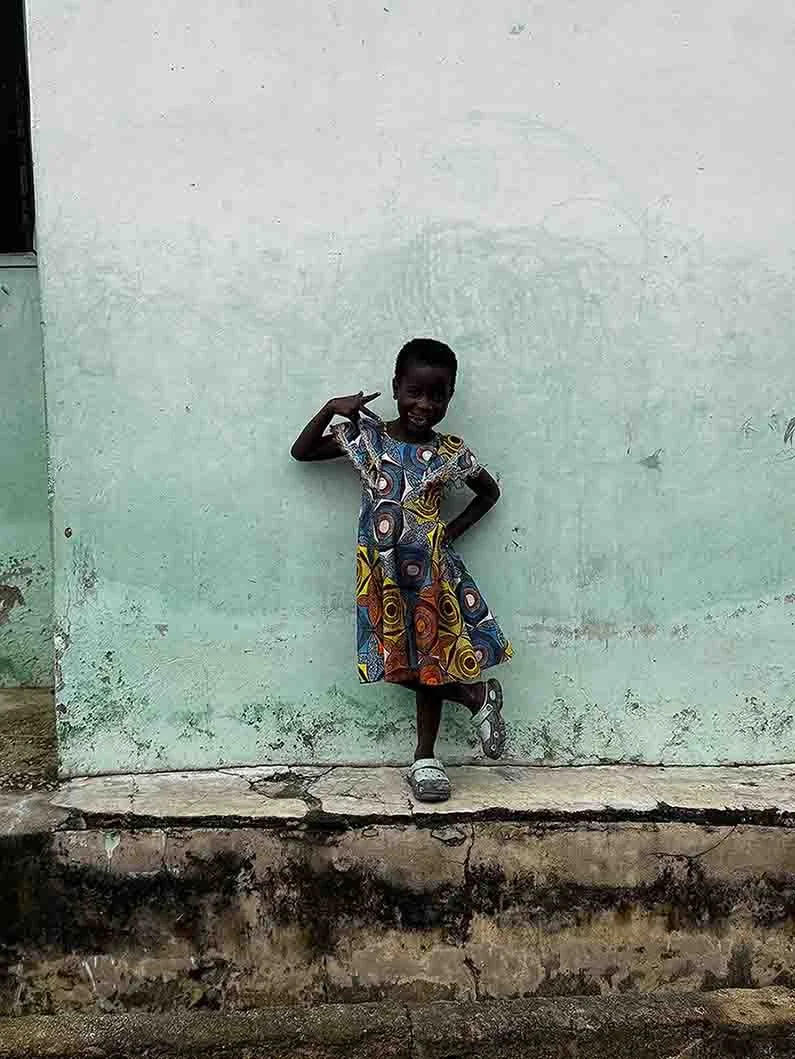
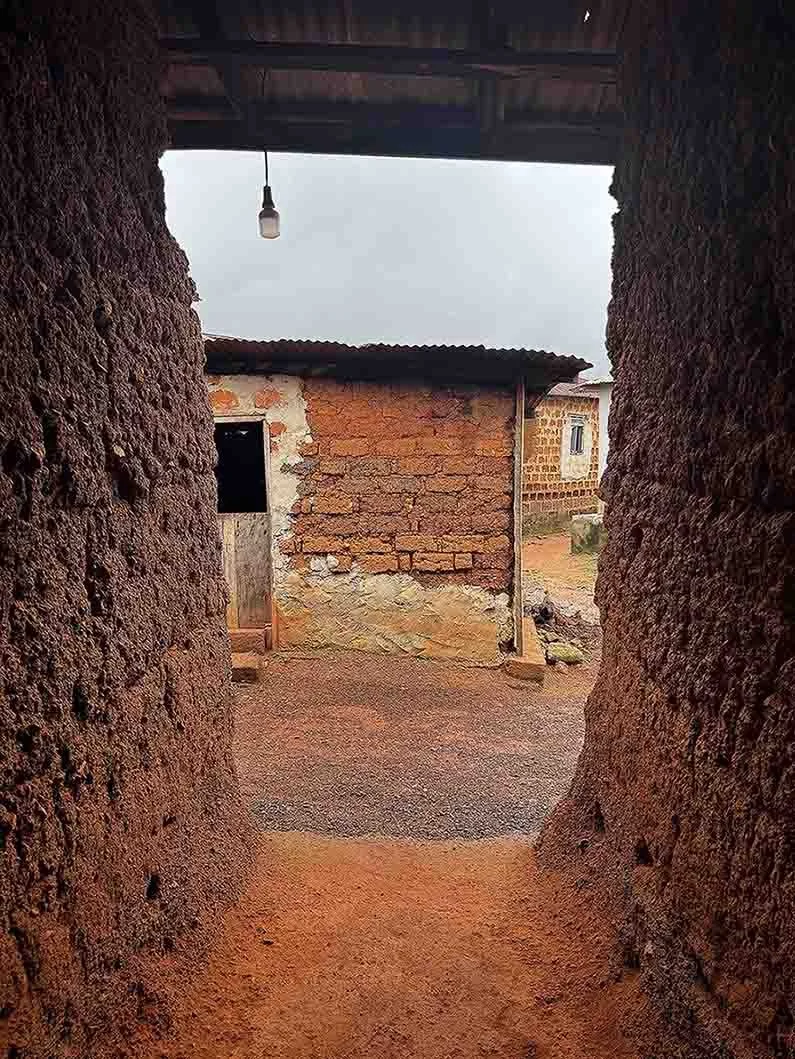
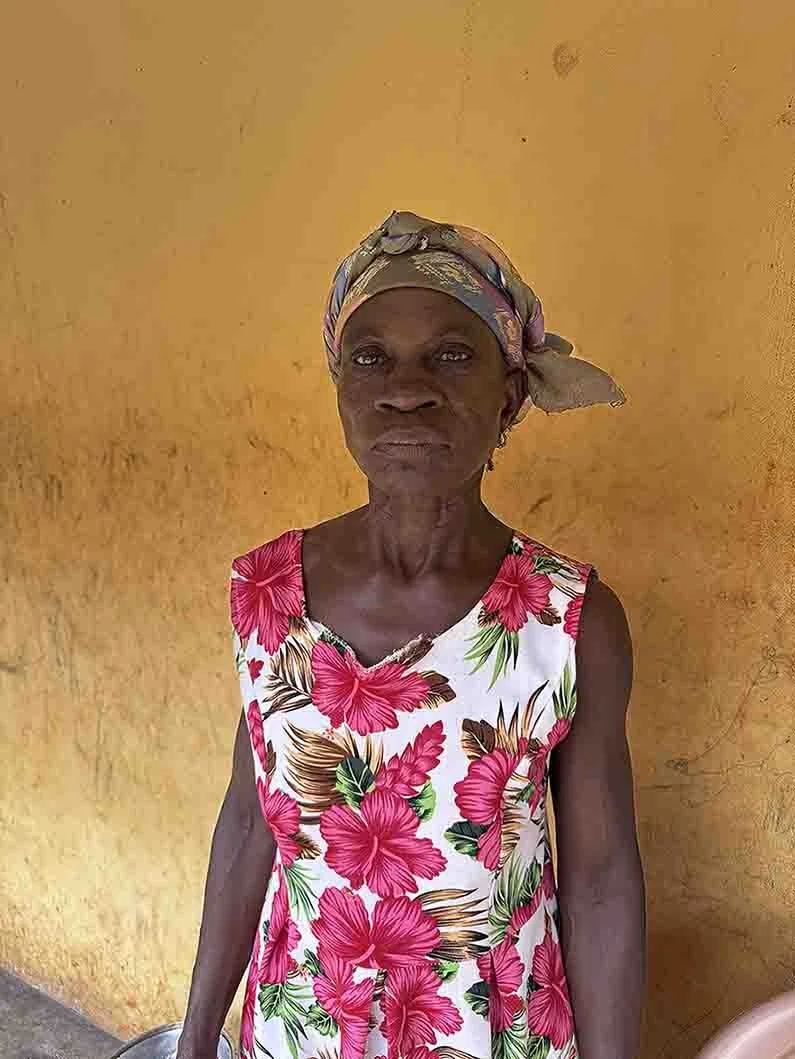
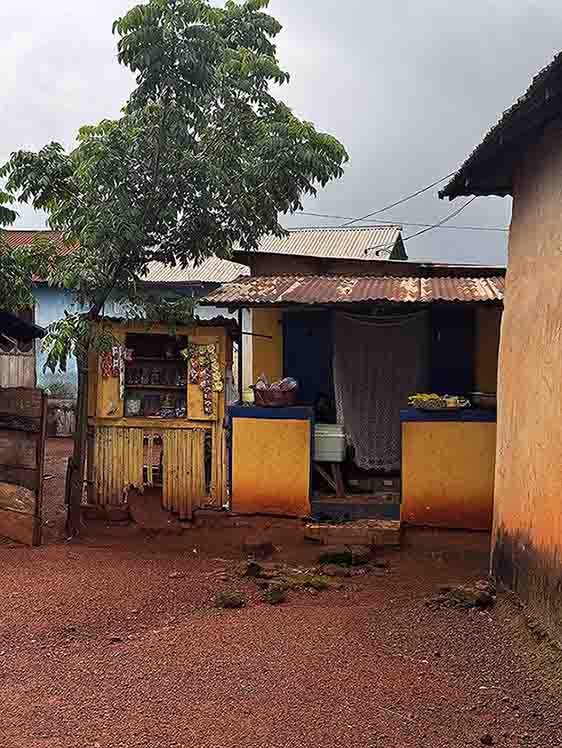
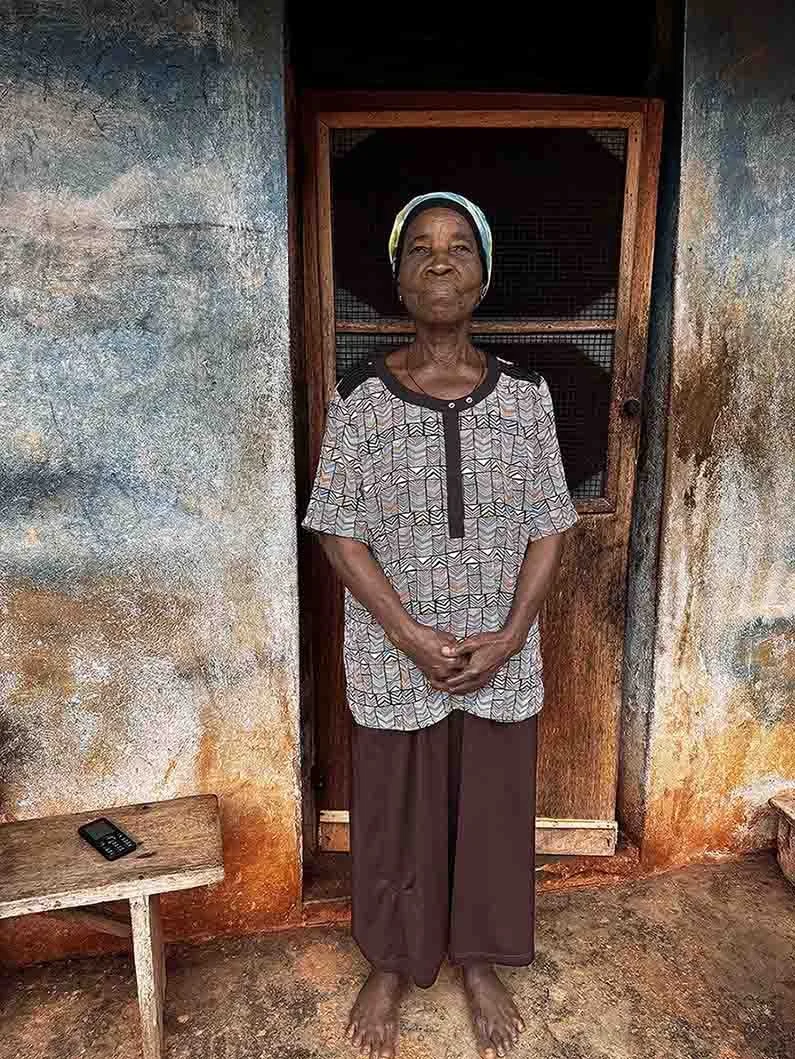
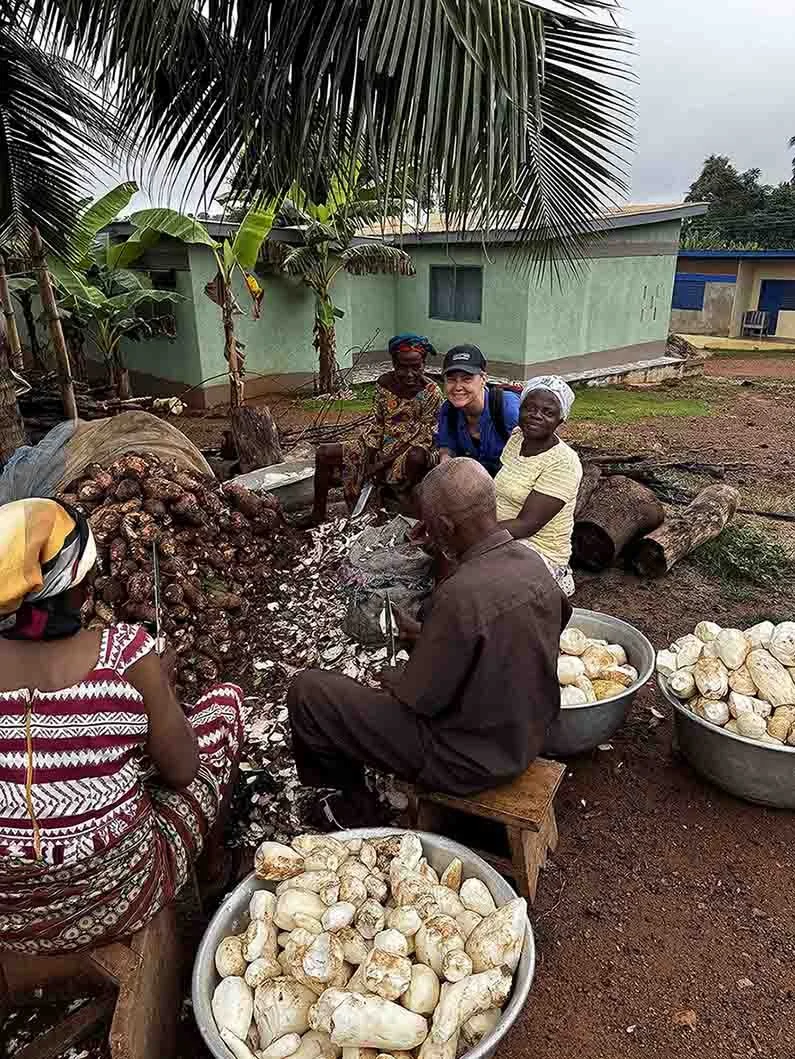
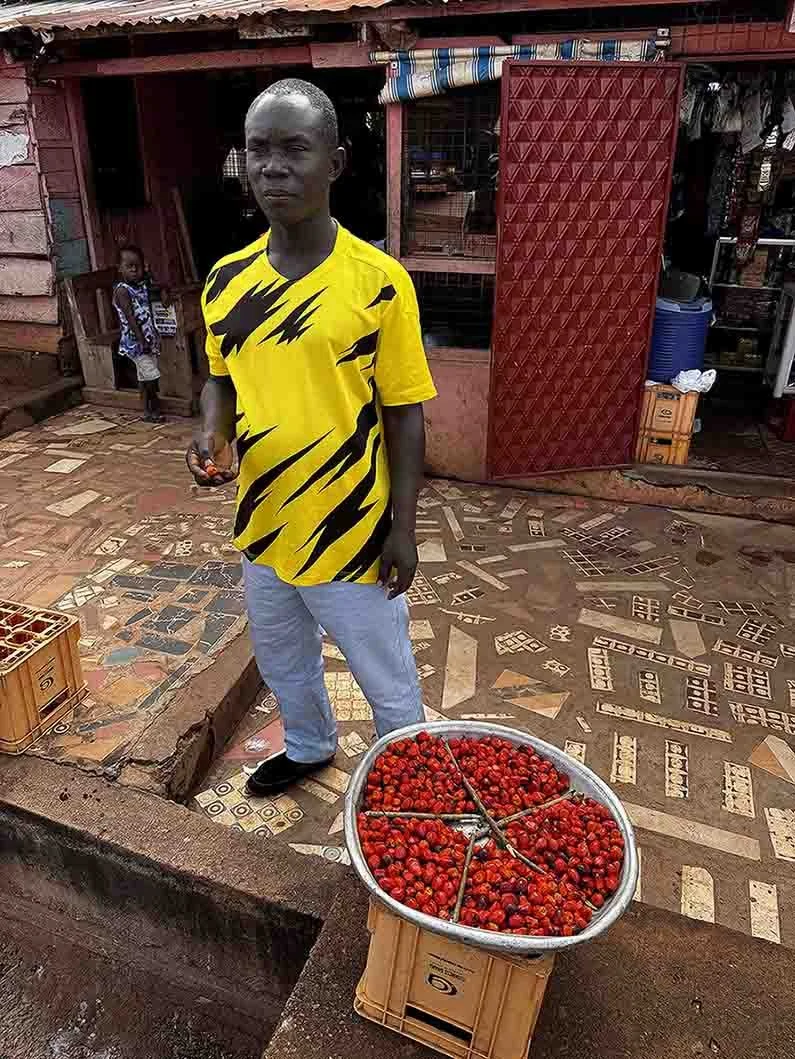
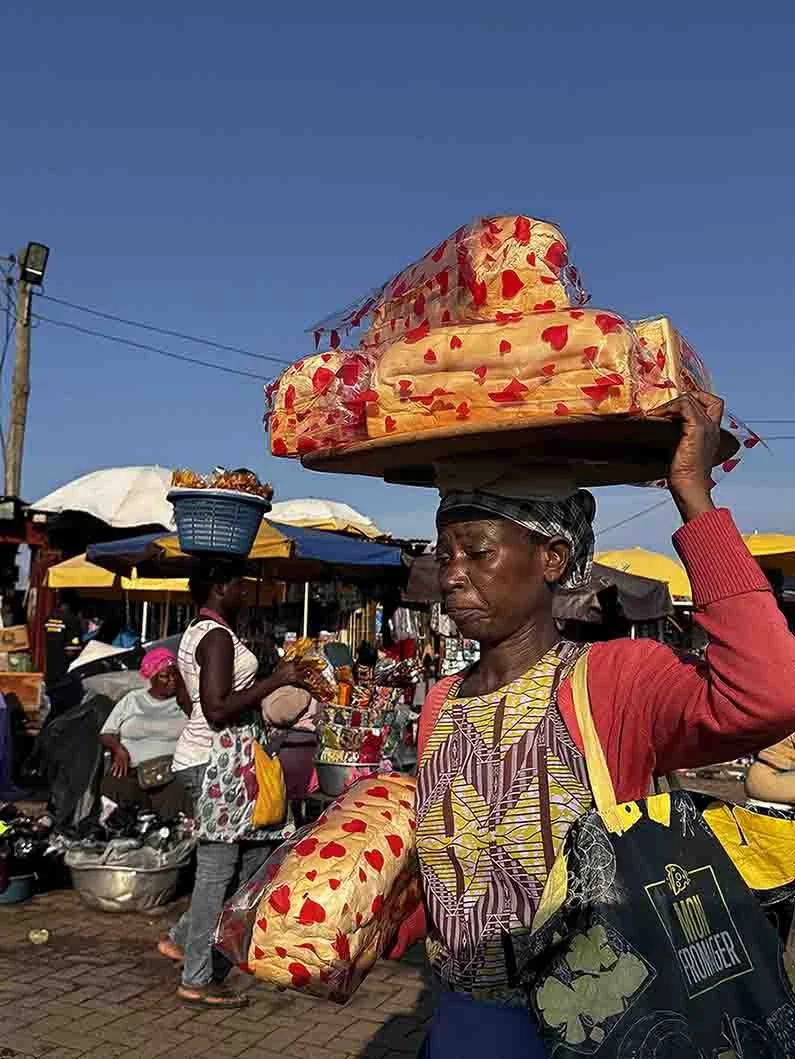
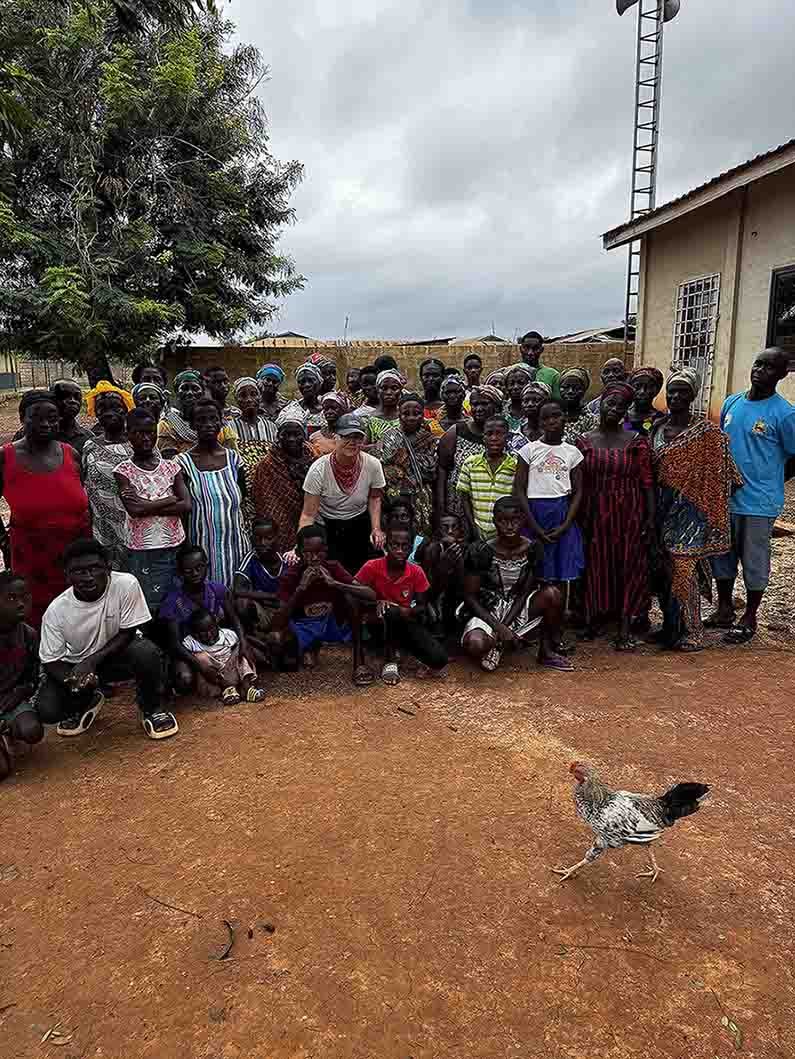
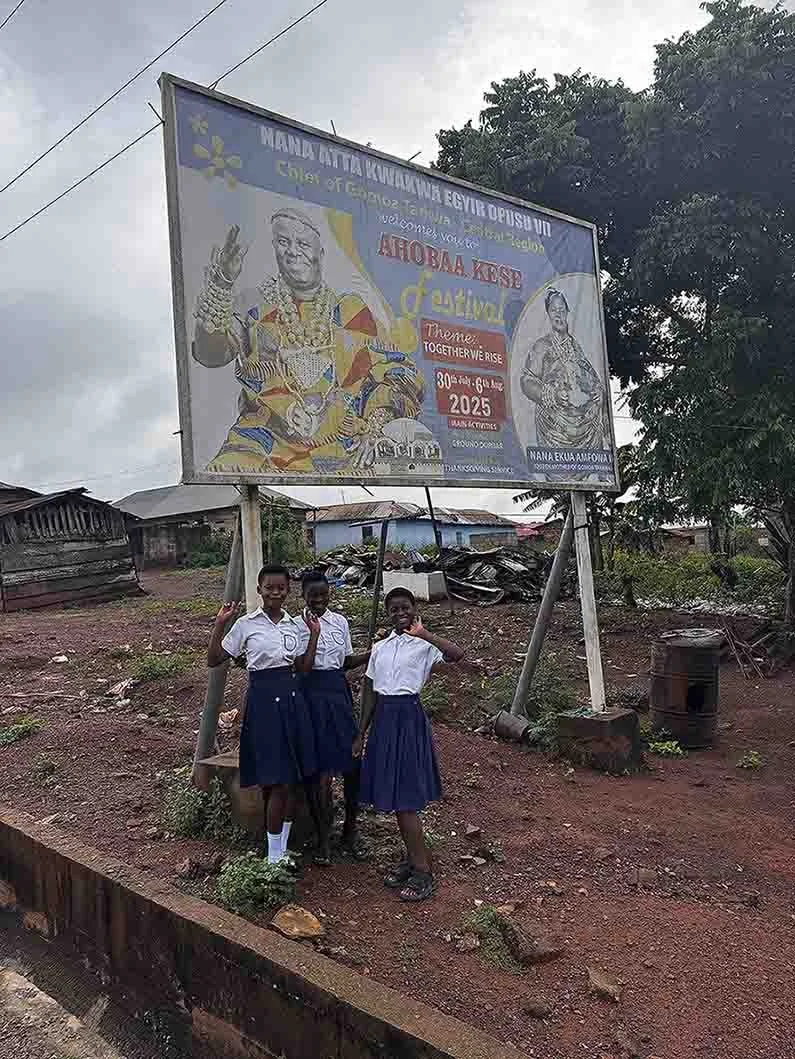
Gomoa Tarkwa and the town’s residents where the poverty rate is high but filled with love and ambition. (Click on the last photo to see the full gallery)
And then there was the ordinary magic with the children. Clapping games that somehow worked across every age group, all in sync. Dances filmed by the older children who were visiting from out of town. Singing back and forth, swapping words between Fante, English, and Swedish, and one time, trading national anthems — a strange and lovely thing to do when you are by yourself with a room full of children you've known for a week! World Cup matches watched together with commentary I couldn't understand. Corn roasted on the fire, salted, shared. The school-master asking me — with no warning at all — to stand in front of all 250 school children and say something important. I talked about gratitude. I told them the curiosity they'd shown me — the hand-holding, their shouting “Obroni!” and the endless questions — was the thing I hoped they'd never lose.
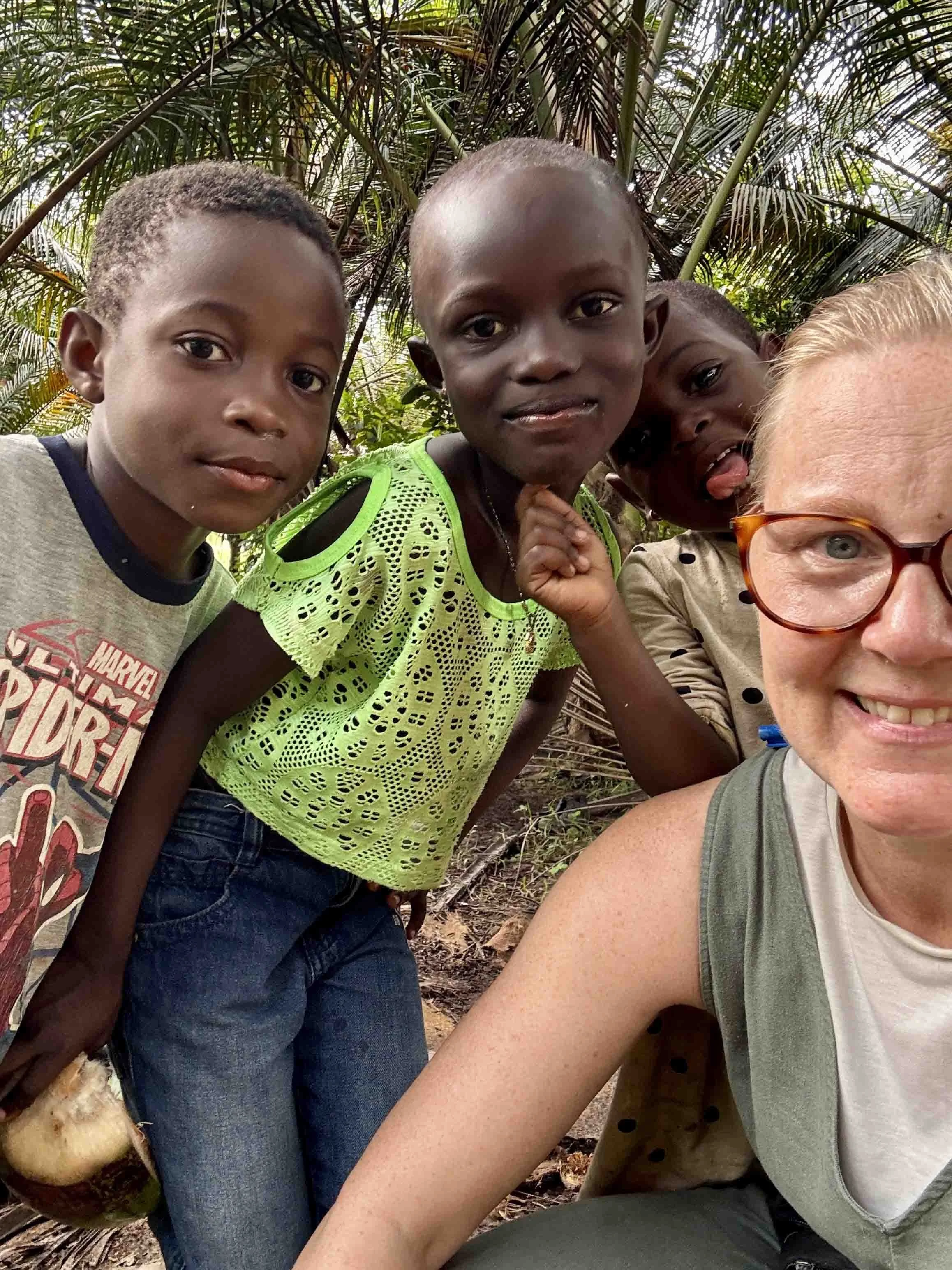
Posing for the picture “Madame meee! Eeeiii!” Queen, Happy boy and Yao.
On my last day, I gave away almost everything I'd brought with me— even the hand fan (which I never ended up using), the shampoo and conditioner, the soap, some left-over Cedi / cash and the mosquito net. It felt strange to bring that home. I didn’t need it. Where I was going there is plenty of that. I wished I had more to leave them. I flew home with two suitcases and almost nothing in them, which felt exactly right.
It's been a few weeks since I landed back in Sweden, back to my own small, safe, comfortable world — and the gap between my world and theirs is a wide one. The sheer abundance we take for granted here — food, choices, education, opportunity, a proper bed, a loving parent— set against what's actually available there, has been one of the harder things I've tried to hold within me since I got home. I haven’t quite processed all of it yet but writing this has been a good step. I feel this trip has been one of the most important experiences in my life and I feel this is the start of a much longer trip, internal and external. A true human experience.
I think of the children every day — Rockson, Isaac, Happy boy, Happy girl, Joyce, Ellen, Jessica, Gifty, Emanuel, Yao, Queen, Wisdom, Richard, Sara and everyone else — wondering what they're doing right now, whether they caught a gecko, how bad their mosquito bites are, whether someone scored a goal with the soccer balls we brought. And the other day I got a video call from them! Isaac called me from the only smart phone available at the Home for Hope and handed the phone over to Gifty and all the other children. It was amazing to see them all and hear their voices - and it made me realize how much I miss my new family far far away.
Every mattress, piece of clothing, and bag of crayons on this trip was funded by people who weren't there to see it land. I got to watch it happen — the good and the imperfect and the very human parts of it — and I wanted you to see it too. If any of this moved you, the Swedish organisation “Childrens Home” is where donations turns into the next mattress, the next set of school shoes, the next bag of crayons nobody has to protect from anyone. If you feel called to continue supporting these children, please find the info here. Of course, I will reach out again before my next trip down.
With so much gratitude and love, thank you, medase!
Jenny
PS. I was never good at editing, so I hope you enjoy all these photos as much as I do!
Jenny Berglund Castro
Children’s Home: https://childrenshome.se/